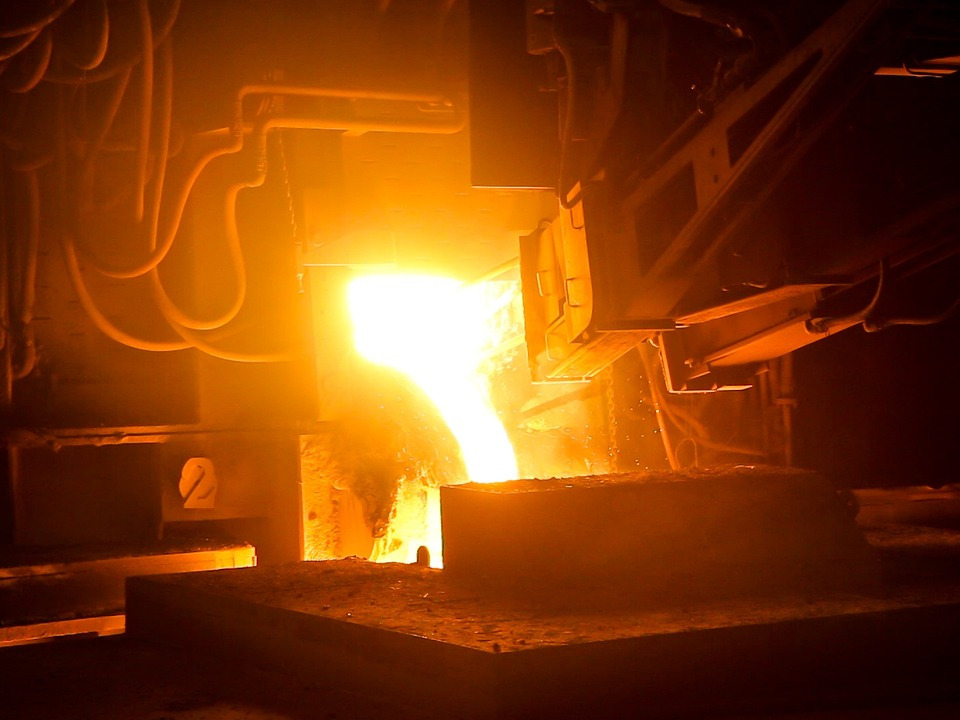
The quest for sustainable and environmentally friendly industrial processes has led researchers to explore new methods of producing iron, a metal that has been integral to human civilization since around 1200 BC. Traditional iron production is a high-energy process contributing significantly to global CO2 emissions due to the reliance on mining, blast furnaces, and refining. However, the annual global demand for iron, which is at approximately 2.5 billion tons, necessitates the search for greener alternatives.
One existing method to reduce the carbon footprint involves substituting coal and coke with eco-friendly hydrogen and methane. These are already seeing practical applications in some regions. However, a groundbreaking approach by the University of Oregon is transforming the way iron is produced. This method employs a technology akin to a traditional battery to extract sodium from seawater, which is abundant in sodium chloride or common salt.
The innovative part of this process is the replacement of the cathode material in the battery setup with iron ore. This alteration keeps the chemical process similar yet yields a decomposition of the cathode into sodium hydroxide and pure iron, effectively removing oxygen from the iron ore and leaving behind elemental iron. Remarkably, this new procedure requires less energy than smelting and solely relies on electricity, which can be sourced from renewable energy. Moreover, the resulting sodium hydroxide is valuable in itself and can potentially serve as a carbon sink by binding CO2 and converting it into mineral carbon like graphite.
Despite the potential benefits, this method is still in the experimental phase and scaling these laboratory tests to industrial levels will be challenging. The process also generates chlorine gas as a byproduct, a toxic substance that must be managed carefully, albeit it is a valuable resource in the chemical industry. Additionally, the feasibility of using pure iron ore as the cathode requires the ore to be cleansed prior to use, which can increase costs and reduce efficiency.
Nonetheless, the promise of producing tens of millions of tons of iron annually with zero CO2 emissions—based on chlorine demand alone—is an exciting prospect. It demonstrates that even for a technology with millennia of history, reimagining and reinventing processes can pave the way for eco-friendly industrial practices.
Ultimately, the search for sustainable iron production methods continues to forge ahead, potentially heralding a new era in manufacturing that aligns with global efforts to combat climate change and reduce carbon emissions.