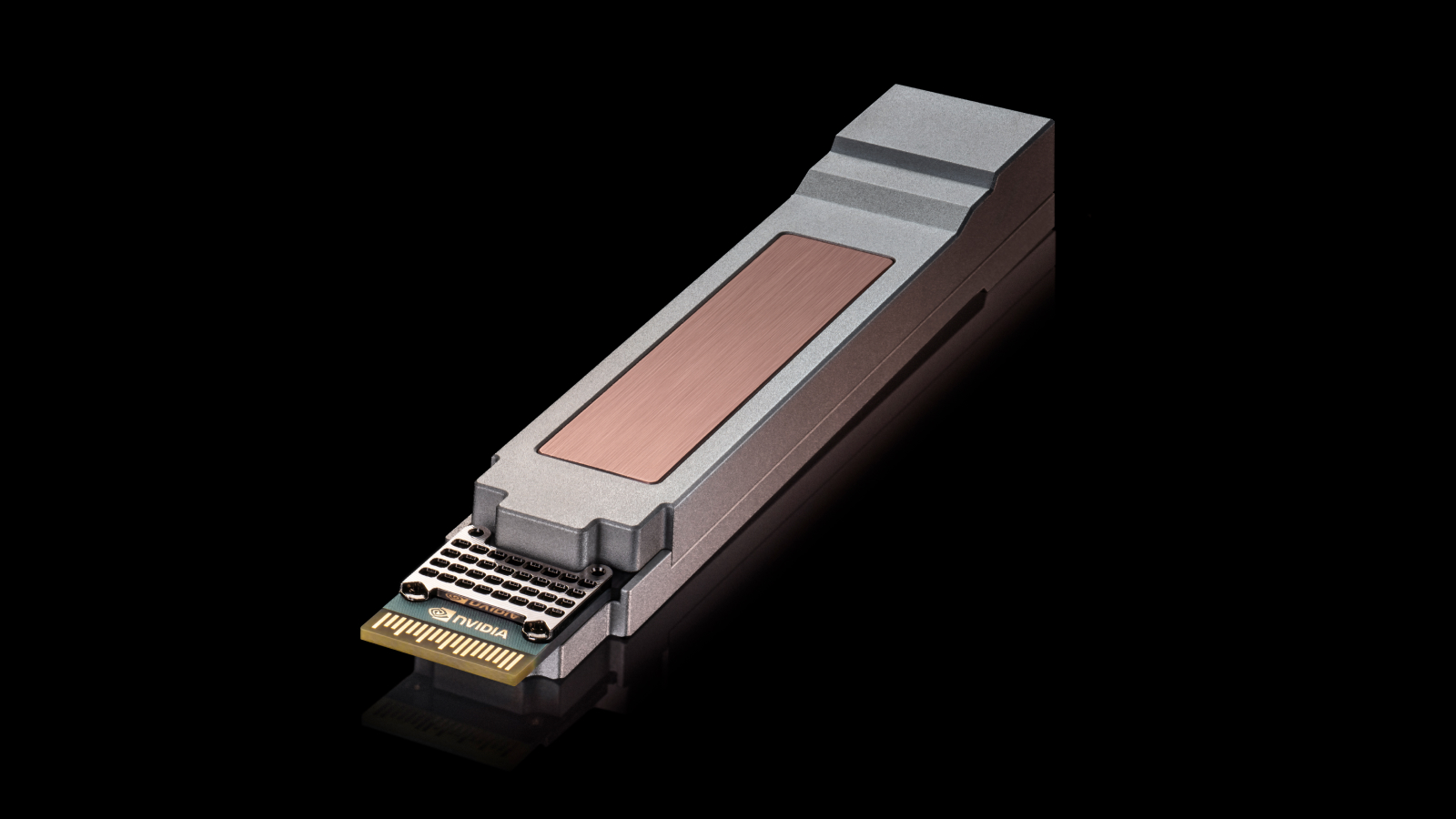
NVIDIA and Cisco Unveil USFP Optical Switch Module for Next-Generation AI Factories
NVIDIA and Cisco are working together on a new networking design built to support the massive bandwidth demands of modern AI infrastructure. Their latest development, called USFP, introduces an ultra-dense, compact pluggable optical module designed to deliver up to 400 Gb/s per lane and help AI data centers scale more efficiently.
As AI factories expand, the pressure on networking systems continues to rise. Larger AI clusters require faster connections between GPUs, servers, switches, and storage systems. At the same time, operators must manage growing complexity, higher power usage, and increasing infrastructure costs. This makes high-bandwidth, power-efficient interconnect technology one of the most important building blocks for future AI computing environments.
USFP, short for Ultra-Dense Small Form Factor Pluggable, is designed to address these challenges by increasing bandwidth density without requiring a major increase in network footprint. NVIDIA and Cisco describe it as the first pluggable module built specifically for 400-gigabit base fabric architectures.
The move to 400 Gb/s per lane represents a major step forward for AI networking. Compared with 200-gigabit solutions, USFP doubles per-lane bandwidth while improving overall efficiency. Although power consumption rises by around 1.5 times, the module still delivers approximately 1.3 times better power efficiency than 200-gigabit alternatives.
One of the biggest advantages of USFP is its bandwidth density. The module is designed to deliver four times the bandwidth density of 200-gigabit OSFP modules, making high-density 1.6 Tb/s fabric designs more practical for large-scale AI deployments. With support for up to 32 electrical lanes, USFP can provide as much as 12.8 Tb/s of total capacity.
NVIDIA and Cisco plan to begin with products offering 16 lanes and up to 6.4 Tb/s of capacity. This initial configuration is expected to give AI infrastructure builders a significant performance boost while maintaining the deployment flexibility of pluggable optics.
Despite its higher performance, USFP is similar in size to existing OSFP modules. This is important because it allows data center operators to increase bandwidth without dramatically changing system layouts or expanding physical network space. In practical terms, AI factories can scale compute and connectivity within the same network footprint, helping reduce complexity and improve operational efficiency.
NVIDIA’s Gilad Shainer said that building the world’s largest AI factories requires rethinking even the smallest connections. He noted that USFP is intended to help create a broader ecosystem around next-generation pluggable optics, enabling more computing power to be connected with greater efficiency.
Cisco also emphasized that AI builders need interconnect architectures capable of scaling performance without making operations more complicated. Bill Gartner, senior vice president and general manager of optical systems and optics at Cisco, explained that moving pluggable optics to 400 Gb/s per lane required more than a simple update to existing module designs. According to Cisco, USFP is being developed with a full-stack approach that spans silicon, systems, optics, and network operating software.
That full-stack strategy is important because AI networking performance depends on more than raw speed. Efficiency, serviceability, deployment flexibility, and compatibility all play major roles in how well large AI clusters perform in real-world environments. By optimizing multiple layers of the network, NVIDIA and Cisco aim to provide the bandwidth and scale required for the next generation of AI workloads.
To support broader industry adoption, NVIDIA is also working with Amphenol and TE Connectivity. These collaborations are intended to help prepare the ecosystem for denser AI network fabrics and accelerate the availability of compatible components.
The new USFP design will build on existing work around NVIDIA Spectrum-X Ethernet networking and Cisco Silicon One-based Ethernet networks. The goal is to ensure that advanced AI networking systems can operate together smoothly while supporting the extreme bandwidth needs of future AI data centers.
With AI models becoming larger and training clusters growing more powerful, networking is quickly becoming a critical factor in overall AI performance. USFP could play an important role in helping AI factories move more data, connect more compute resources, and improve efficiency without making infrastructure harder to manage.