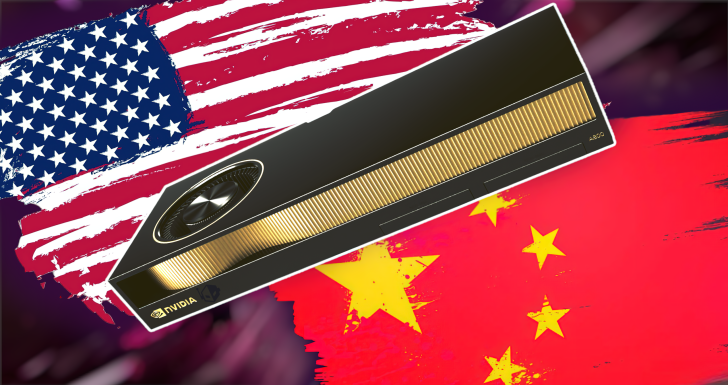
US lawmakers are pushing a bold plan to make sure American consumers and businesses get first crack at advanced AI chips, potentially reshaping how companies like NVIDIA and AMD sell their most coveted hardware.
The proposal arrives as an amendment to the National Defense Authorization Act for 2026 and is titled the “Guaranteeing Access and Innovation for National Artificial Intelligence Act of 2025” (GAIN AI Act). Introduced by Senator Jim Banks, the measure would prioritize domestic demand by limiting exports of advanced AI chips when U.S. buyers—especially small businesses, startups, and universities—are still waiting in line. In simple terms, if an American entity can’t get the chips, foreign customers shouldn’t be able to get them first.
Lawmakers say the demand for AI accelerators has far outstripped supply, creating long queues and stalling research, product development, and AI deployment across the country. The stated goal is to remove that bottleneck for American users and ensure that the nation’s innovation pipeline has reliable access to cutting-edge compute.
While the draft’s language focuses on AI accelerators, its impact could ripple into the broader GPU market. Many consumer GPUs now play a crucial role in AI workloads, from model training to local inference, so any policy that reshapes supply for AI chips could influence availability and pricing for mainstream graphics hardware as well.
Not everyone agrees with the premise. NVIDIA has pushed back, disputing the idea of a persistent “AI chip shortage” and suggesting the proposal mirrors earlier attempts to restrict the flow of advanced AI technology abroad. From the company’s perspective, sweeping export limits could undermine America’s technological leadership by slowing overseas adoption of U.S.-designed hardware, particularly in markets like China.
This policy debate goes beyond who gets a chip first; it cuts to the core of how the United States wants to manage AI diffusion, national security, and global competitiveness. Policymakers have already floated other measures aimed at tightening oversight of AI hardware sales, including the idea of a built-in “kill switch” for chips sold to specific foreign markets. The message is clear: Washington wants greater control over where and how American AI technology is used, especially at a time when AI capabilities are seen as strategic assets.
Supporters of the GAIN AI Act argue it could be a lifeline for entrepreneurs, researchers, and academic institutions that can’t compete with deep-pocketed buyers worldwide. By guaranteeing access at home, they say the U.S. can accelerate domestic innovation, broaden participation in AI, and reduce delays that slow everything from medical research to industrial automation.
Skeptics warn that overreaching restrictions may introduce new friction in global supply chains, complicate business planning for chipmakers, and trigger unintended consequences in international markets. If exports are throttled too aggressively, it could invite retaliation, encourage alternative supply ecosystems, or slow revenue growth that funds the next generation of U.S.-made AI hardware.
What happens next will depend on the final language of the amendment and how it navigates the legislative process. Key questions remain: How will “advanced AI chip” be defined in a way that keeps the policy targeted? What safeguards will ensure that domestic prioritization doesn’t unintentionally choke the broader GPU market? And how will agencies implement and enforce any export prioritization without adding red tape that slows deliveries even further?
For now, the GAIN AI Act signals a pivotal moment for the AI hardware landscape. If passed and strictly enforced, U.S. buyers—from large data centers to small labs—could see shorter lead times and more predictable access to the compute power they need. If it falters or is watered down, the status quo will likely continue, with intense global demand shaping who gets the silicon first. Either way, the debate underscores just how central AI chips have become to economic growth, national security, and technological leadership in the years ahead.