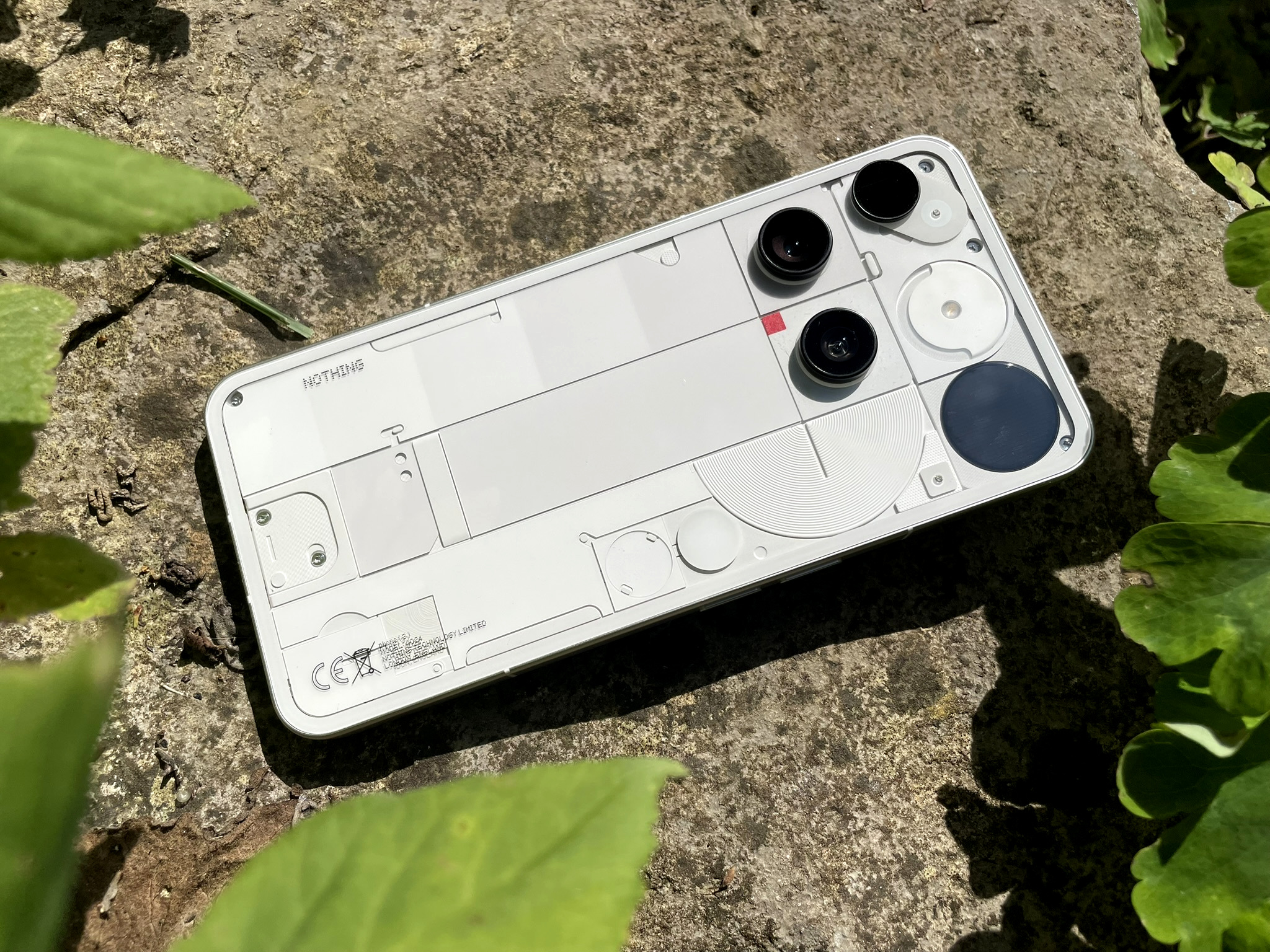
Nothing Phone 3 aims to redefine what a “flagship” feels like without charging true flagship prices. It’s the brand’s most powerful phone so far, and it shows in everyday speed, camera performance, and battery life. Still, a few strategic compromises keep it from the ultra-premium tier, which is exactly the point: deliver a high-end experience where it matters and trim the rest.
What holds it back from full flagship status is mostly display and charging extras. The 6.67-inch AMOLED uses LTPS rather than LTPO, so it switches between fixed refresh rates of 60, 90, and 120 Hz instead of adapting fluidly from 1–120 Hz. That means it’s a bit less power-efficient than the best panels. The cover glass on the display is Gorilla Glass 7i instead of a more premium option, and there’s no Qi2 magnetic wireless charging. In day-to-day use, though, those differences fade into the background, while the polished performance and thoughtful software stand out.
Under the hood, the Snapdragon 8s Gen 4 delivers snappy responsiveness for gaming, multitasking, and camera processing. The base model already feels generous with 12 GB of LPDDR5X RAM and 256 GB of UFS 4.0 storage, and stepping up to 16/512 GB is just $100 more. The bright, color-accurate AMOLED looks great, and the 5150 mAh battery comfortably lasts a full, heavy day and tops up in under an hour, making range anxiety a non-issue.
The camera system is a headline feature. With a 50 MP main camera, 50 MP ultra-wide, 50 MP telephoto, and a 50 MP selfie shooter, it targets consistency across lenses rather than relying on a single standout sensor. Expect crisp detail, reliable colors, and minimal compromises when switching focal lengths, whether you’re capturing landscapes, portraits, or social-ready selfies.
Software is another reason the Nothing Phone 3 feels premium. It ships with Nothing OS 3.5 based on Android 15, and the company promises five years of OS upgrades up to Android 20, plus seven years of security updates delivered every two months. The interface is clean and fast, enhanced by smart touches: an AI hub called Essential Space, resizable Quick Settings toggles, swipe-up camera presets in the Photos app, and a second search bar in the app drawer—Essential Search—that can scan your phone for content or kick off an AI-assisted web search with a tap of the yellow icon.
Design remains distinctively Nothing, but with a twist. The transparent back returns, protected by Gorilla Glass Victus, while the familiar illuminated lines are replaced by the Glyph Matrix—a compact circular mini-display built from 486 LEDs. It can show notifications and battery levels, act as a stopwatch, and even power simple games like Spin the Bottle or Rock-Paper-Scissors. A circular, pressure-sensitive button near the volume rocker lets you customize what the Glyph Matrix shows. There’s also a subtle red LED that pulses during audio or video recording, which you can disable if you prefer a stealthier look.
Pricing starts at $799 for 12/256 in white or black, with a $899 option for 16/512. Considering the fast chipset, ample memory and storage, polished software, robust update policy, and versatile cameras, the value proposition is strong—especially if you don’t need LTPO finesse or Qi2 accessories.
Verdict: The Nothing Phone 3 nails the “flagship feel” at a price that undercuts many top-tier rivals. You lose a few elite luxuries, but gain excellent performance, thoughtful design, long-term software support, and cameras that punch above their weight. For most people, that’s a trade worth making.