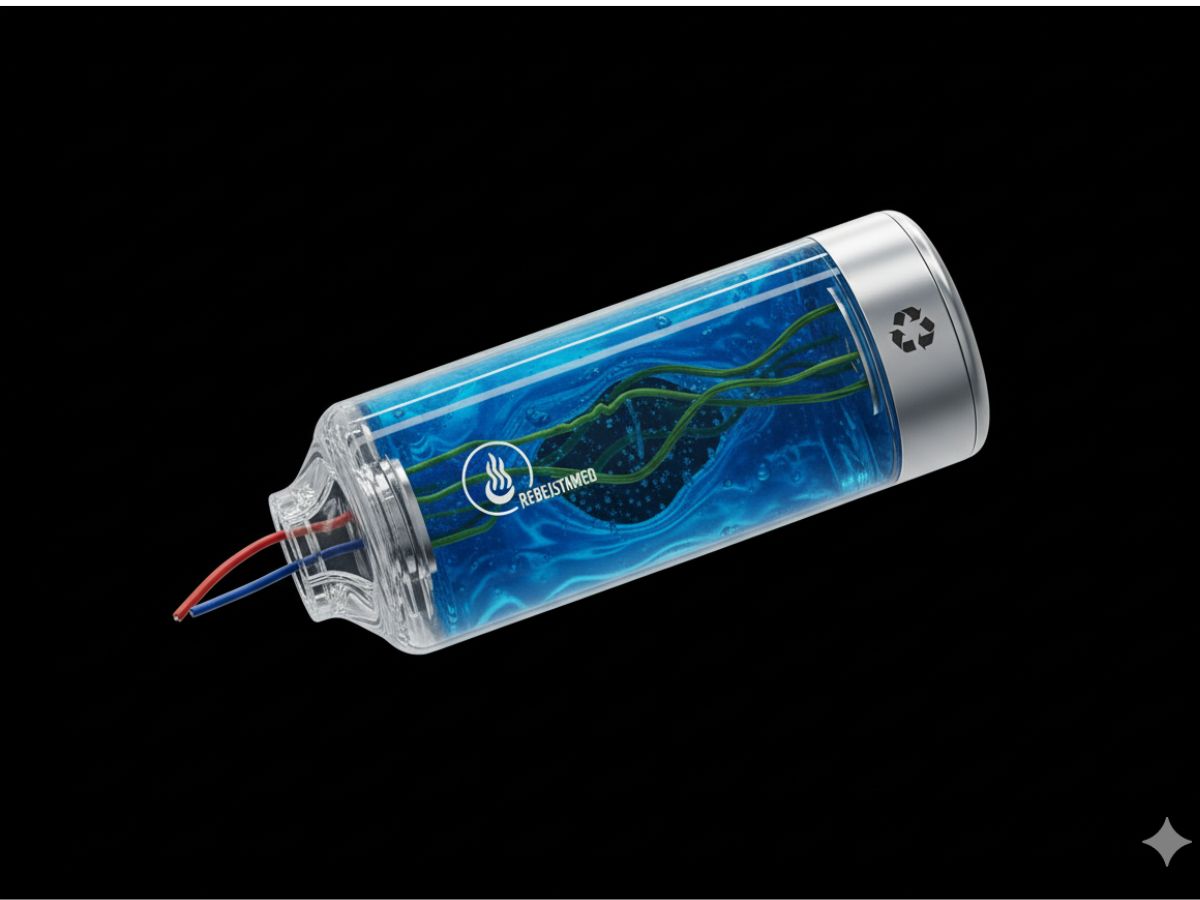
Fire-safe, water-based, and recyclable: a new kind of battery material from Japan could make energy storage cleaner and safer
A team at Tohoku University, working with Nitto Boseki Ltd., has engineered an organic redox polymer designed specifically for aqueous (water-based) batteries. The polymer is water-soluble, high performing, and can be chemically recycled—tackling three of the biggest hurdles in sustainable energy storage. The work, published in Polymer Journal, points to a practical path for safer, greener batteries made from earth-abundant elements.
Organic batteries have long been attractive because they use carbon-based materials rather than scarce metals. The catch is that many of the most effective charge-storing organic molecules are hydrophobic, so they struggle in water-based systems. That matters because aqueous electrolytes are far less flammable than the organic solvents used in many conventional batteries.
The researchers addressed the problem by bonding hydroquinone—a high-capacity redox-active molecule—to polyallylamine, a water-soluble polymer backbone. This architecture does two jobs at once: it makes the active material compatible with water-based electrolytes, and it leverages electrostatic repulsion along the polymer chain to suppress a common side reaction that typically degrades hydroquinone’s performance.
To prove the concept, the team built a polymer–air battery using the new material. In testing, the device showed impressive durability, losing only about 1% of its capacity over more than 100 charge–discharge cycles. Because the electrolyte is water-based, the system avoids the fire risk associated with many lithium-ion chemistries.
Equally important, the material was designed with end-of-life in mind. Instead of relying on complex, energy-intensive recycling, the polymer can be broken down into its constituent components via acid treatment, simplifying recovery and reuse. That design-for-disassembly approach aligns with a broader push for circularity in next-generation batteries.
This advance arrives amid a wave of sustainability-focused battery research. In related work, an MIT team recently demonstrated a self-assembling solid-state electrolyte built from aramid-like molecules that can be dissolved for easy recycling. Together, these efforts highlight a growing trend: engineer performance and safety, but also engineer the exit strategy.
Why this matters
– Safer energy storage: Water-based electrolytes reduce fire risk.
– Sustainable materials: Organic polymers from abundant elements can lessen reliance on critical metals.
– Easier recycling: Built-in chemical pathways make recovery of raw materials more practical.
– Performance promise: Early tests show low capacity fade and robust cycling in a polymer–air prototype.
What’s next
– Boosting energy density to compete with today’s leading chemistries.
– Extending cycle life well beyond hundreds of cycles for real-world applications.
– Scaling synthesis and refining recycling processes for industrial use.
– Exploring compatibility with various aqueous battery architectures for grid, home, and portable storage.
Bottom line: By marrying hydroquinone’s high capacity with a water-soluble polymer backbone and a straightforward recycling route, this research charts a compelling course toward fire-safe, recyclable, and sustainable batteries that don’t compromise on performance.