Nintendo’s patent lawsuit against Palworld developer Pocketpair once looked like it could become a major threat to one of the biggest breakout games in recent years. Filed in September 2024 by Nintendo and The Pokémon Company, the case raised serious questions about whether Palworld could continue growing without major disruption.
Now, nearly two years later, the lawsuit appears to have lost much of its original force.
The legal dispute focuses on three Japanese patents connected to gameplay systems involving creature capture, creature release, and riding mechanics. Nintendo originally sought damages and an injunction, a move that could have had a major impact on Palworld’s future if successful. However, the case has become more complicated for Nintendo after patent office setbacks and challenges over originality, with earlier games being cited as examples of similar mechanics.
As the case has progressed, its focus has reportedly narrowed. Instead of threatening the current version of Palworld, the dispute now appears to center mostly on older builds of the game. That is a major shift, especially for players waiting for the full release.
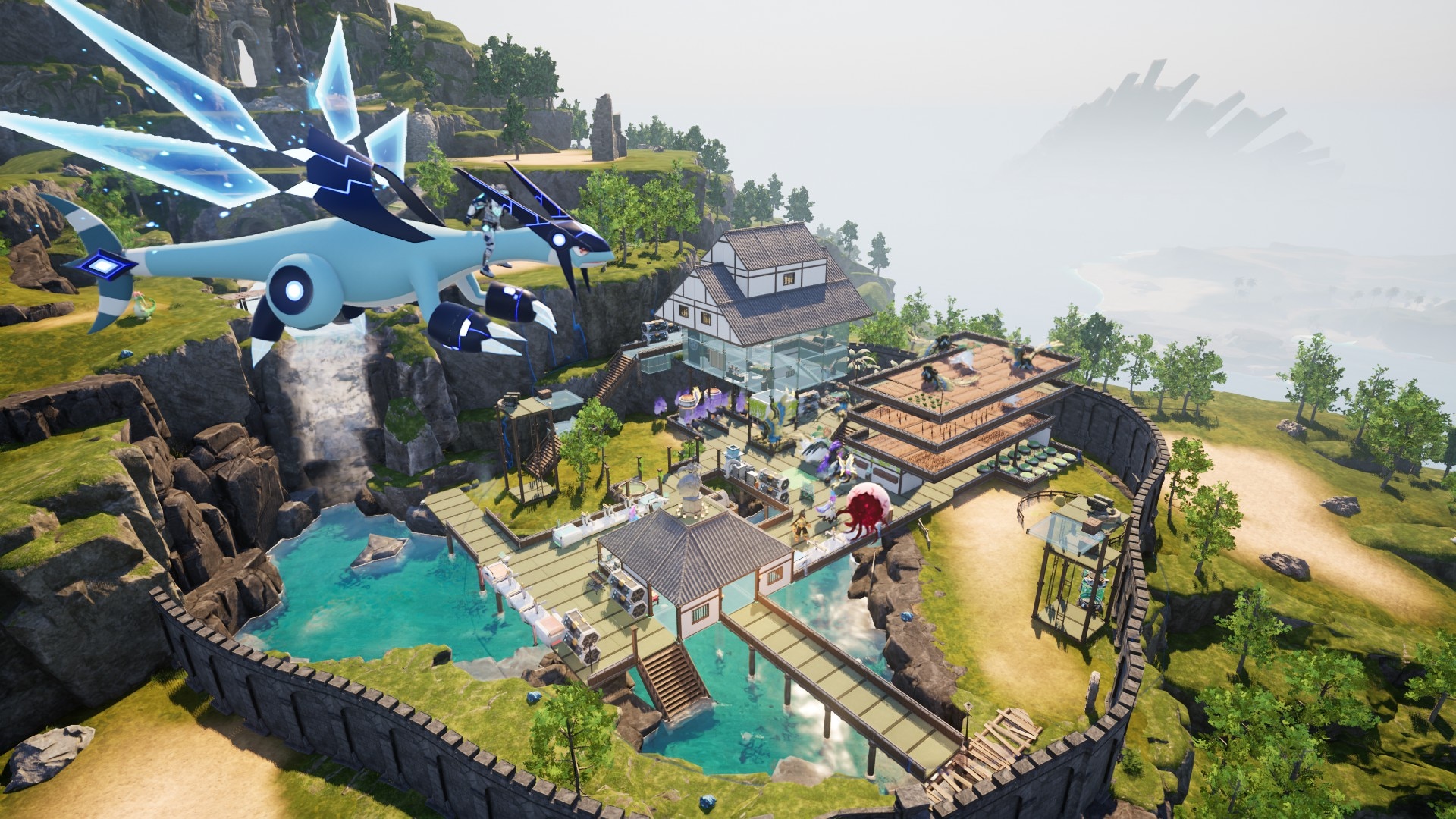
Pocketpair has already made several important gameplay changes that directly affect the features at the heart of the lawsuit. The original method of summoning Pals by throwing Pal Spheres has been changed, and the gliding system has also been redesigned. Instead of relying on Pals for gliding in the same way as before, players now use a dedicated glider.
The developer has been open about the reason behind these adjustments. Pocketpair said the changes were made to prevent disruption to development and distribution while the lawsuit continues. In other words, the studio appears to be protecting Palworld’s future by removing or altering mechanics that could become legal sticking points.
That raises a key question: if the disputed gameplay features are no longer part of the current version of Palworld, what remains of the lawsuit?
At this stage, Nintendo and The Pokémon Company are mainly pursuing damages related to earlier versions of the game. While that could still result in some financial compensation, the potential payout may be much smaller than many originally expected. More importantly, there is currently no sign that the lawsuit will delay or block Palworld’s planned 1.0 launch on July 10, 2026.
For Pocketpair, that may be the biggest win so far.
Palworld began as an early-access sensation and quickly became one of the most talked-about games in the industry. At first, many people described it simply as a creature-collecting game with guns, but that label only captured part of its appeal. The game found a massive audience by mixing survival crafting, monster collection, open-world exploration, base building, automation, combat, and multiplayer gameplay.
That combination helped Palworld stand out in a crowded market. It offered players something familiar but also different enough to feel fresh. The game’s huge popularity is one of the reasons the lawsuit attracted so much attention, even from people who do not normally follow patent disputes in gaming.
The case has also sparked a wider debate about the role of patents in the video game industry. Some players and developers worry that broad gameplay ideas could become locked behind legal claims, making it harder for studios to build on familiar mechanics or experiment with new variations. Others argue that companies have every right to protect systems and ideas they believe are part of their intellectual property.
The truth is likely more complicated than either side suggests.
Nintendo may have succeeded in pressuring Pocketpair to change certain mechanics, but the larger goal of seriously disrupting Palworld now seems much harder to achieve. The chance of an injunction affecting the current version of the game appears to have weakened, and Palworld continues to move toward its full release with major updates still planned.
The public reaction has also become increasingly difficult for Nintendo. Many online discussions now frame Pocketpair as the smaller studio standing up to one of the most powerful companies in gaming. Whether that view is completely fair or not, it has shaped the conversation around the lawsuit. To many fans, the case looks less like a simple fight over innovation and more like an effort to slow down a competitor that found huge success in a space long associated with Pokémon.
What makes the situation even more notable is that Palworld has not lost momentum during the legal battle. If anything, the lawsuit may have brought even more attention to the game. Legal controversy often fades quickly, but in this case it has kept Palworld in the spotlight while the developer continues preparing for launch.
The case is not over yet. Another court hearing is expected in October, and Nintendo may still win some form of compensation connected to previous versions of Palworld. However, the likelihood of the lawsuit dramatically changing the game’s future now appears much lower than it did when the complaint was first filed.
Palworld is set to leave early access and launch its full 1.0 version globally on July 10, 2026. The game is available on Windows PC, Xbox One, Xbox Series X and S, and PlayStation 5. For now, despite the ongoing legal dispute, Palworld’s road to full release remains firmly on track.


