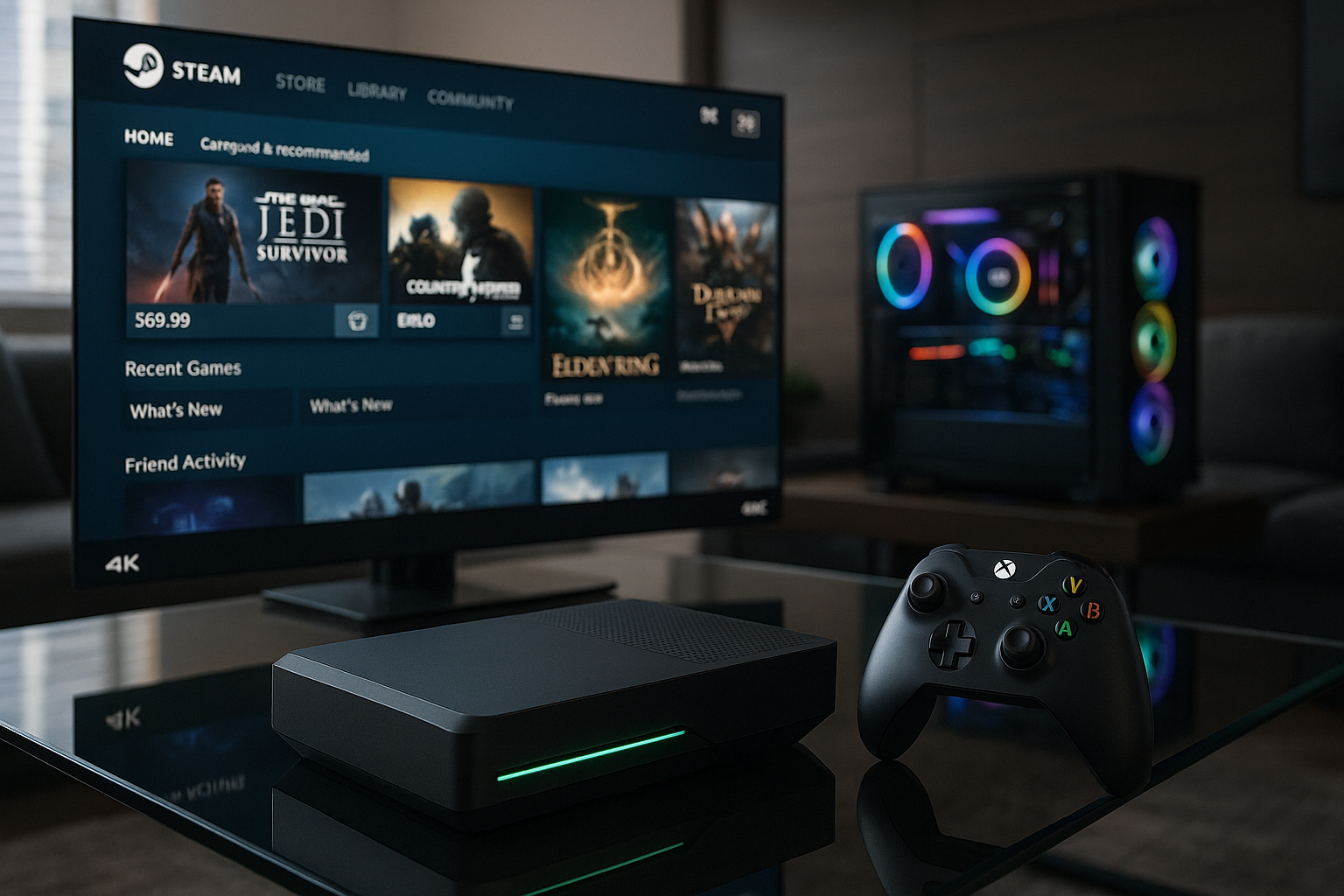
Leak suggests the next Xbox could run Steam and GOG, powered by AMD’s “Magnus” APU and a virtual machine layer. That openness could be great for players—but it might also push the price of the console higher.
Microsoft’s next-generation Xbox may be heading in a bold new direction. Building on mid-2024 chatter that the platform could become more open, new details shared by hardware leaker KeplerL2 on the NeoGAF forum point to support for PC game stores such as Steam and GOG. If accurate, this would further blur the line between consoles and PCs, giving Xbox owners access to vast PC libraries without leaving the living room.
At the heart of the rumor is AMD’s upcoming “Magnus” APU, reportedly designed to power multiple Xbox-branded devices—from traditional consoles to PC-style systems. The console version is said to retain full backwards compatibility with older Xbox titles, while PC store support would come via a virtual machine setup that runs Steam and GOG games on the hardware.
The biggest hurdle may not be technical or legal—it’s financial. Console makers typically take a 30% cut of software sales through their own stores, a margin that helps offset slim or negative profits on hardware. If players buy games on Steam or GOG instead, that revenue would bypass Microsoft. To make up the difference, the company could need to charge more for the console itself. In a worst-case scenario floated by the leaker, the new Xbox might even land at nearly twice the price of Sony’s PlayStation 6, though that figure is speculative and unconfirmed.
The community reaction has been lively. A virtualization approach seems plausible to many, but there’s understandable skepticism about whether Microsoft would sacrifice its traditional platform margins. Still, an open Xbox with access to established PC storefronts would be a seismic shift, potentially delivering a broader catalog and greater flexibility for players.
Key questions remain unanswered, including how account integration, performance, anti-cheat, updates, and customer support would be handled across ecosystems. Until Microsoft shares official details, treat these reports as early signals of where the next Xbox could be headed rather than firm plans.
If the leak proves true, the next Xbox could redefine what a console can be—part traditional gaming box, part PC gateway—while forcing a rethink of how console hardware is priced in a world where software sales don’t all flow through a single store.