New NVIDIA RTX GPU Unlock Tool Boosts AI Performance on RTX 30 and RTX 40 Graphics Cards
A new GPU unlock tool is drawing major attention in the AI and PC hardware community after users reported large performance gains on NVIDIA GeForce RTX 30 series graphics cards, with early signs that some RTX 40 series GPUs may also benefit. The tool, known as Zagita, is designed to unlock higher BF16 and FP16 compute throughput on Ampere-based GPUs, making older gaming cards much more attractive for AI inference, LLM workloads, and compute-heavy tasks.
What makes this development especially interesting is that it does not require flashing the graphics card BIOS, modifying the hardware, or repeatedly patching NVIDIA drivers after every update. Instead, the tool works as a Linux kernel module that runs before the NVIDIA driver binds to the GPU. This allows it to apply the unlock early in the boot process while leaving the official driver untouched.
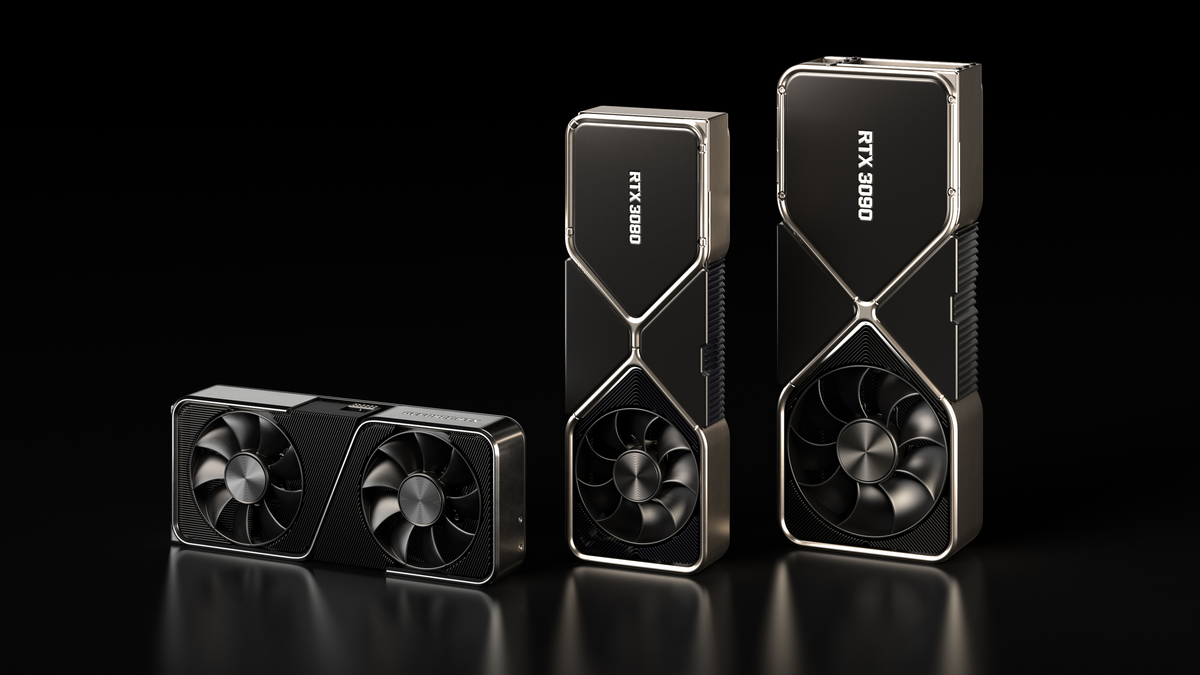
The result is a major boost in AI compute performance for several RTX 30 series GPUs, especially cards based on GA102, GA103, GA104, and GA106 chips. These include popular models such as the GeForce RTX 3090 Ti, RTX 3090, RTX 3080, RTX 3070, and RTX 3060.
During the cryptocurrency mining boom, NVIDIA’s GeForce RTX 30 series cards were known for having certain performance restrictions, while the company also offered mining-focused CMP cards. Modders previously found ways to improve mining-related performance, but broader compute limitations remained in place. Zagita appears to address a different part of the equation by improving BF16 and FP16 instruction issue rates, bringing some consumer RTX 30 cards closer to their professional counterparts in specific workloads.
The tool uses a low-level approach that combines earlier unlock techniques with pre-driver timing. It writes performance selector values before the standard NVIDIA driver takes control of the card, then performs a function-level reset. Because the official driver remains unmodified, users do not need to redo the process manually each time a new driver version is released.
In practical terms, the unlock can double the issuing rate for FP16 and BF16 FMA operations into FP32 paths on supported Ampere GPUs. For AI users, that can translate into much higher throughput in workloads that rely heavily on these formats.
The reported performance gains are significant. On the GeForce RTX 3090 Ti, BF16 performance increased from around 87.5 TFLOPS to approximately 157 TFLOPS in dense GEMM testing. TF32 performance also rose sharply, going from about 42.6 TFLOPS to 82.6 TFLOPS. FP16 performance improved as well, with one test showing an increase from roughly 87.5 TFLOPS to 118.4 TFLOPS.
The GeForce RTX 3080 10 GB also saw a large uplift. Reports show FP16 performance climbing from around 65 TFLOPS to roughly 113 TFLOPS under stock 320W conditions. In separate testing, the RTX 3080 delivered around 59.6 TFLOPS in FP16 and 63 TFLOPS in BF16 before the unlock. After applying the unlock, cold-boot results reached about 100.3 TFLOPS in FP16 and 105.9 TFLOPS in BF16. Warm reboot results were slightly lower but still much faster than stock, reaching around 89.5 TFLOPS in FP16 and 95.1 TFLOPS in BF16.
For AI large language model workloads, users are reporting meaningful real-world improvements rather than just synthetic benchmark gains. Long-context prefill performance reportedly improved by 33% to 36%, while time-to-first-token latency dropped by around 25%. Decode performance does not appear to change much, which makes sense because not every stage of an LLM workload is limited by the same type of compute throughput.
Reported gains vary depending on the GPU model. The RTX 3090 Ti has shown BF16 GEMM gains of roughly 68% to 80%. The RTX 3090 has shown gains ranging from about 25% to 67%. The RTX 3080 10 GB has reportedly improved by around 70% to 73%, while a memory-upgraded RTX 3080 20 GB saw gains closer to 56% to 59%. The RTX 3070 appears to benefit strongly as well, with reported improvements of 73% to 81%. The RTX 3060 12 GB has also been reported to gain around 80%.
Not every card behaves the same way. One RTX 3080 Ti 20 GB OEM model reportedly completed the unlock process, but BF16 performance remained at half rate. GA103-based cards have not yet been widely tested, so results for those GPUs remain unclear.
At the moment, Zagita is available for Linux only. Windows support is not currently available through this tool, although other low-level approaches have reportedly worked in limited cases. Users should also remember that this is an unofficial modification. Anyone attempting it should understand the risks, monitor power and thermals carefully, and verify that their specific GPU model is supported.
Interestingly, the excitement is not limited to RTX 30 series GPUs. Some early user reports suggest that RTX 40 series cards may also see Tensor Core throughput improvements under certain conditions. If that proves consistent, it could make newer Ada Lovelace GPUs even more attractive for AI workloads. However, RTX 30 series cards appear to be the biggest winners so far because they are widely available, offer strong VRAM options, and are already popular among AI hobbyists.
This unlock arrives at a time when older consumer GPUs are becoming increasingly useful for local AI. The RTX 3090, in particular, has gained a reputation as one of the best used GPUs for AI because it offers 24 GB of VRAM, strong memory bandwidth, and broad software support. With tools that improve BF16 and FP16 throughput, its value for local LLM inference and fine-tuning becomes even stronger.
Separate optimization work is also helping older GPUs achieve better AI performance. In one reported case, Qwen3.8-27B reached around 381 tokens per second on a single RTX 3090 with 24 GB of VRAM. The same setup reportedly started at around 82 tokens per second before optimization, meaning performance improved by about 4.6 times. That gain was achieved through software-side improvements such as optimized multi-token prediction, DFlash2 with context lookup, and improved lookup verification.
This broader trend is clear: AI workloads are becoming more efficient, quantization is improving, and consumer GPUs are being pushed much further than many expected. Large models that once seemed practical only on enterprise hardware are now being compressed and optimized to run on high-end consumer cards, sometimes even on GPUs with far less VRAM.
The downside is price. As AI users discover that older RTX 30 series cards can deliver much stronger compute performance, demand for used GPUs is rising quickly. The GeForce RTX 3090 24 GB, which had been selling for around $1,000 in some markets, has reportedly climbed past $2,000 in certain listings. The RTX 3090 Ti is moving closer to the $3,000 range, while RTX 3080 10 GB and 12 GB models are appearing around $900 to $1,100 in some second-hand marketplaces.
That is good news for sellers, but not so good for gamers hoping to buy an affordable used graphics card. Ampere GPUs were already attractive for gaming, rendering, and AI experimentation. Now, with unlock tools and model optimizations giving these cards a second life as budget AI accelerators, competition for used RTX 30 hardware is becoming much more intense.
The arrival of this RTX GPU unlock tool could be an important moment for local AI enthusiasts. By unlocking higher BF16 and FP16 performance without hardware modification or BIOS flashing, it makes several NVIDIA RTX 30 series cards far more capable for LLM inference, fine-tuning, and compute workloads. The biggest beneficiaries appear to be GPUs like the RTX 3090 Ti, RTX 3090, RTX 3080, RTX 3070, and RTX 3060.
For AI builders, this is an exciting development that could extend the life of existing hardware and reduce the need for expensive professional GPUs. For gamers, however, it may make the used GPU market even more expensive as more buyers chase the same cards for artificial intelligence workloads rather than gaming alone.