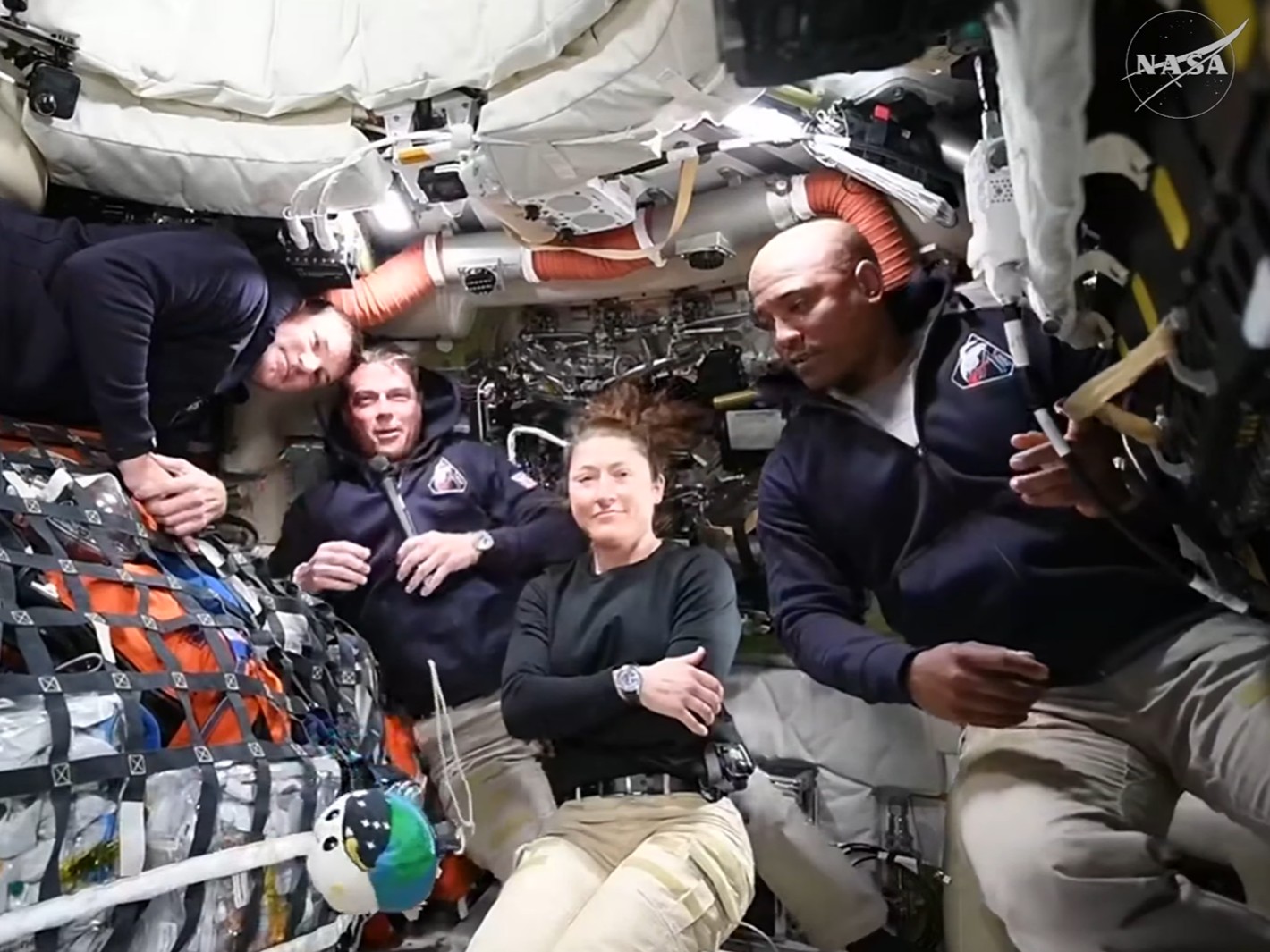
NASA’s Artemis II mission is pushing farther into deep space on the road to the Moon, and a recent mission status update offered a reminder that even the most advanced spacecraft can run into the same kind of small, fixable problems we see on Earth. The good news: every issue mentioned was handled quickly, and none of them threatened the mission.
One of the first hiccups involved the capsule’s sanitation system. Teams found that the water level was too low, which caused the pumps to shut down as a protective measure. It was the kind of straightforward technical snag that can happen in everyday systems, just in a far more unusual location.
Later, shortly before a key engine burn to head into lunar orbit, a leak alarm sounded. That understandably gets attention in space, but this one turned out to be a false alarm. A misaligned fan interfered with a pressure sensor, leading to incorrect readings. Once the root cause was identified, the situation was resolved.
The most relatable problem, however, had nothing to do with propulsion, life support, or navigation. It was a classic software headache—this time involving Microsoft Outlook on Commander Reid Wiseman’s Microsoft Surface Pro. Two separate instances of Outlook were running, and neither was behaving properly.
Mission Control in Houston jumped in like an experienced IT help desk, using a remote connection to troubleshoot the device. Because Orion is much farther from Earth than the International Space Station, this may have been one of the longest-distance Remote Desktop-style support sessions ever attempted. After roughly an hour, the ground team fixed the issue by reloading files within Outlook. Even though the app showed an “offline” status, it didn’t interfere with any technical or operational work happening aboard the spacecraft.
This moment also highlights a practical approach NASA continues to embrace: using standard commercial devices for everyday tasks in space. Tablets with stylus input have a long history in human spaceflight because they’re easier to operate, especially when astronauts are dealing with bulky gear and demanding workflows. Over time, Microsoft Surface devices have become a common choice, although other consumer tablets have also been considered.
These devices fall into the category of COTS, or “commercial off-the-shelf,” meaning they’re not exotic, custom-built computers made only for space missions. They’re used for routine needs like scheduling, reference material, and internal communication. Importantly, they are not the same as the mission-critical flight systems, which run on separate, radiation-hardened hardware designed specifically to keep the spacecraft safe and functioning in the harsh environment beyond Earth.
Beyond convenience and cost, there’s another reason familiar hardware and software matter on a lunar mission: human performance. Astronauts already have to master a huge number of complex procedures, and deep-space missions add stress, fatigue, and high stakes. Using a familiar software environment can reduce cognitive load, helping the crew stay efficient and focused when it matters most.
In short, Artemis II’s recent minor glitches—from a low-water shutdown to a false leak alarm to an Outlook problem fixed from hundreds of thousands of miles away—show how spaceflight is still a blend of cutting-edge engineering and everyday troubleshooting. And despite those brief hiccups, communication and mission operations remain solid as the journey toward the Moon continues.