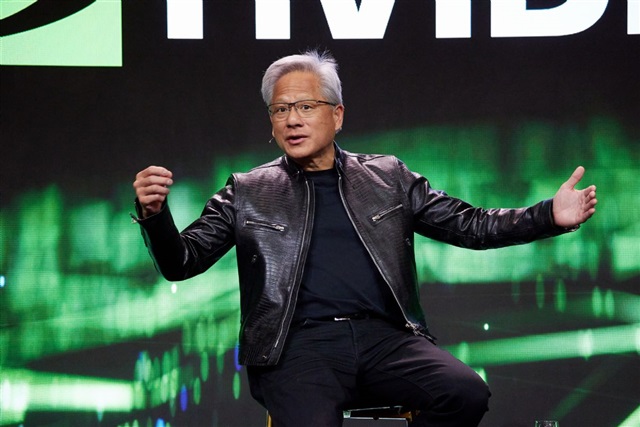
Elon Musk’s vision of building a huge in-house semiconductor manufacturing hub is turning heads again, but Nvidia CEO Jensen Huang is offering a timely reality check: making advanced chips at the cutting edge is one of the toughest industrial challenges on the planet.
The idea of a Musk-led “mega fab” appeals for obvious reasons. As demand for AI hardware accelerates, controlling chip supply can look like a strategic superpower. A large, vertically integrated facility could, in theory, reduce reliance on outside manufacturers, strengthen long-term planning, and help support ambitious AI and computing roadmaps.
Huang’s warning, however, underlines what many industry insiders already know: leading-edge chip manufacturing isn’t just another factory project. It requires extreme precision, deep process expertise, and years of iteration to reach competitive yields. Even well-funded efforts can struggle because the difficulty isn’t only about buying equipment or building clean rooms—it’s about mastering a complex production ecosystem where tiny improvements in process control can mean the difference between a viable high-performance chip and expensive scrap.
Advanced semiconductor production involves specialized tooling, ultra-clean environments, and highly coordinated supply chains for materials and components. It also demands top-tier engineering talent across multiple disciplines, plus a manufacturing culture built around relentless optimization. These are capabilities that the established leaders in chip fabrication have spent decades developing.
Huang’s comments are especially relevant in an era when AI chips and high-performance GPUs are in unprecedented demand. As companies race to secure more compute, the temptation grows to bring more manufacturing in-house. But the message from Nvidia’s chief is clear: the jump from designing world-class chips to producing them at the most advanced nodes is enormous.
For readers tracking the future of AI infrastructure, semiconductor supply, and next-generation computing, this moment highlights a key takeaway: the global chip race isn’t only about bold plans and massive budgets. It’s also about execution at a near-microscopic level—where engineering complexity, manufacturing experience, and time can matter as much as money.
If Musk pursues a large-scale chip manufacturing strategy, the ambition will be hard to ignore. But as Huang points out, turning that ambition into a competitive advanced fab is one of the most difficult industrial feats in modern technology.