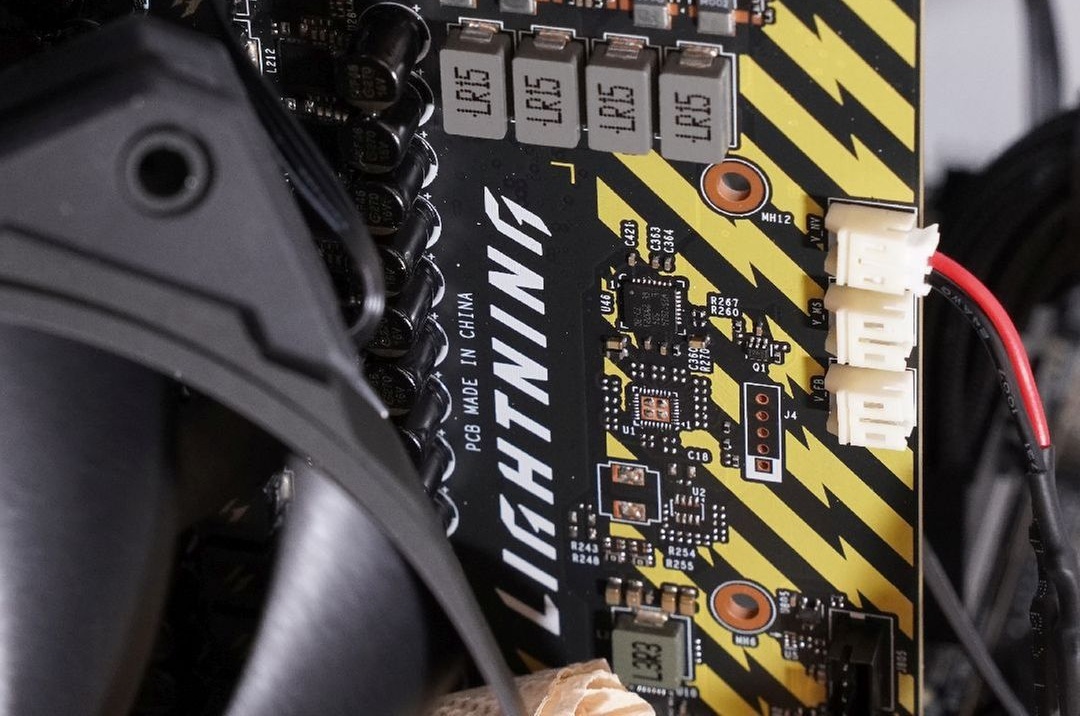
MSI is pushing extreme GPU overclocking to new heights with its upcoming GeForce RTX 5090 Lightning Z, a graphics card that’s already stacking up world-record results across multiple benchmarks ahead of its official debut.
The RTX 5090 Lightning Z has been turning heads since overclockers were recently cleared to show off its PCB design. Built specifically for chasing benchmark records, the board is reportedly equipped with an enormous 40-phase power delivery system and dual 16-pin power connectors—hardware choices that signal MSI is targeting serious, high-current overclocking rather than typical day-to-day gaming configurations.
Early results suggest the card is living up to the hype. After previous record attempts saw an RTX 5090 hit around 3.65 GHz, MSI’s Lightning Z has now pushed even higher, reaching roughly 3742 MHz, or close to 3.75 GHz. That’s nearly 100 MHz beyond the earlier best-known frequency, an impressive jump at this level where every extra MHz gets harder to stabilize.
Memory overclocking is also hitting the current ceiling. The Lightning Z has been shown running GDDR7 memory at 36 Gbps, which appears to be the practical cap for GDDR7 overclocking at the moment. While GPU core frequency records are still being nudged upward, memory speeds seem to be running into a limit that multiple top-tier overclocking cards are now converging on.
One of the most interesting details is that not every RTX 5090 Lightning Z being tested right now is meant for store shelves. According to overclocker Alva Jonathan (also known as Lucky_n00b), MSI is distributing a special “OCER” version directly to overclockers. These units include a non-retail heatsink and are meant for competitive benchmarking rather than traditional use. In fact, the included cooling solution reportedly isn’t designed to handle the card’s full 600W-class thermal load for long periods—which isn’t a concern for this crowd, since extreme sessions typically involve liquid nitrogen (LN2) cooling.
Power limits are also where this card really separates itself. A special XOC BIOS for the OCER version is said to allow up to 2500W, a staggering figure that highlights what MSI is aiming for: maximum headroom for short, record-setting benchmark runs where stability is achieved through extreme cooling and tuned voltage rather than conventional efficiency.
With multiple overclockers already posting standout benchmark scores, the MSI GeForce RTX 5090 Lightning Z is shaping up to be one of the most purpose-built overclocking GPUs in recent memory. MSI is expected to officially launch the RTX 5090 Lightning Z at CES 2026, where we should see the final retail design and learn how much of this extreme DNA makes it into the version that normal buyers can actually purchase.