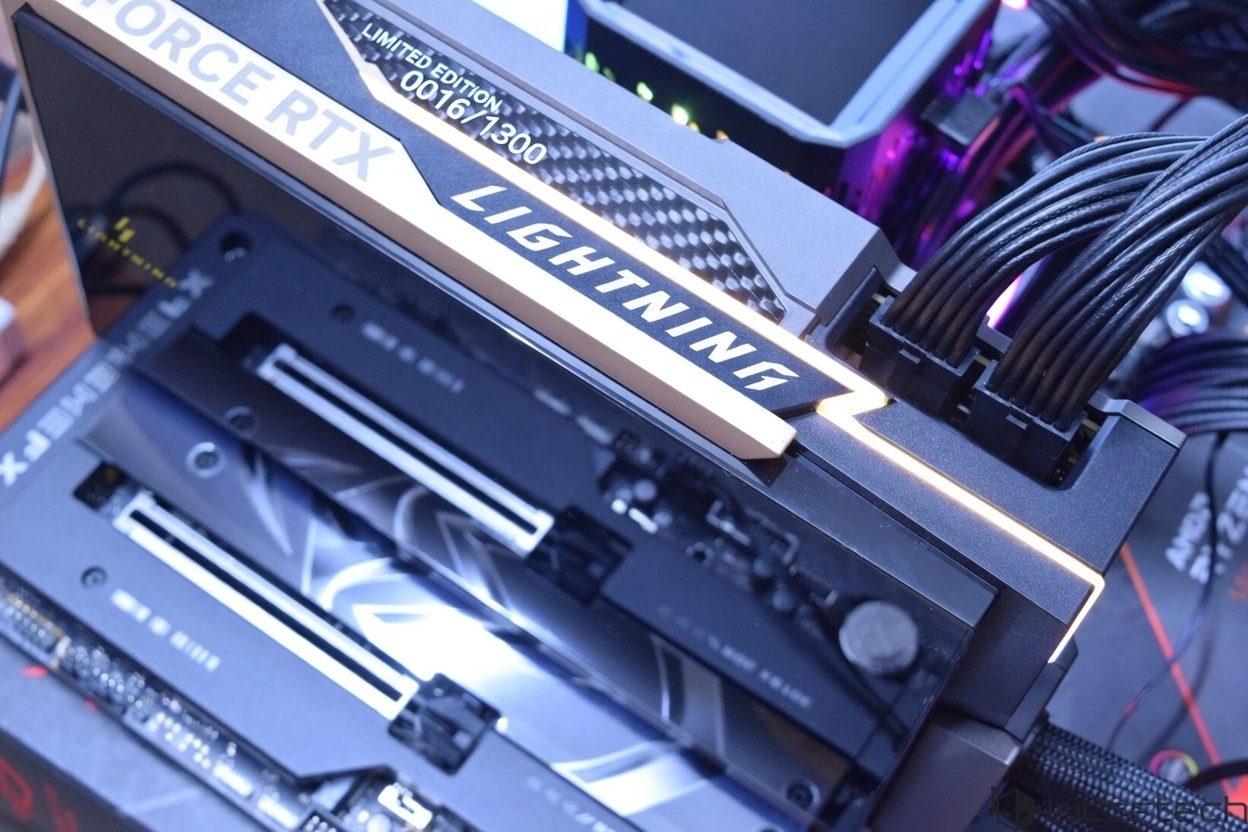
MSI is pushing NVIDIA’s Blackwell-based flagship even further with a showpiece built for extreme enthusiasts: the MSI GeForce RTX 5090 Lightning Z. Expected around February 2026 and priced at $6000 or more, this ultra-premium custom graphics card is designed to take everything the GeForce RTX 5090 is known for and crank it up with record-focused hardware, oversized cooling, and a tightly limited production run.
NVIDIA introduced the GeForce RTX 5090 in January last year, positioning it as the new peak of gaming and creator GPU performance. Along with raw horsepower, the Blackwell generation brought a heavy focus on AI-driven graphics—features meant to raise frame rates and image quality while making advanced rendering techniques more practical in real-world games. The RTX 5090 platform supports modern AI upgrades such as Neural Rendering, Neural Shaders, DLSS 4, and DLSS MFG. Since launch, the software stack has continued to mature, with updates mentioned as DLSS 4.5 and MFG6X modes aimed at delivering cleaner visuals and smoother gameplay.
While NVIDIA’s own Founders Edition set the baseline, the most dramatic RTX 5090 builds are arriving through board partners. Unveiled as part of the latest wave of custom designs shown at CES 2026, MSI’s Lightning Z appears to be one of the most performance-focused RTX 5090 variants yet—especially for users who care about top-end thermals, stability under heavy load, and overclocking headroom.
The Lightning name has long been associated with MSI’s no-compromise approach, and the RTX 5090 Lightning Z leans hard into that identity. This is a limited-release model with only 1300 units planned in total, making it as much a collector-grade product as it is a performance tool. It also arrives in a market where even standard RTX 5090 models have already climbed well beyond typical flagship pricing, with mention of regular cards reaching $5000 in some cases—so the Lightning Z is clearly aimed at buyers who want the absolute top tier, regardless of cost.
On the hardware side, MSI goes “big” with an AIO cooling implementation and a premium PCB that’s already been associated with multiple overclocking world records. The goal is straightforward: keep temperatures under control and power delivery stable so the GPU can sustain higher clocks and push harder than reference designs. It’s the kind of configuration meant for enthusiasts who benchmark, tune, and chase every last ounce of performance rather than simply installing a card and leaving it at stock settings.
Underneath, the Blackwell GPU architecture is built to handle traditional graphics workloads while expanding what GPUs can do with AI acceleration. Key platform highlights include a new Streaming Multiprocessor design, 5th Gen Tensor Cores for AI workloads, and 4th Gen RT Cores to accelerate ray tracing. Blackwell also incorporates an AI Management Processor, introduces Max-Q modes that span desktops and laptops, and moves to a GDDR7 high-performance memory subsystem. For display and media tasks, it adds a DP2.1b display engine along with next-generation NVENC/NVDEC media blocks.
In the broader lineup, the RTX 5090 continues to occupy the very top “Titan-tier” position in NVIDIA’s stack, sitting above the rest of the RTX 50-series. Historically, this tier represents the fastest consumer-focused GPU offerings and carries corresponding pricing expectations.
With the MSI GeForce RTX 5090 Lightning Z, the pitch is clear: take the fastest Blackwell GPU, pair it with elite-grade cooling and a record-ready board, then deliver a limited-edition flagship built for the most demanding gamers, creators, and overclockers. The real intrigue is how far it can stretch beyond the Founders Edition in sustained clocks, thermals, and peak benchmark numbers—exactly the kind of head-to-head that extreme GPU buyers care about most.