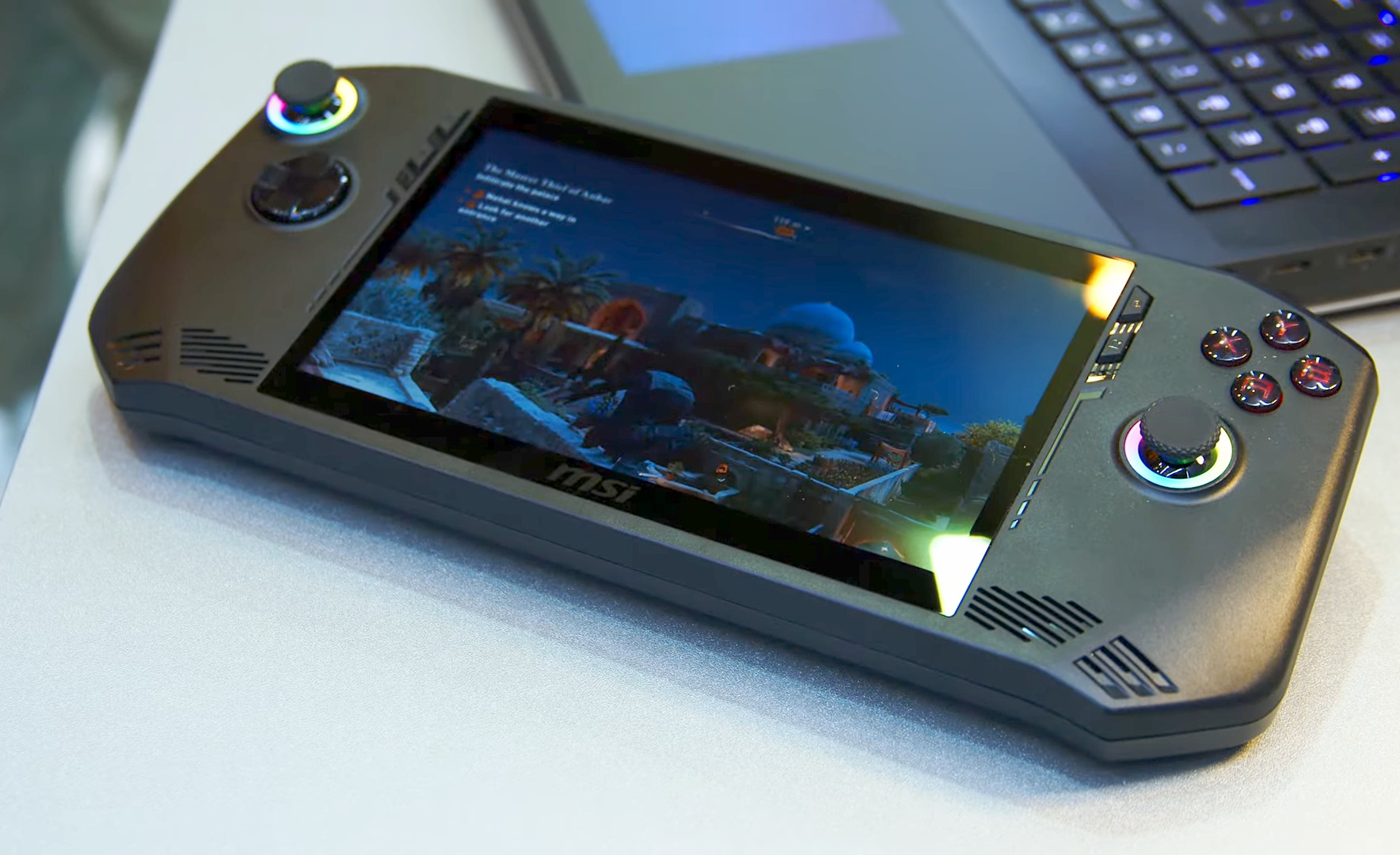
The anticipation for MSI’s entry into the handheld Windows gaming PC market reached a peak with the impending launch of the MSI Claw, particularly because of its supposed inclusion of a variable refresh rate (VRR) display. This feature, aimed at enhancing gaming experiences by smoothing out gameplay hitches, appeared to bolster the device’s prospects, especially given its use of the Intel Arc 8-Core iGPU within the Core Ultra 7 155H.
However, recent developments have clarified that the VRR display of the MSI Claw A1M might not be as dynamic as initially thought. Contrary to expectations of an adaptive refresh rate like AMD’s FreeSync or Nvidia’s G-Sync, the MSI Claw A1M will instead offer preset refresh rate options for users to choose from – at 48 Hz, 60 Hz, and 120 Hz. This selection, while providing a variety of options, doesn’t match the seamless, tear-free visual experience delivered by true VRR technology, such as that offered by the Asus ROG Ally, which smartly varies refresh rates between 48 Hz and 120 Hz to align with the game’s performance.
To its defense, MSI has represented that the Claw does, in fact, feature variable refresh rate capabilities, though this seems to be a broader interpretation of the term. The distinction is notable given that the Asus ROG Ally is the only current handheld gaming PC that includes authenticated VRR technology, giving it a clear edge in the ability to deliver a consistently smooth display performance.
Despite missing out on true VRR, the MSI Claw A1M is not altogether compromised in delivering a quality gaming experience. The handheld can still harness frame rate limiters and other technological aids like Intel’s XeSS, Nvidia DLSS, and AMD FidelityFX Super Resolution to achieve a desirable gaming quality even without the natural adaptability of a dynamic display refresh rate.
Gamers looking for alternatives in the handheld gaming market might also consider the Lenovo Legion Go, which is available on Amazon and offers expanded gaming device options.
The handheld gaming PC segment continues to grow and evolve with these dynamic offerings, presenting an ever-changing landscape for gamers who prioritize portability and performance. As technologies like VRR become more commonplace, consumers will be poised to expect more from these handheld devices, naturally influencing the direction of future product innovations and market competition.


