MSI Unlocks Faster CXMT DDR5 Memory Support on China-Specific AM5 Motherboards
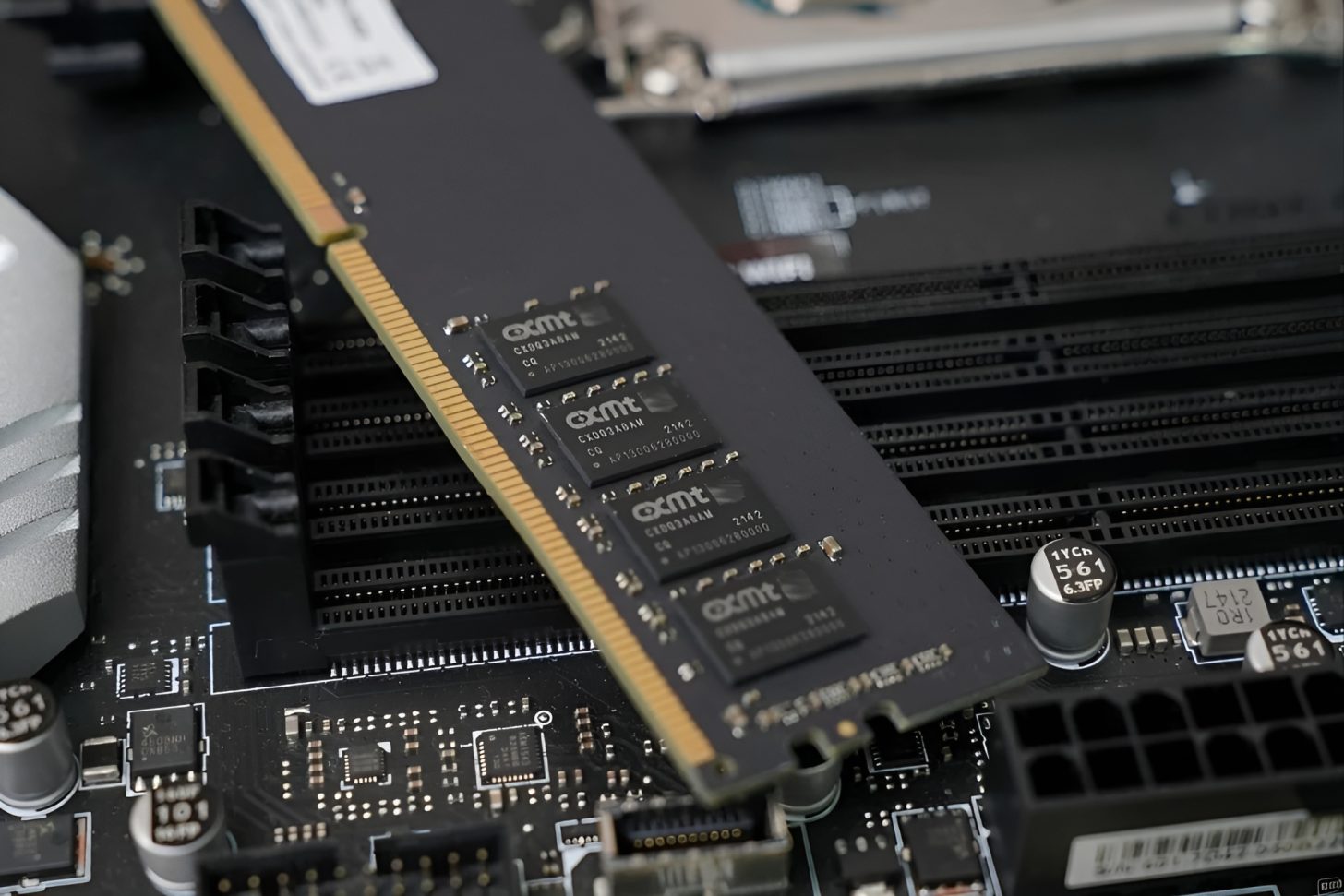
MSI has rolled out a new BIOS update for its China-focused AM5 motherboards, bringing expanded support for CXMT DDR5 memory and pushing memory speeds as high as DDR5-8200. The update is an important step for China’s growing domestic memory industry, as it allows locally produced DRAM modules to run at far higher speeds on AMD AM5 platforms than before.
CXMT, short for ChangXin Memory Technologies, has become one of China’s most important DRAM manufacturers. As the country continues to reduce its dependence on overseas memory suppliers, domestic brands are gaining more attention, especially in the PC hardware market. While CXMT memory has not yet become widely available in global retail channels, it is increasingly being used inside China and in certain China-specific systems that may appear in other markets.
The main advantage of CXMT right now is not necessarily lower pricing, but supply availability. With memory demand remaining strong and major global suppliers often focusing on high-margin products, China’s push toward local DRAM production is becoming more significant.
With its latest BIOS update, MSI is among the first major motherboard makers to improve support for CXMT DDR5 modules on AM5 motherboards. Before this update, domestically produced DDR5 memory on these platforms was generally limited to around 6800 MT/s. Thanks to the new BIOS, which includes updated AMD AGESA firmware, MSI boards can now support much higher memory frequencies when paired with compatible CXMT-based modules.
MSI demonstrated the update using its MAG B850MPOWER motherboard, a compact and budget-friendly AM5 board built with memory overclocking in mind. Despite being positioned as an affordable option, the board is designed for users who want to tune RAM performance and push DDR5 kits beyond standard speeds.
In testing, MSI verified CXMT DDR5 memory running at more than 8000 MT/s, marking a 20.5% improvement compared with the previous speed ceiling. For users interested in AMD Ryzen performance, especially on memory-sensitive workloads, this could be a meaningful upgrade.
According to MSI’s testing, dual-slot AM5 motherboards can now achieve stable boot and full memory stress-test stability with CXMT 16Gb memory running at DDR5-8000. The company also validated CXMT 24Gb memory at DDR5-8200, with stable operation through strict burn-in testing and MemTest coverage exceeding 100%.
The update also benefits mainstream AM5 motherboards equipped with four memory slots. MSI says these boards can now reach up to DDR5-7200 when using four memory sticks, raising the frequency ceiling for more traditional desktop configurations.
In one demonstration, MSI used a 32 GB Lexar DDR5 memory kit built with CXMT 16Gb ICs. The kit successfully reached 8000 MT/s with CL40-52-52-126-144 timings at 1.40V. It completed RunMemtestPro stability testing with an average coverage of 101.63%, showing that the configuration was not just able to boot, but also stable under load. The modules also support both Intel XMP 3.0 and AMD EXPO 1.1 profiles, improving compatibility across different platforms.
A second test used a 48 GB DDR5 kit from Kingbank Technology, originally rated for 6000 MT/s. MSI overclocked the kit to 8200 MT/s with CL40-52-52-126-200 timings at just 1.25V. The system passed stability testing, further proving that CXMT-based DDR5 modules are becoming more capable on modern AM5 hardware.
This BIOS update is notable because memory compatibility and tuning are crucial for AMD Ryzen systems. AM5 motherboards rely heavily on BIOS optimization, AGESA improvements, and memory training updates to support higher DDR5 frequencies. By enabling faster CXMT DDR5 speeds, MSI is giving users in China more flexibility when building Ryzen-based PCs with locally produced memory.
It also signals a broader shift in the PC hardware market. China is investing heavily in domestic semiconductor production, and memory is one of the key areas of focus. CXMT is expected to continue expanding production capacity in the coming years, which could make its DDR5 products more common in prebuilt systems, retail memory kits, and possibly wider international markets in the future.
For now, the new MSI AM5 BIOS is especially important for users in China who want to pair AMD Ryzen processors with domestic DDR5 memory without sacrificing high-speed performance. With support for DDR5-8000, DDR5-8200, and up to DDR5-7200 on four-slot boards, MSI’s update gives CXMT memory a stronger position in the enthusiast and mainstream PC segments.
As more motherboard vendors optimize their platforms for domestically produced DRAM, CXMT DDR5 memory could become a more competitive choice for builders looking for reliable supply, improved compatibility, and higher overclocking potential on AMD AM5 systems.