Corsair DDR5 Memory Spotted Using CXMT DRAM as Chinese Memory Makers Enter Global PC Market
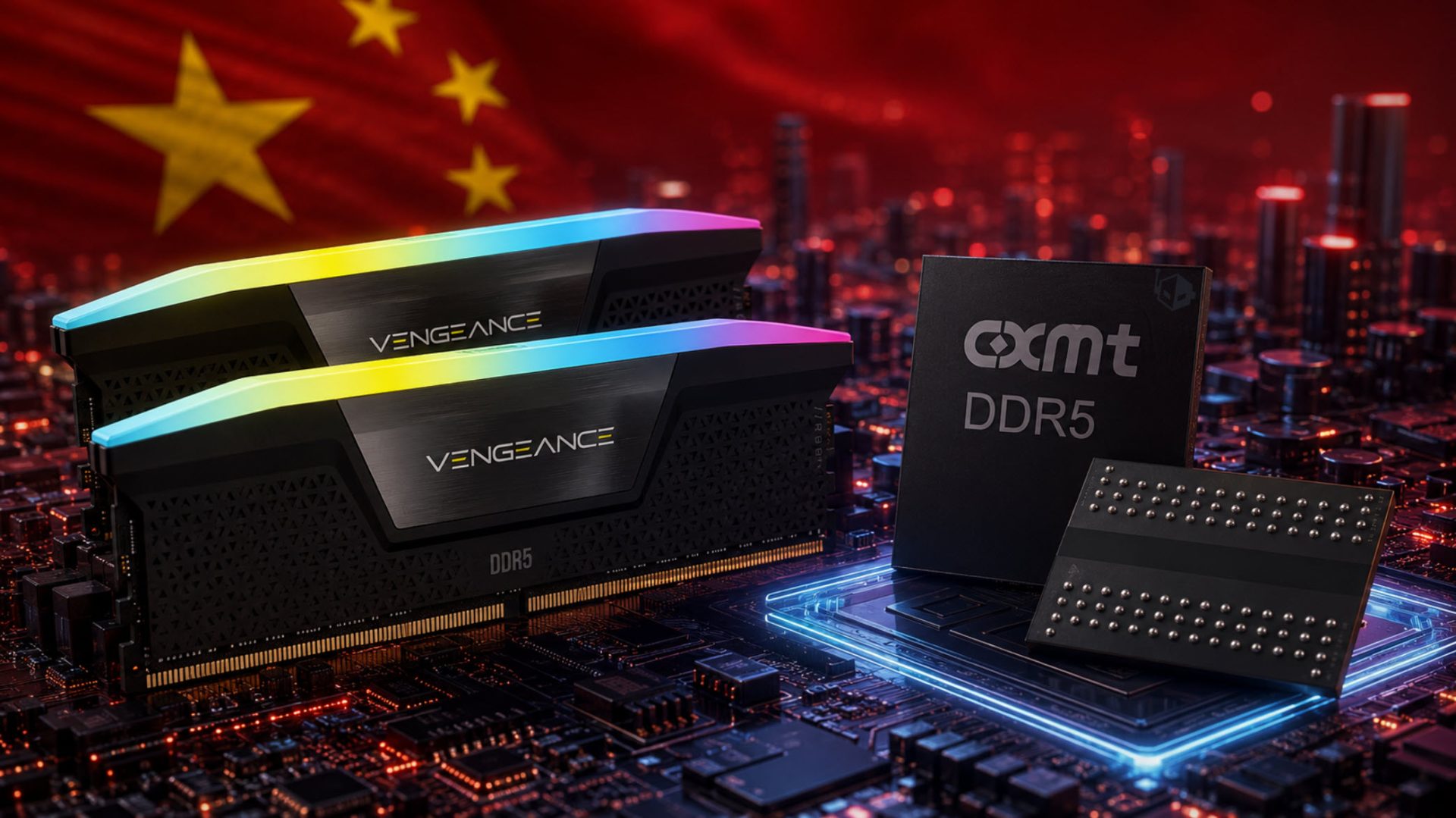
Chinese memory chips are beginning to appear in products from major global PC hardware brands, signaling a possible shift in the DDR5 supply chain. A Corsair DDR5 memory module has reportedly been spotted using DRAM from ChangXin Memory Technologies, better known as CXMT, one of China’s leading memory manufacturers.
The discovery comes at a time when the global memory market is under pressure. Demand for AI hardware has pushed major DRAM suppliers such as Samsung, SK Hynix, and Micron to prioritize high-margin products like HBM and advanced LPDDR memory. As a result, traditional PC memory supply has tightened, leaving system builders, OEMs, and component brands looking for alternative sources.
This is where CXMT appears to be gaining momentum.
Corsair DDR5 Module Reportedly Uses CXMT Memory
Images shared online show a Corsair DDR5 memory module equipped with CXMT DRAM chips. Corsair is one of the most recognized names in the PC components market, especially among gamers, enthusiasts, and custom PC builders. Its memory products are widely used across gaming desktops, workstations, and high-performance consumer PCs.
The module in question is listed as part of Corsair’s Vengeance Gaming DDR5 lineup. It reportedly features a 16 GB capacity, 6000 MT/s speed, and the product ID “CMK5X16G3E60C36A2.” The memory supports both AMD EXPO and Intel XMP profiles, making it suitable for modern gaming and productivity platforms using DDR5-compatible processors and motherboards.
The module is said to operate within a 1.1V to 1.35V range and carries CL36 timings. That puts it in line with many mainstream DDR5-6000 kits already available on the market using DRAM from established suppliers.
Why Corsair May Be Using CXMT DRAM
The biggest reason appears to be supply pressure. AI demand has changed the priorities of the memory industry. Samsung, SK Hynix, and Micron have shifted a large portion of their output toward AI-focused memory products, especially HBM, which is essential for accelerators and data center GPUs.
This shift has reduced the amount of DRAM available for conventional PC memory modules. For companies that sell DDR5 kits in large volumes, securing a steady supply has become more difficult.
CXMT offers an alternative. The company has been increasing DDR5 production and improving its technology at a rapid pace. Reports suggest that CXMT is already producing DDR5 memory with speeds reaching up to 8000 MT/s, along with 16 Gb and 24 Gb DRAM dies. That makes the company increasingly competitive in the consumer memory space.
Cost may also be a major factor. As Chinese memory manufacturers expand production capacity, they may be able to offer competitive pricing compared to traditional suppliers. For global PC component brands, that could help maintain product availability and control costs during a period of tight supply.
Chinese Memory Makers Are Expanding Fast
CXMT is not the only Chinese company pushing deeper into the memory market. Other local manufacturers are also working to increase DDR5 output, including RDIMM memory designed for servers, workstations, and data center use.
This matters because AI growth is not only affecting consumer PC memory. It is also increasing demand for server-grade memory, enterprise SSDs, and high-capacity modules used in cloud computing and AI training systems. With established memory giants focused heavily on AI and data center customers, Chinese suppliers may find new opportunities in both consumer and enterprise markets.
CXMT and other Chinese memory firms are reportedly expanding wafer output significantly as part of large-scale production growth plans. If these efforts continue, Chinese DRAM could become a more common sight in memory kits sold by well-known global brands.
What This Means for PC Builders
For consumers, the appearance of CXMT DRAM in a Corsair DDR5 module does not automatically mean lower quality. The listed specifications are comparable to many standard DDR5-6000 gaming kits. Support for AMD EXPO and Intel XMP also suggests that these modules are designed to work smoothly with current-generation platforms.
However, PC enthusiasts will likely pay close attention to real-world performance, overclocking potential, stability, and compatibility. Samsung and SK Hynix DRAM have long been popular among users who tune memory settings manually, especially for high-frequency DDR5 builds. CXMT will need to prove that its chips can deliver consistent performance across different systems.
Still, for mainstream users running memory at rated speeds, the impact may be minimal if the modules meet Corsair’s validation standards.
A Turning Point for the DDR5 Market
The use of CXMT DRAM in a Corsair DDR5 memory module could mark an important moment for the global memory industry. For years, the DRAM market has been dominated by Samsung, SK Hynix, and Micron. Now, supply constraints and rising demand from AI are creating space for new players to enter the global PC hardware supply chain.
If shortages continue, more brands may turn to Chinese memory suppliers for DDR5 kits, SSDs, and other components. This could increase competition, improve availability, and potentially put pressure on pricing.
With major technology events approaching, more DDR5 memory modules using Chinese DRAM may appear from familiar PC hardware brands. The trend suggests that CXMT and other Chinese memory makers are no longer limited to domestic markets. They are beginning to play a larger role in the global memory supply chain, and the PC industry is starting to take notice.


