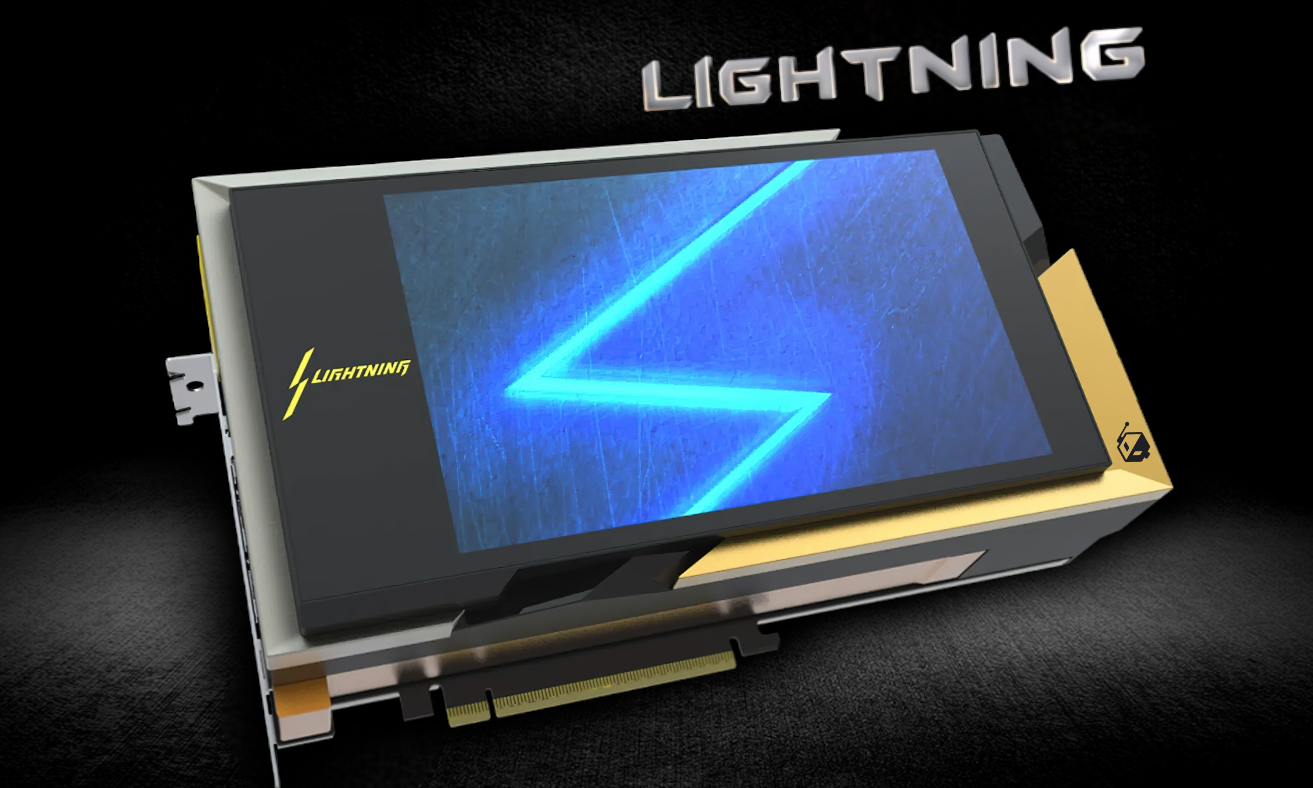
MSI has officially pulled back the curtain on its GeForce RTX 5090 Lightning, a no-compromise flagship graphics card designed for extreme performance, record-chasing overclocks, and next-level cooling. After early glimpses of the PCB and reports of overclockers pushing RTX 5090 frequencies as high as 3.75 GHz, the spotlight is now on the final retail cooler—and it’s built specifically to handle the kind of power this card is intended to draw.
Unlike the earlier Lightning Z OCER units that circulated among overclockers with a non-final heatsink, the retail-ready GeForce RTX 5090 Lightning arrives with a new all-in-one liquid-cooling design that aims to deliver serious thermal headroom in a relatively compact layout. MSI is positioning this model as a co-developed product with NVIDIA, emphasizing stability and consistency even at exceptionally high clocks and power limits.
One of the biggest talking points is power delivery. MSI says the RTX 5090 Lightning uses a reinforced high-power PCB and a premium VRM layout with 40 phases, built to maintain stability under heavy load. The card also introduces a dual-connector setup using two 16-pin power connectors, with MSI quoting support for up to 1600W. For extreme overclocking scenarios, an XOC BIOS is said to enable power limits up to 2500W—clearly aimed at enthusiasts who chase benchmark records rather than everyday gaming efficiency.
Cooling is just as ambitious. MSI’s next-generation liquid architecture uses an integrated full-contact cold plate designed to cover not only the GPU die, but also the memory and other high-power components. The updated pump is described as improving flow dynamics to keep heat moving quickly, feeding a hybrid-density radiator that uses zoned fin spacing to improve heat exchange where it matters most.
MSI also adds airflow assistance with a silent, high-pressure axial fan featuring newly designed aerodynamic blades. The goal is increased static pressure for better cooling performance while keeping noise levels under control—important for a card that can run at extreme wattage.
Aesthetically, the RTX 5090 Lightning sticks to the series’ recognizable black-and-yellow look, but the centerpiece is a massive LCD integrated into the shroud. MSI calls it the world’s first full-surface display on a graphics card, intended for real-time monitoring, system visualizations, and personalization. The company also mentions mobile app support for monitoring and adjusting overclocking presets on the go, reinforcing that this GPU is built for enthusiasts who want constant control over performance tuning.
More official details on the MSI GeForce RTX 5090 Lightning lineup are expected soon, including final specifications, clock profiles, and likely pricing and release timing. If the early frequency records and the headline-grabbing power limits are any indication, this is shaping up to be one of the most talked-about ultra-enthusiast GPUs of CES 2026.


