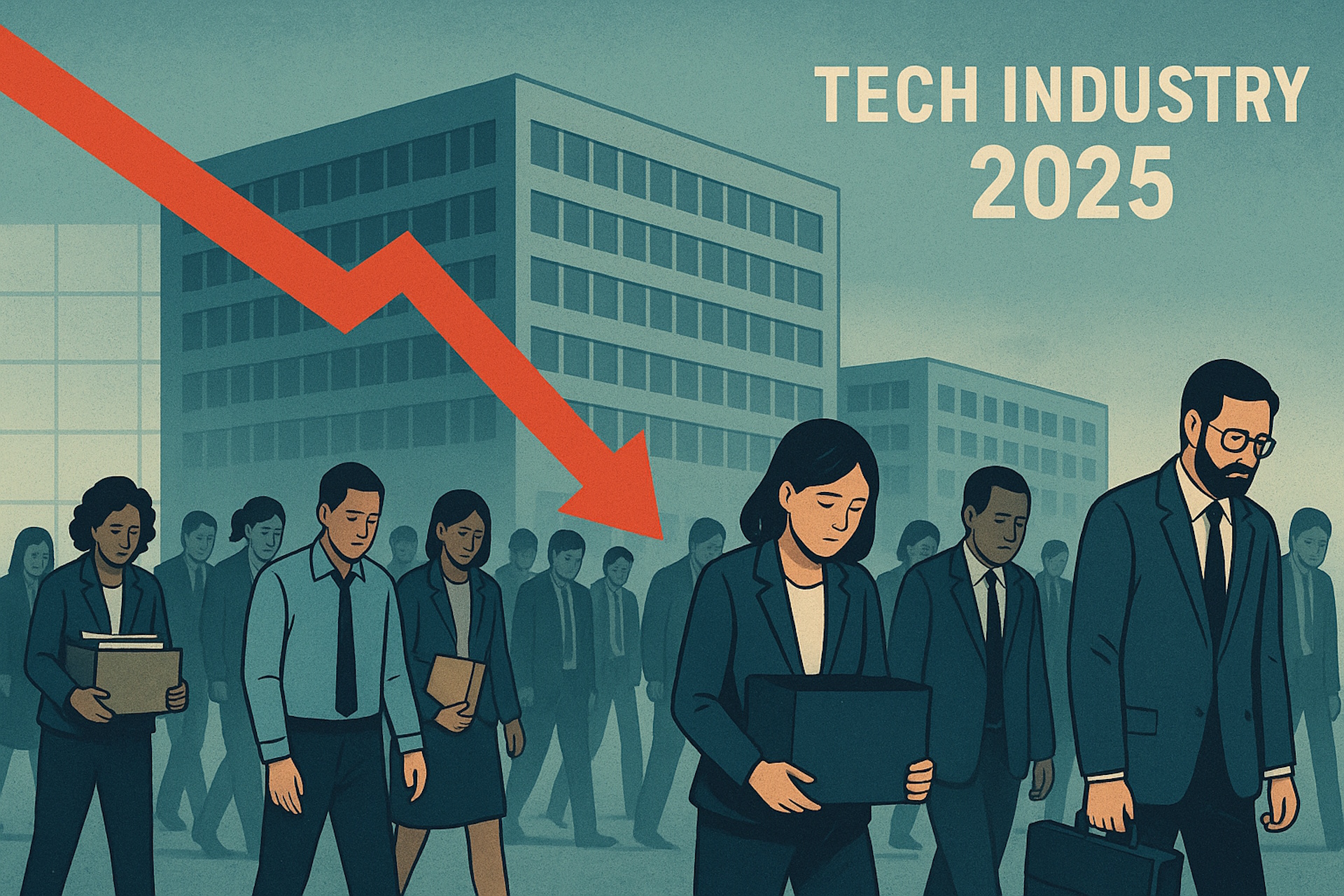
Tech layoffs haven’t let up in 2025. More than 166,000 roles have already been cut across the industry this year, and some of the biggest names in technology are leading the downsizing as they refocus strategies, trim costs, and lean into automation.
At the top of the list is Intel. The chipmaker plans to eliminate around 34,000 jobs in 2025 as it works to streamline operations and reset its long-term direction. The move underscores a major restructuring effort aimed at sharpening competitiveness in a rapidly evolving semiconductor landscape.
Microsoft isn’t far behind. After multiple rounds of job cuts this year—about 6,000 roles in April and another 9,000 in July—estimates point to an even larger total by year’s end. According to RationalFX, the company is on track to reduce at least 19,215 positions in 2025 in pursuit of efficiency and margin discipline.
India’s Tata Consultancy Services ranks third, with an estimated 12,000 employees let go this year. The reductions are tied largely to cost-cutting efforts and the rollout of AI-driven automation across services, signaling a broader industry shift toward technology-enabled productivity.
What’s driving the cuts? While each company has its own playbook, a few themes keep coming up: tighter spending, portfolio realignment, and accelerating adoption of AI tools that change how teams and projects are staffed. Taken together, these trends are reshaping headcount needs and role requirements, even at companies with strong revenue streams.
Key numbers at a glance:
– Intel: about 34,000 jobs slated for reduction in 2025
– Microsoft: at least 19,215 roles expected to be eliminated this year, including 6,000 in April and 9,000 in July
– Tata Consultancy Services: roughly 12,000 layoffs tied to cost controls and AI automation
Why it matters: The scale of 2025’s tech layoffs highlights an industry recalibrating for efficiency and AI-first operations. For employees and job seekers, the shifts point to rising demand for skills in areas that complement automation—data, AI, cloud, security, and product roles centered on measurable impact. For companies, the challenge is executing leaner strategies without losing the innovation edge that drives long-term growth.
The tally will likely continue to evolve as the year progresses. But the message is clear: 2025 is a watershed moment for tech workforce planning, with headcount decisions increasingly shaped by profitability goals and the pace of AI adoption.