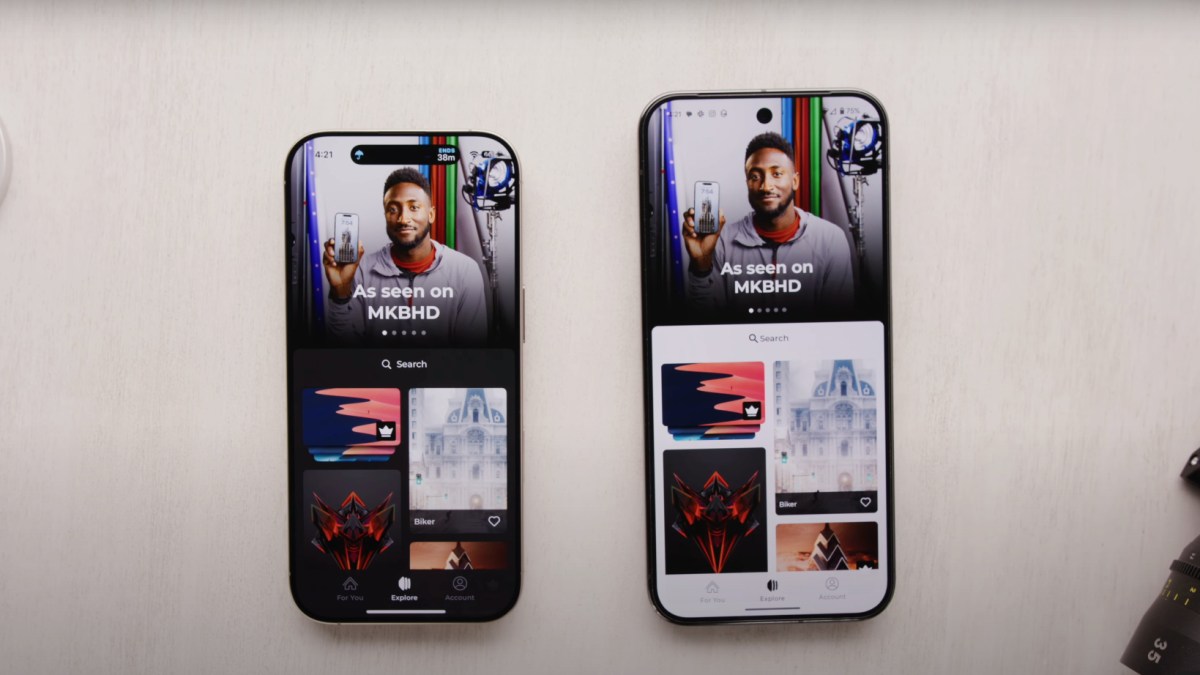
Marques Brownlee, widely known as MKBHD in the tech community, has taken an intriguing new direction. Famous for his meticulous tech reviews, Brownlee is stepping into the realm of app creation. This week, he unveiled an app named Panels, designed for both iOS and Android, aimed at bringing high-quality digital wallpapers to users. However, there’s a twist: to enjoy those high-resolution artworks without ads, users need to shell out either $50 yearly or $12 monthly.
Brownlee’s influence stretches far, with nearly 20 million subscribers on YouTube. His reviews carry significant weight, so much so that he’s been blamed for the downturn of companies like Fisker and Humane after he critiqued their products. However, it’s essential to recognize that Fisker faced serious security issues, and Humane’s Ai Pin had functionality problems despite significant funding. Therefore, it’s more reasonable to attribute these failures to inherent flaws rather than Brownlee’s reviews. Given Brownlee’s sharp insights and high standards, fans anticipated something exceptional when he announced the Panels app.
Panels promises to meet a significant demand. Whenever Brownlee showcases a new device, whether it’s a phone, laptop, or smartwatch, people often notice his eye-catching wallpapers. It’s no surprise that a common Google search phrase is “where does mkbhd get his wallpapers.” The app’s timing is impeccable, aligning with Apple’s latest iOS 18 update, which prioritizes lock screen and home screen customization, spurring interest in sleek, high-resolution wallpapers.
Yet, there’s a catch. While the app can be downloaded for free, viewing high-res images without ads comes at a premium price. Users who opt for the free version can still get wallpapers by watching two 30-second ads per image—a model that seems surprisingly commercialized coming from someone like Brownlee.
Despite this, Panels does have its perks. One standout feature is its support for digital artists. Brownlee has ensured a fair split in earnings—50% of the payment goes to the artist. For instance, if a user purchases a wallpaper for $8 (after Apple’s 30% cut), the artist earns about $2.80. This effort to create a new revenue stream for artists is commendable, especially amidst the rising influence of generative AI, which threatens traditional digital artistry. Brownlee’s reach might indeed help normalize paying for quality digital art and offer artists additional passive income opportunities.
However, another point of concern raised by users involves data privacy. Information on the App Store revealed that Panels could potentially track users’ locations, usage data, and personal identifiers across other apps and websites. Acknowledging these concerns, Brownlee quickly addressed them. He assured users that the app does not intend to request sensitive data like location or internet history. The broad data disclosures, he explained, are a result of ad network recommendations, and steps are being taken to rectify this swiftly.
Moreover, he intends to reduce the frequency of ads in the app’s free version. This move seems aligned with his commitment to user experience, much like his transparent and responsive approach to YouTube critiques.
Although users can still access wallpapers through the free version of Panels, the lower resolution images lose much of their appeal unless enhanced with Apple’s filters. It’s hard to justify a subscription fee comparable to a Spotify membership just for avoiding ads.
Through feedback and continuous improvements, Brownlee is navigating this new venture. “Part of building in public is getting mass feedback immediately, which is pretty dope,” he noted, drawing a parallel to his experience in releasing YouTube content.
Overall, while Panels represents a bold step into app development for Marques Brownlee, its success will ultimately depend on its value proposition to the users and its ability to balance monetization with a satisfying user experience.