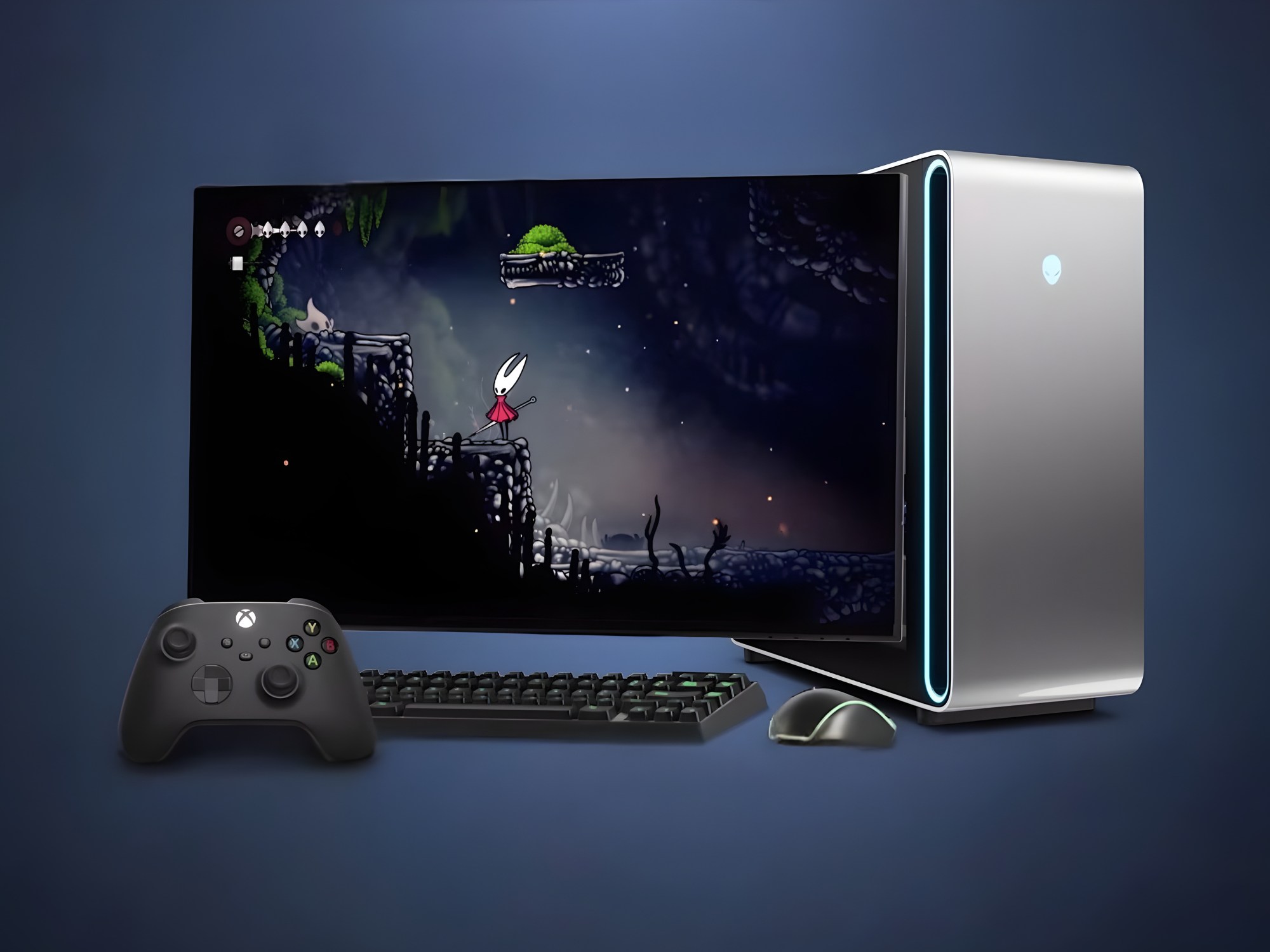
Fresh rumors about Microsoft’s next Xbox are starting to paint a clearer picture of what the company may be building, and the biggest takeaway is this: the future Xbox could look a lot more like a Windows PC than a traditional console.
According to the latest insider chatter, Microsoft is working with AMD on new Xbox hardware that could arrive as early as 2027. What’s still up in the air is the exact form factor. Will it be a classic living-room console designed to sit under a TV, or a hybrid that behaves more like a PC while still offering a console-style experience? The reporting suggests Microsoft is leaning hard into Windows as the foundation, with an interface designed to feel more natural from the couch.
The idea is that the “next Xbox” would run Windows at full power, but with a console-like way to get around. Instead of dropping players into a typical Windows desktop, Microsoft appears to be betting on an immersive full-screen Xbox experience for navigation and day-to-day use. This is not just theory—Microsoft has already been experimenting with an Xbox Full Screen Experience on gaming handhelds, showing how Windows can be shaped into something more console-friendly.
Still, there’s a big gap between “Windows with an Xbox-style overlay” and a seamless console replacement. One of the key pain points is the transition between a full-screen Xbox interface and the traditional Windows desktop. If users feel like they’re constantly bouncing between two worlds, it undercuts the simplicity people expect from a console. That’s why Microsoft is reportedly focusing on major improvements to the Xbox PC app and the overall full-screen experience, aiming to make the switch feel smoother and more unified.
Another major challenge is game compatibility—especially for players who have built libraries on older Xbox consoles. Backward compatibility has become a core expectation in the Xbox ecosystem, and a more PC-like Xbox raises questions about how older console-only games will work. Many Xbox titles already run on PC, but not everything does, and some games can’t be launched locally on a standard Windows machine without using cloud streaming. The report suggests Microsoft is treating this as a priority to solve before the next-generation Xbox arrives.
There are a couple of possible paths here. One option is emulation, which could allow Xbox console games to run on Windows-based hardware. Another possibility is a more hardware-level solution, potentially involving specialized components or system features that bridge the gap between console software and a PC-like platform. Either way, it’s clear Microsoft can’t afford to stumble on compatibility if it wants console players to embrace a Windows-driven Xbox future.
While the next major Xbox console might still be years away, the same information also points to new Xbox hardware showing up sooner—possibly before the end of 2026. One rumored product is a new premium controller that may be called the Elite Series 3. If it launches, one of its headline goals could be reducing latency, especially for streaming scenarios where responsiveness matters most.
There’s also talk of another Xbox-branded OEM device. In other words, Microsoft could partner with a manufacturer to release a desktop-style Xbox PC that looks and feels like a conventional console or compact gaming machine, but is built on a Windows foundation. Even now, enthusiasts can test and experiment with the full-screen Xbox-style experience on desktops and laptops, hinting that Microsoft wants the idea of “Xbox on Windows” to scale across different types of hardware.
If these reports prove accurate, Microsoft’s direction is becoming easier to read: a next-generation Xbox powered by Windows, wrapped in a full-screen console interface, and supported by ongoing upgrades to the Xbox app experience. The big question is whether Microsoft can make Windows feel as effortless in the living room as dedicated consoles have been—and whether it can keep the promise of backward compatibility that Xbox players value.


