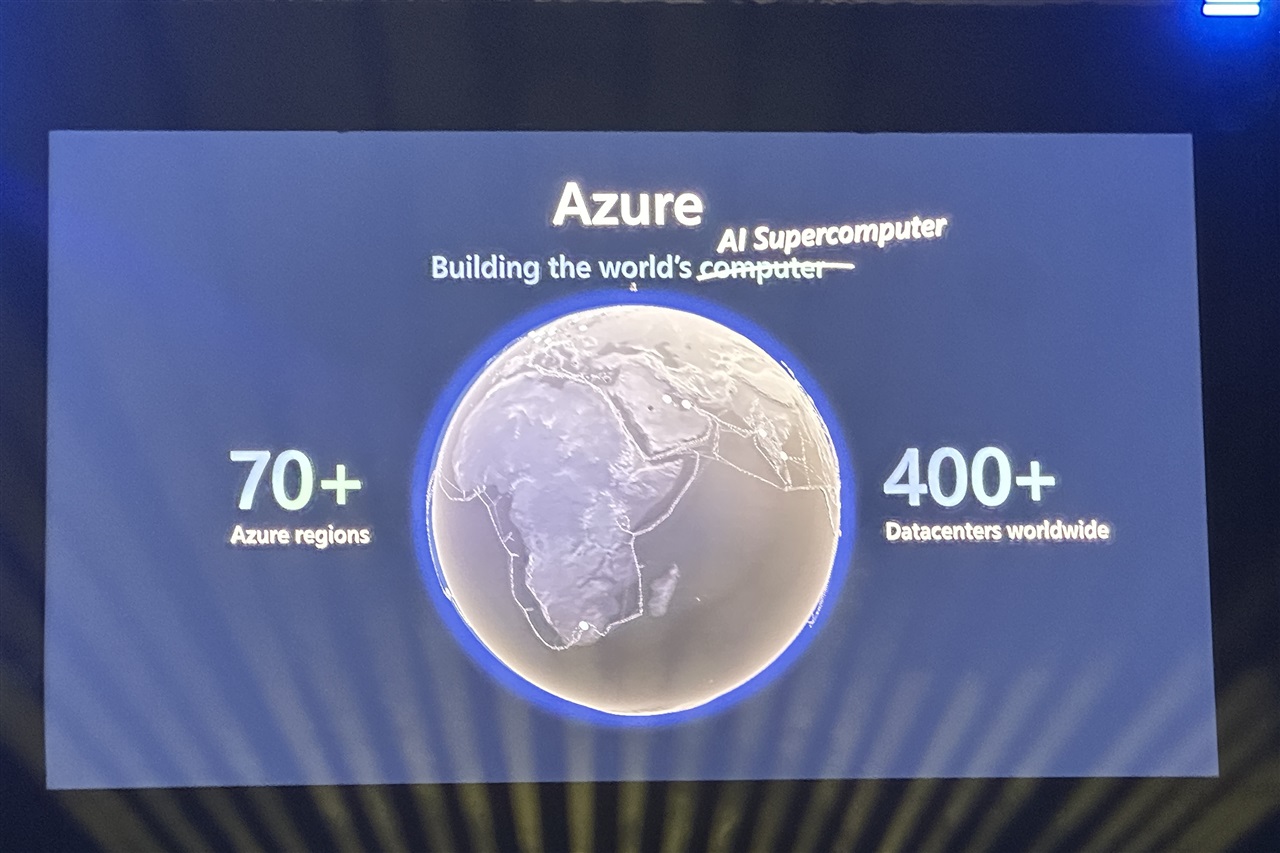
Microsoft is accelerating its push to become what it calls the world’s AI supercomputer, revealing that it added 2 gigawatts of new Azure capacity over the past year—more than the company’s entire footprint just three years ago. The scale-up underscores how rapidly demand for artificial intelligence, high-performance computing, and massive-scale cloud services is reshaping the data center landscape.
This surge in capacity isn’t just about building more servers. Training and running advanced AI models requires enormous amounts of compute, high-bandwidth networking, and specialized accelerators, all backed by robust power and cooling. By expanding Azure at gigawatt scale, Microsoft is positioning itself to support larger model training runs, faster inference at scale, and more reliable capacity for enterprises rolling out AI-powered applications.
For customers, more capacity translates to practical benefits. Organizations tapping into Azure’s AI services should see improved availability during peak demand, reduced wait times for GPU and accelerator instances, and better performance for latency-sensitive workloads. The expansion also lays the groundwork for wider regional coverage, helping companies keep data and compute closer to their users for compliance and speed.
The investment highlights a broader trend: AI is becoming a core layer of modern computing. From copilots embedded in productivity suites to industry-specific solutions in healthcare, finance, retail, and manufacturing, generative AI and machine learning are moving from pilot projects to production-scale deployments. Supporting that shift requires not only more compute, but also advances in networking, storage throughput, and energy-efficient cooling such as liquid and immersion solutions.
Power is now a strategic resource in cloud computing. Adding 2 gigawatts in a year signals massive growth in data center capacity and the supporting energy ecosystem behind it. While the company did not detail the specific mix of facilities or regions, the trajectory suggests continued buildouts, long-term power agreements, and infrastructure upgrades designed to drive down unit costs and improve energy efficiency over time.
It also reflects the intensifying competition to deliver leading AI infrastructure. Hyperscale clouds are racing to secure accelerators, streamline supply chains, and optimize software stacks from the silicon layer up through model orchestration. Microsoft’s push to expand Azure capacity at this pace indicates confidence in sustained enterprise demand for AI training, fine-tuning, and large-scale inference.
What to watch next: continued regional expansion, new generations of AI accelerators becoming broadly available in Azure, and improvements in price-performance as the platform scales. For developers and IT leaders, the message is clear—plan for more capacity, faster iteration cycles, and an ecosystem increasingly optimized for AI-first applications.
Bottom line: by adding 2 gigawatts of capacity in a single year—exceeding its entire footprint from just a few years ago—Microsoft is staking a bold claim in the next era of cloud and AI infrastructure, aiming to deliver the scale, performance, and reliability that modern AI workloads demand.