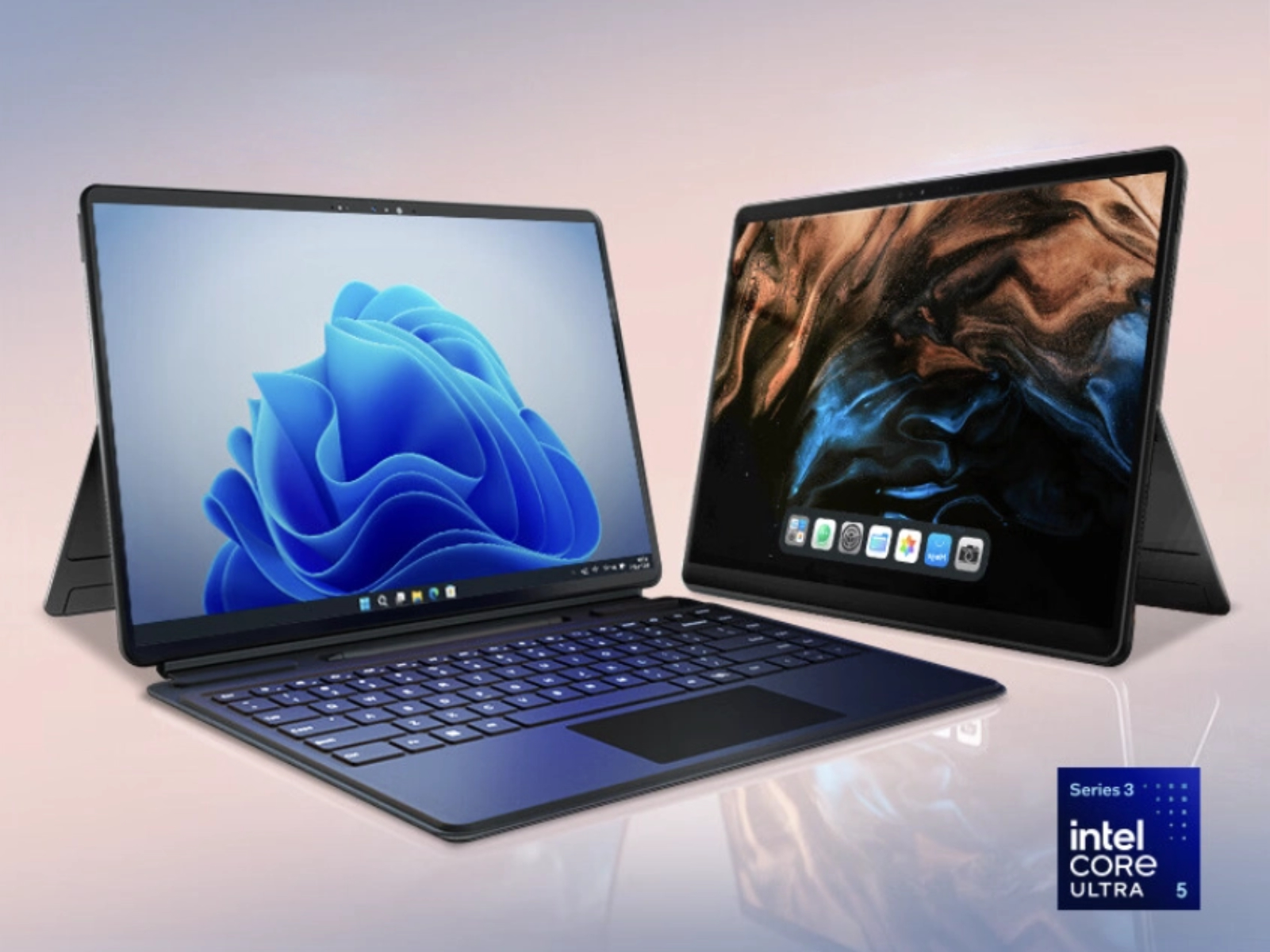
H3C has officially pulled back the curtain on its next-generation MegaBook 2, a new detachable 2-in-1 aimed squarely at people considering devices in the same “tablet-plus-keyboard” category as the Microsoft Surface Pro. After an earlier appearance on Geekbench hinted at Intel’s upcoming Panther Lake platform, the company has now confirmed key specifications and revealed the device’s design.
At the heart of the MegaBook 2 is the Intel Core Ultra 5 325, an 8-core chip built with 4 Cougar Cove performance cores reaching up to 4.5 GHz, paired with 4 Darkmont low-power efficiency cores topping out at 3.4 GHz. Graphics are handled by a 4-core Xe3 integrated GPU, which is positioned just below the Arc 130V iGPU used in the original MegaBook. In practical terms, that means buyers should expect a modern, efficient iGPU suitable for everyday productivity, streaming, and lighter creative workloads rather than a large leap in graphics horsepower.
Memory options include either 16 GB or 32 GB of LPDDR5x RAM, targeting users who want a thin, travel-friendly machine that can still handle multitasking, heavier browser workloads, and office or school productivity without bogging down.
Based on performance expectations from similar chips, the Core Ultra 5 325 may deliver only modest speed gains versus the prior generation in raw performance. Where it may stand out more is efficiency. Intel’s latest architecture is designed to balance performance with battery-friendly power use, which could make day-to-day use feel smoother and cooler under lighter loads.
However, there’s a notable tradeoff: H3C has reduced battery capacity. The MegaBook 2 ships with a 50 Wh battery, which is about 15% smaller than before. Real-world battery life will depend heavily on how aggressively the system and OLED panel manage power, but a smaller battery always puts more pressure on efficiency improvements to keep runtime competitive.
One of the biggest highlights is the display. The MegaBook 2 keeps a 14-inch OLED panel with a sharp 2.8K resolution and a 120 Hz refresh rate for smoother scrolling and animations. Peak brightness is now rated at up to 1,000 nits, which should help with visibility in brighter environments and improve HDR-style highlights where supported. Unlike the 3:2 aspect ratio that many Surface Pro users are used to, H3C chose a 16:10 layout, which still offers extra vertical space compared to 16:9 and works well for documents, web browsing, and split-screen multitasking.
Portability is also a major theme here. The tablet portion weighs 925 grams, though that figure does not include the detachable keyboard accessory. That keeps it in the lightweight 2-in-1 conversation for commuters, students, and frequent travelers who want a large OLED screen without carrying a traditional clamshell laptop.
H3C says the MegaBook 2 will go on sale in China starting April 11. Pricing has not been announced, and there’s no confirmation yet on whether the device will launch internationally. For now, it’s one to watch if you’re tracking upcoming Intel Panther Lake 2-in-1s, especially those combining a high-refresh OLED display with a detachable design.


