Marvel’s Spider-Man 2 has made its debut on PC, but its introduction has been less than smooth. Gamers across the globe have been grappling with numerous frustrations as the game stumbles with persistent crashes, annoying frame drops, and some pesky graphical glitches. Despite these issues, the game surprisingly manages to offer modest system requirements. This makes it seem like an attractive option for those using gaming handhelds. However, the performance might not be as straightforward as the specifications suggest.
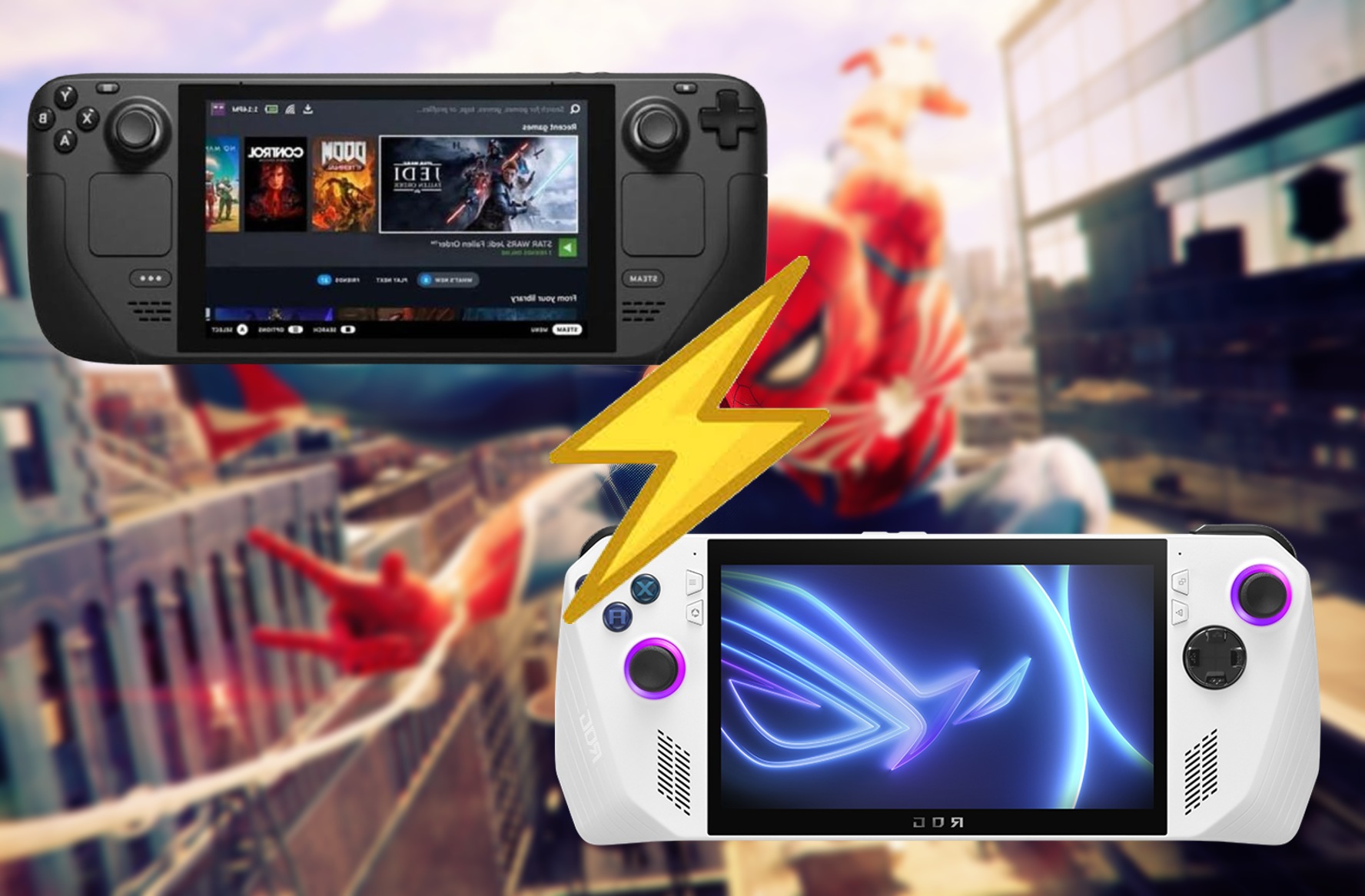
TechPowerUp took a deep dive into Marvel’s Spider-Man 2, examining how it runs on two of the hottest gaming handhelds on the market: the Valve Steam Deck and the Asus ROG Ally. Both devices are powered by AMD APUs, but there’s a notable difference in power. The Steam Deck is equipped with an AMD Van Gogh APU that includes a Zen 2 CPU and RDNA 2 GPU, while the Asus ROG Ally sports a significantly beefier Ryzen Z1 Extreme APU, boasting an 8-core CPU and a powerful 12-CU iGPU capable of delivering 8.6 TFLOPS of performance.
So, how did these two stack up when Spider-Man swung into town? The resulting performance was pretty much what one might anticipate given their specifications.
Starting with the Steam Deck, things didn’t look too bright. Even when the settings were dialed down to “very low” at 720p, it struggled, barely managing to achieve a sluggish 26 frames per second (FPS), dropping to a minimum of 12.8 FPS. Meanwhile, the ROG Ally showed a lot more promise. With the same settings, it delivered a more fluid experience with 51.3 FPS at a power draw of 25 watts, though it did dip to 17.8 FPS at its lowest. When the settings were set to a slightly higher “low” preset, the ROG Ally continued to impress with a decent 46.1 FPS. In contrast, the Steam Deck continued to lag behind, with only 21.1 FPS.
Interestingly, while the ROG Ally occasionally crashed due to its Windows-based system, the Steam Deck managed to avoid such disruptions, even if its overall performance was far from smooth. Frame rates remained marginally steadier on the Steam Deck, but were still barely usable, even with upscaling options.
The ROG Ally not only outshone its competition in terms of performance, but it holds even more potential with an upcoming upgrade to the Ryzen Z2 Extreme, which promises to add even more power. Unfortunately for Steam Deck fans, there’s no immediate successor on the horizon, although other devices, including those using Lenovo’s SteamOS offerings powered by Ryzen Z2-series APUs, are starting to emerge as contenders in the market.
In this contest of handheld powerhouses, the ROG Ally seems to be the current champion, at least until the next generation of gaming hardware swings into the fray.