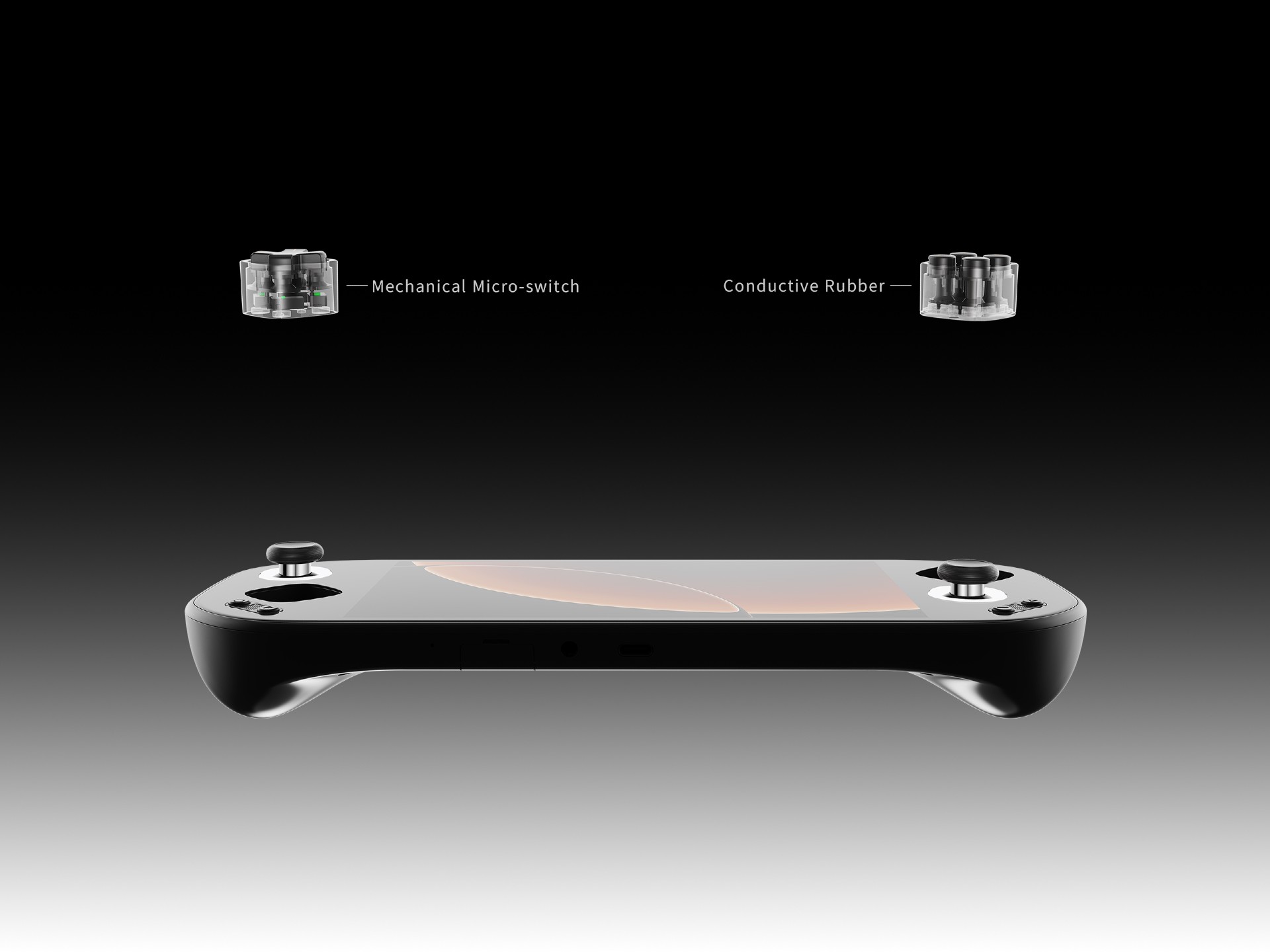
Mangmi is continuing to tease its upcoming Pocket Max handheld, and the newest reveal focuses on a feature aimed squarely at players who love to customize their controls. The company says the Pocket Max will introduce modular magnetic buttons to the Android handheld space, making it easy to remove and swap key inputs without tools or complicated disassembly.
In the latest teaser image shared on Mangmi’s social channels, the Pocket Max is shown with both the D-Pad and the ABXY button cluster removed. The idea is simple: these sections are designed as modules, so you can quickly pop them out and replace them with different options. Mangmi suggests the modular system could support alternate ABXY layouts, or even a touchpad module in place of the traditional D-Pad—an intriguing option for users who want more flexibility across different genres, emulators, and streaming setups.
Mangmi has also demonstrated the swap process in a short video, emphasizing how quick and straightforward it is to change the controls. That ease-of-use matters, because modular features only feel “premium” when they’re genuinely convenient. If the modules are truly magnetic and user-friendly, the Pocket Max could appeal to players who alternate between classic retro titles and modern Android games, where preferred control styles can vary.
While Mangmi is positioning this as a first for Android-powered handheld gaming devices, modular controls themselves aren’t entirely new in the broader handheld market. Some handhelds have already explored swappable input components, including systems that extend modularity beyond face buttons and the D-Pad. Still, bringing a modular approach to an Android handheld could be a meaningful differentiator, especially if Mangmi backs it up with a strong lineup of optional modules.
One of the biggest unanswered questions is what modules will actually be available at launch. Mangmi hasn’t confirmed which add-ons it plans to sell alongside the Pocket Max, and it also hasn’t said whether third-party makers will be allowed to create custom modules. That second point could be huge: an open ecosystem could lead to specialty button shapes, alternative layouts, accessibility-focused options, or unique inputs tailored for specific game styles.
Mangmi also shared an important detail about how it plans to sell the handheld. Instead of relying on crowdfunding platforms, the company intends to launch the Pocket Max directly through its own website. A firm release date hasn’t been announced yet, but the steady flow of teasers suggests more details are likely on the way.
So far, Mangmi has already confirmed the Pocket Max processor, along with display specifications and the color options buyers can expect. With modular controls now added to the list, the Pocket Max is shaping up to be an Android handheld to watch—especially for gamers who want hardware that can adapt to how they play.