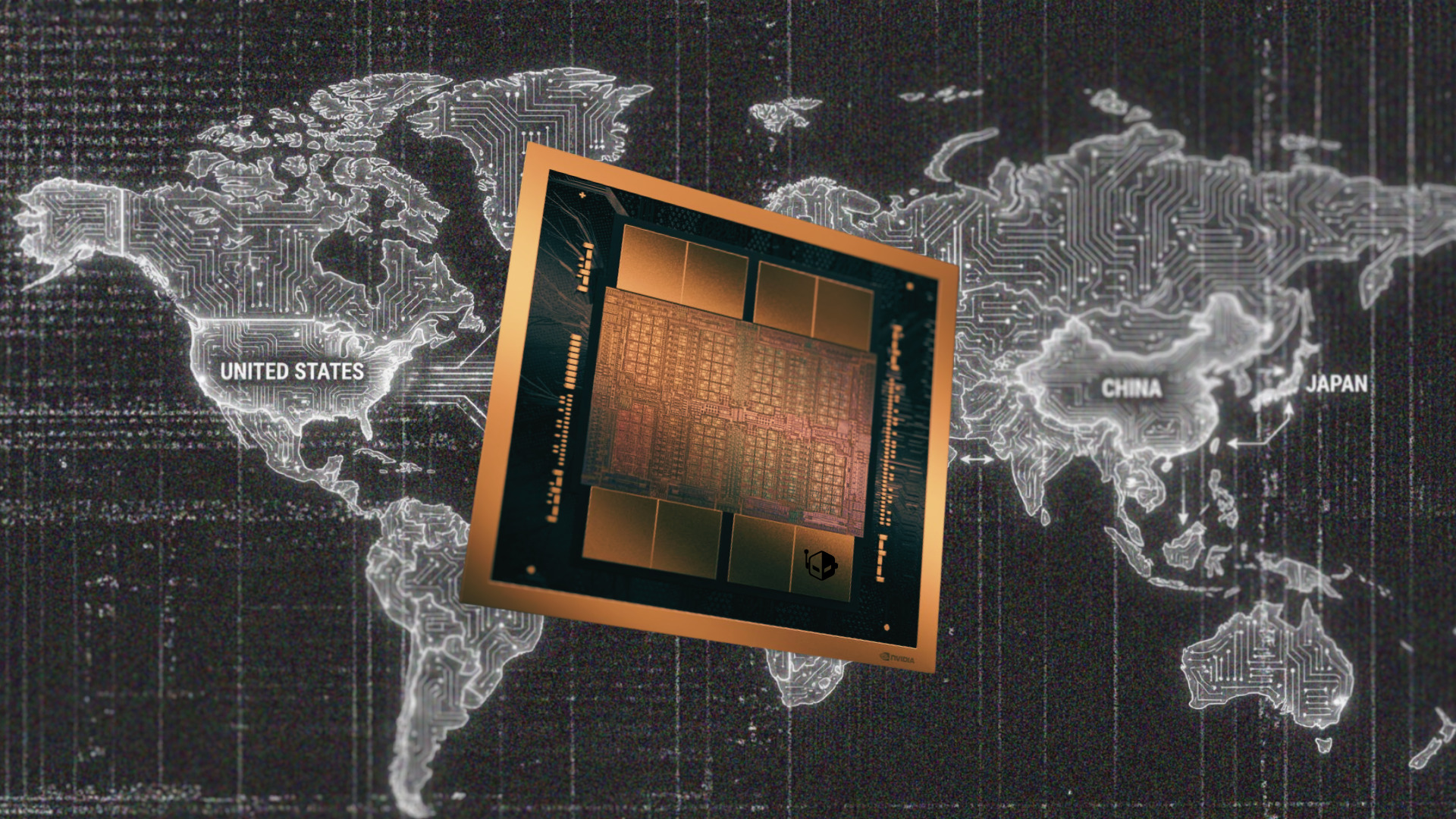
ByteDance, one of China’s biggest names in the global AI race, has reportedly found a practical workaround to ongoing US export controls by securing access to NVIDIA’s latest Blackwell B200 AI chips through a cloud partner in Malaysia.
For years, US export restrictions have tried to limit how easily Chinese companies can obtain NVIDIA’s most advanced AI hardware. Earlier on, major Chinese tech firms were able to source high-end chips such as the Hopper H100 and A100 with far fewer obstacles. As controls tightened, direct purchases became far more difficult, pushing major players to explore alternative routes to get the compute power needed to train and run large-scale AI models.
According to a report cited by the Wall Street Journal, ByteDance is working with a Malaysian cloud provider to gain access to Blackwell B200 chips. The company is said to be a key customer of Aolani, a Malaysia-based cloud firm that is also described as a “Tier-1” NVIDIA customer, a status that typically implies priority access to supply. That detail matters because it suggests the supply chain advantage isn’t coming from ByteDance itself, but from the cloud partner’s standing and purchasing power.
This approach fits a broader pattern that has been building across Asia. Rather than trying to import restricted AI chips directly into China, firms such as ByteDance and Tencent have increasingly invested in or partnered with offshore cloud providers, including operations in places like Singapore and other parts of Southeast Asia. These locations can offer fewer barriers to acquiring and deploying advanced AI accelerators, making them attractive hubs for hosting AI workloads.
With regulatory hurdles creating delays and uncertainty—even when it comes to newer chips that may fall into more complicated approval categories—renting compute has become one of the most reliable options for Chinese AI companies that need immediate scale. In many cases, accessing AI hardware through cloud services is viewed as less risky than other methods that have been reported in the market, because it can be framed as purchasing services rather than importing restricted goods.
Southeast Asian countries such as Singapore, Thailand, and the Philippines are increasingly associated with this shift, in part because they are not subject to the same export restriction framework that directly targets shipments to China. That has helped accelerate a growing ecosystem of data center operators, cloud providers, and infrastructure “middlemen” who can supply large blocks of GPU compute on demand.
The rise of AI chip renting is now so significant that some companies are choosing it over direct ownership entirely. This new reality creates a key question for policymakers: if leading Chinese tech firms can still obtain cutting-edge AI compute through offshore cloud channels, are export controls truly reducing China’s overall access to advanced AI capabilities—or simply changing where and how that computing happens?


