NVIDIA Blackwell GPUs are reportedly thriving on China’s black market despite strict export bans and domestic chip policies
China’s efforts to keep banned NVIDIA Blackwell GPUs out of the country appear to be facing a major challenge. Even with tighter customs inspections, arrests linked to smuggling attempts, and a government push toward local AI hardware, demand from Chinese technology companies remains extremely strong.
According to recent reports, NVIDIA’s most advanced AI hardware is still finding its way into China through unofficial channels, and prices have surged dramatically. Some systems are now selling for more than double their original cost, showing how valuable NVIDIA’s AI ecosystem remains to companies working on artificial intelligence workloads.
The Blackwell generation of NVIDIA GPUs has become a major focus of US export restrictions. These chips are considered highly advanced for AI training and inference, which is why US lawmakers have blocked several models from being sold to China. The restrictions cover powerful products such as the GB200, GB300, DGX B300 systems, RTX PRO 6000 Blackwell, and even high-end consumer cards such as the RTX 5090.
To comply with regulations, NVIDIA introduced limited versions of some products for the Chinese market, including the RTX 5090 D V2. However, these cut-down variants have not generated the same level of interest among buyers who want maximum AI performance. At the same time, China has encouraged local companies to use domestic alternatives from manufacturers such as Huawei, as part of a broader push to reduce reliance on foreign semiconductor technology.
Despite that strategy, many AI firms in China still appear to prefer NVIDIA hardware. The reason is simple: NVIDIA chips are not just valued for raw performance. They also come with a mature software ecosystem, strong developer support, and widespread compatibility with AI frameworks. For companies already building their infrastructure around NVIDIA platforms, switching to another architecture can be difficult, expensive, and time-consuming.
One of the clearest examples of this demand is the reported pricing of NVIDIA’s DGX B300 platform. The system, which includes eight Blackwell GPUs and Intel Xeon processors, offers a massive 2.1 TB of GPU memory. In the United States, it typically sells for around $400,000. In China’s unofficial market, however, its price has reportedly climbed to more than 8 million yuan, or roughly $1.1 million. That is about twice the previous black-market price of 4 million yuan.
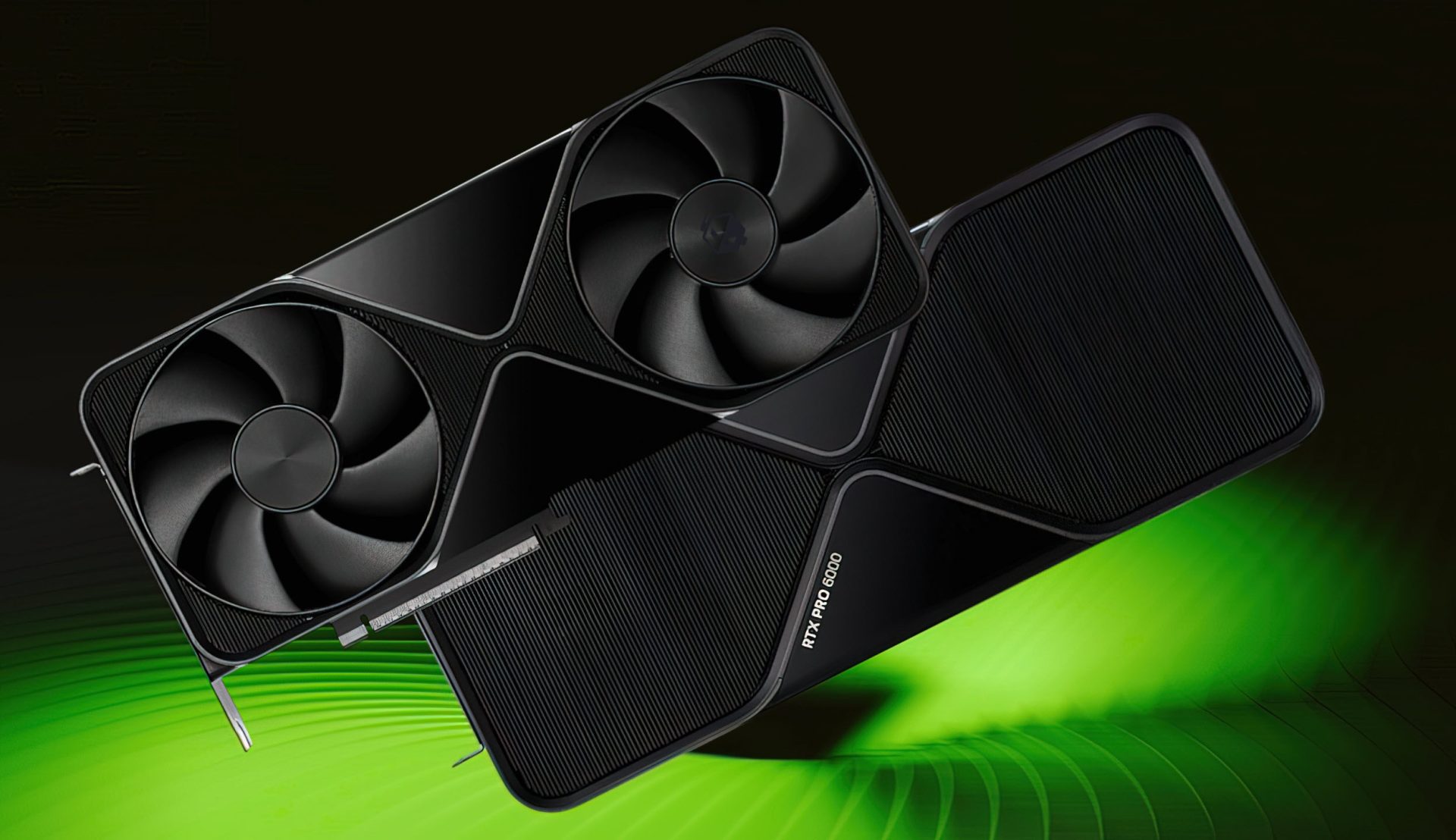
The RTX PRO 6000 Blackwell is also seeing heavy demand. This workstation-class GPU features 96 GB of memory, making it attractive for smaller AI companies and research groups that need large memory capacity without buying a full data center system. While the card has already experienced price pressure in other markets, with prices reaching around $13,250 in the US, Chinese black-market sellers are reportedly listing it for around 130,000 yuan, or close to $20,000.
That large memory capacity is a key reason buyers are chasing the RTX PRO 6000 Blackwell. Compared with cards such as the RTX 5090 with 32 GB of memory or the RTX 5090 D V2 with 24 GB, the 96 GB configuration is far more useful for AI models that require larger datasets, bigger batch sizes, or more complex workloads. For entry-level AI startups, this type of GPU can be a practical alternative to much more expensive server platforms.
Older NVIDIA AI accelerators are also becoming more expensive in China. Traders have reportedly seen growing interest in previous-generation data center chips such as the A100, as well as other older accelerators that can still handle demanding AI workloads. Even though these GPUs are not as powerful as Blackwell, they remain valuable because of NVIDIA’s software advantage and proven performance in machine learning environments.
The H200, another high-end NVIDIA accelerator, has seen some relaxation under certain export rules, but it is still not a perfect replacement for Blackwell. It is older, less advanced, and may not offer the same performance-per-dollar for companies targeting the latest AI workloads. Even so, NVIDIA’s older hardware can still compete strongly against many domestic alternatives, largely because of its software stack and ecosystem maturity.
The situation has created a difficult environment for both Chinese companies and black-market sellers. Demand is high, prices are rising, and supply is becoming harder to secure. Some sellers claim stock is moving quickly even at extremely inflated prices, with certain hardware reaching hundreds of thousands of yuan.
At the same time, the risks are increasing. US export controls are becoming stricter, and Chinese customs authorities are paying closer attention to servers, AI accelerators, and high-performance graphics cards entering the country. Smuggling routes that once may have been easier to use are now under greater scrutiny.
For China’s technology sector, the pressure is clear. Companies want access to the most powerful AI chips available, but official policy is pushing them toward local solutions. While domestic chipmakers are improving, NVIDIA continues to hold a major advantage in AI hardware, software tools, and industry adoption.
The rapid rise in black-market prices shows that restrictions have not eliminated demand. Instead, they have made NVIDIA Blackwell GPUs even more valuable inside China. As AI competition accelerates globally, access to advanced chips remains one of the most important factors shaping the future of artificial intelligence development.
For now, China’s AI firms face a tough choice: pay extreme premiums through risky unofficial channels, rely on older NVIDIA hardware, or accelerate the move toward domestic alternatives. The growing price gap suggests that many companies are still willing to pay heavily for NVIDIA’s most advanced GPUs, even under intense regulatory pressure.