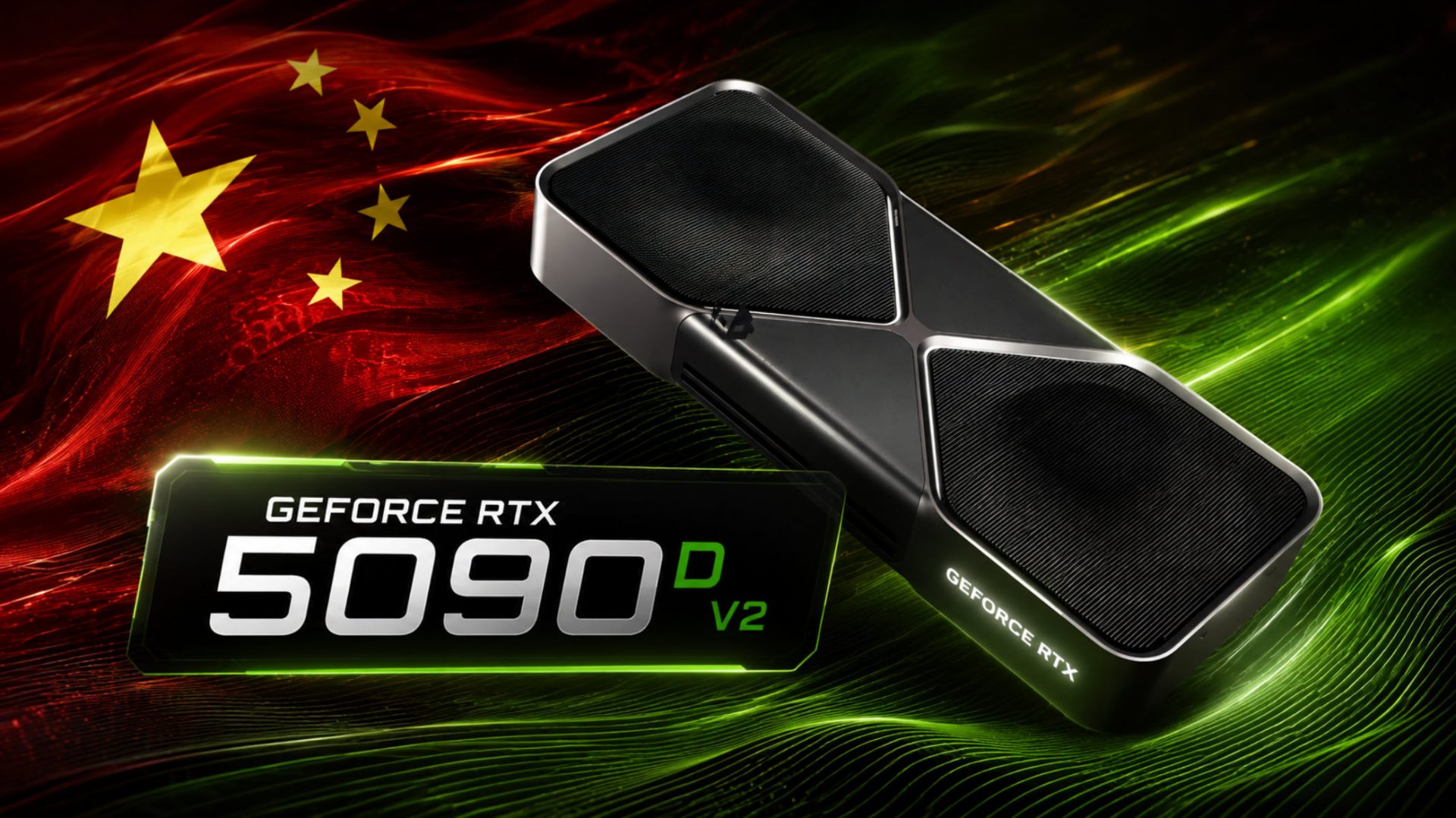
NVIDIA GeForce RTX 5090 D v2 Reportedly Blocked in China Despite Being Made for China
NVIDIA’s GeForce RTX 5090 D v2, a high-end gaming graphics card designed specifically for the Chinese market, has reportedly run into a major roadblock. This time, however, the restriction is not coming from the United States. According to market sources, the card is being blocked by Chinese customs authorities, preventing it from entering the country for sale.
The development is surprising because the RTX 5090 D v2 was created as a China-focused alternative after earlier restrictions affected NVIDIA’s flagship products. Instead of solving the company’s access problem in the region, the new model may now be facing a ban from the very market it was built to serve.
NVIDIA originally introduced the GeForce RTX 5090 D alongside the standard RTX 5090. The “D” version was made exclusively for China, with adjusted specifications intended to comply with export rules. After the original RTX 5090 D was affected by updated U.S. regulations, NVIDIA prepared a second version, the RTX 5090 D v2, with even more reduced specifications.
One of the biggest changes in the RTX 5090 D v2 was memory. The original model featured 32 GB of VRAM, while the newer v2 version reportedly reduced that figure to 24 GB and used a narrower memory bus. This made the card less attractive for artificial intelligence workloads, especially for users who may have wanted to take advantage of the larger memory buffer for AI tasks.
Even with these reductions, reports suggest that some AI companies have been modifying RTX 5090 D v2 graphics cards with expanded memory configurations, pushing them up to 48 GB of VRAM. That has added another layer of attention around the product, as high-end gaming GPUs continue to be repurposed for AI computing in markets where dedicated AI accelerators are difficult to obtain.
According to reports from Asian hardware market sources, Chinese motherboard manufacturers have recently been notified by customs officials that GeForce RTX 5090 D v2 graphics cards will not be approved for import processing. That means retailers attempting to bring the cards into China may not receive clearance or sales permits.
Logistics companies are also said to have received similar notices stating that import permits will not be issued for the RTX 5090 D v2. If accurate, this effectively blocks the graphics card from reaching official retail channels in China.
The move has reportedly caught NVIDIA off guard. The RTX 5090 D v2 is not a standard global product that can simply be redirected to another region. It was built specifically for China, which means a ban inside China creates a major distribution problem. If the card cannot enter the market it was designed for, NVIDIA and its partners may have very few legitimate sales options.
The timing is also notable. Recent discussions between the United States and China had raised expectations that tensions around certain NVIDIA products could ease, particularly in the AI chip segment. The U.S. has been allowing some AI-focused NVIDIA hardware, such as the H200, to move toward Chinese customers under specific conditions. Yet while some AI chip restrictions appear to be softening, China may now be taking action against a gaming GPU.
The exact reason for China’s reported block on the RTX 5090 D v2 remains unclear. Some industry voices believe the government may not see the card as helpful for domestic technology development, especially because its AI performance has already been limited. Others speculate that Chinese authorities may view the RTX 5090 D v2 as an overly downgraded product made only to satisfy restrictions, making it less welcome in the local market.
If the reported ban holds, the impact on Chinese gamers could be significant. The GeForce RTX 5090 D v2 was expected to be the fastest gaming GPU officially available in China. Without it, gamers looking for a top-tier NVIDIA graphics card may have to settle for the GeForce RTX 5080 as the highest practical option through standard retail channels.
The situation could also create more pressure on pricing. NVIDIA and AMD graphics cards available in China have already seen rising costs due to supply limitations, regulatory uncertainty, and strong demand from both gamers and AI users. Removing the RTX 5090 D v2 from the official market could further tighten supply at the high end.
There is also the possibility of gray-market activity. Since the RTX 5090 D v2 has limited official sales potential outside China, some units could end up moving through unofficial channels. Reports have already highlighted cases where restricted NVIDIA hardware appeared on major Chinese retail platforms under AI-focused listings before being removed. If official imports are blocked, demand from gamers, resellers, and AI firms could push more activity into unofficial markets.
China has been investing heavily in domestic GPU development, and local companies are working to accelerate their hardware roadmaps. However, current domestic graphics solutions still trail NVIDIA’s latest RTX 50 series products in gaming performance, software support, and overall ecosystem maturity. That performance gap makes the loss of a flagship NVIDIA gaming GPU even more noticeable for enthusiasts in the country.
For NVIDIA, the RTX 5090 D v2 situation highlights the growing complexity of selling advanced chips in China. The company is trying to balance international regulations, local market demand, AI-related concerns, and product segmentation. But even a heavily modified gaming GPU created specifically for China may no longer be guaranteed access to the Chinese market.
For now, the GeForce RTX 5090 D v2 remains in a difficult position. It is reportedly barred from official entry into China, unsuitable for normal global release, and still desirable enough to attract interest from both gamers and AI buyers. Unless the customs decision changes, China’s fastest NVIDIA gaming option may never reach the shelves it was designed for.