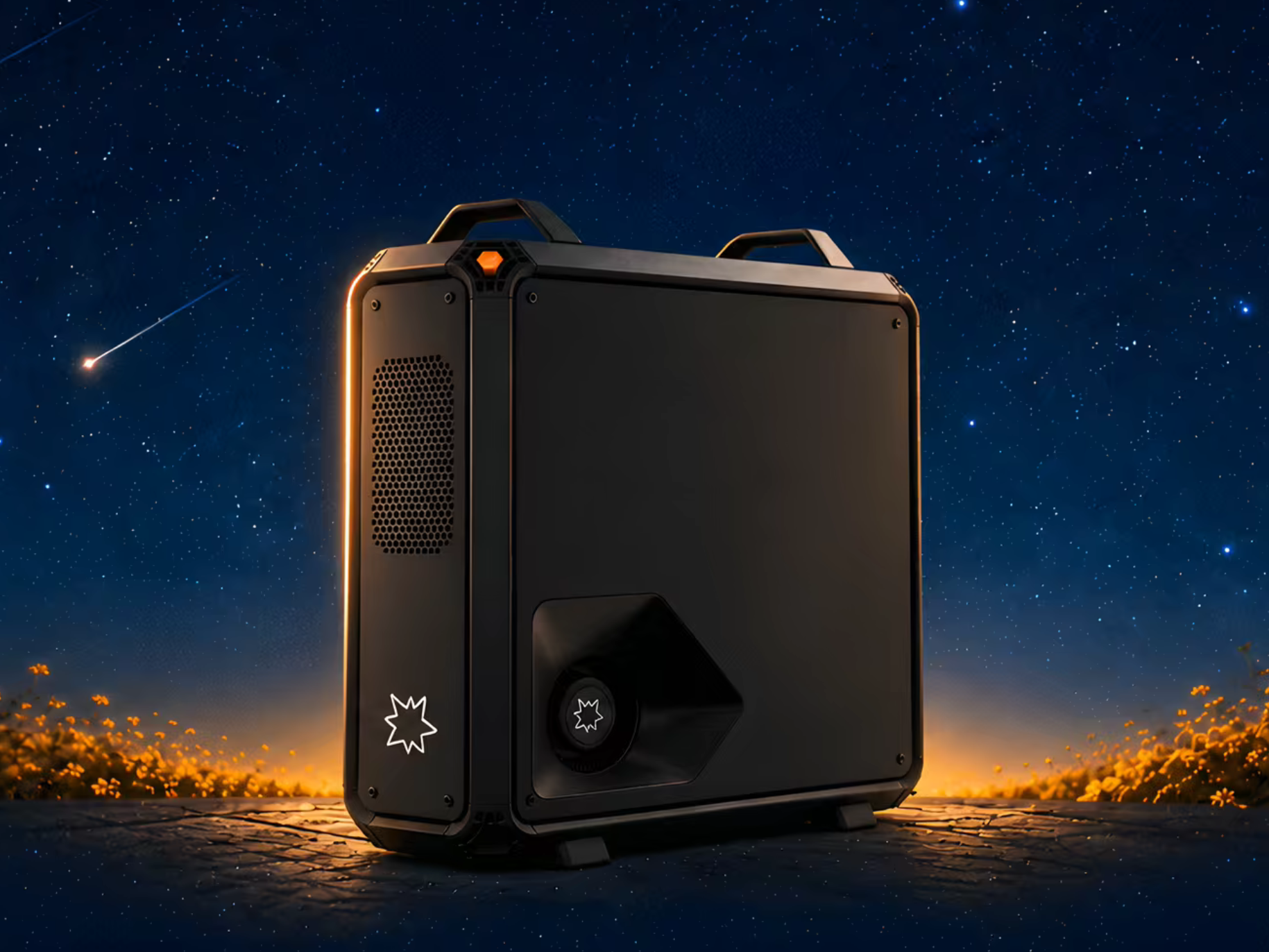
Lucebox Opens Direct Orders for AMD-Powered Local AI Workstation, but a Price Hike Is Coming
Lucebox has officially opened direct orders for its powerful AMD-based local AI workstation, making it much easier for developers, researchers, and businesses to buy the system without going through a lengthy approval process.
Company co-founder Alessandro Puppo confirmed that the workstation is now available to purchase directly through Lucebox’s redesigned website. He also warned that a price increase is expected soon, though the company has not yet shared how much the workstation will cost after the adjustment.
Previously, ordering a Lucebox system was not as simple as adding it to a cart. Interested buyers had to submit details about their workloads, explain how many units they needed, speak with the Lucebox team, and then wait for confirmation that production capacity was available. Only after that would they receive a purchase link.
That process has now been simplified. Buyers can order the local AI workstation directly, with a limit of up to five systems per customer. This change makes the machine far more accessible to AI developers and teams looking for a compact but powerful workstation for running large language models locally.
The entry point is still high. The Lucebox Developer configuration is priced at $5,999, though that price includes worldwide shipping and taxes. For companies that need more support, Lucebox also offers a Business package priced at $7,999. That version includes one year of Lucebox Engine Pro, white-glove installation, and direct engineering support. However, buyers interested in the Business package need to contact Lucebox directly.
Demand appears to be strong. Lucebox says Batch 3 has already sold out, while Batch 4 orders are expected to ship in November 2026. With a price increase on the way, early buyers may be able to lock in the current pricing before the next production wave becomes more expensive.
The biggest attraction is the hardware. Lucebox is built around AMD’s Ryzen AI Max+ 395 “Strix Halo” APU, paired with 128 GB of LPDDR5X-8000 unified memory. It also includes a discrete Radeon AI Pro R9700 graphics card with 32 GB of GDDR6 VRAM.
For local AI workloads, the system can use a combined memory pool of 128 GB, with 96 GB available through the Strix Halo platform and another 32 GB from the Radeon AI Pro R9700. This setup is designed to help users run larger AI models locally without relying entirely on cloud services.
Despite its high-end specifications, the workstation is housed in a compact 11.97-liter aluminum chassis. It also includes a 2 TB NVMe SSD, 5 Gbps Ethernet, Wi-Fi 7, and a 1,000 W 80 Plus Platinum power supply. That makes it a relatively small but capable machine for AI development, model testing, inference, and other demanding workloads.
Lucebox has also been demonstrating how the workstation can split large AI models between the Radeon AI Pro R9700 and the Ryzen AI Max+ 395. According to the company, the system has run the 284-billion-parameter DeepSeek V4 Flash model across both processors, reaching a claimed 86 tokens per second during decoding.
However, Lucebox notes that performance can vary depending on the test setup, quantization method, and model configuration. Users may still need to experiment with tuning and optimization to get the best results for their own AI workloads.
With direct ordering now available, Lucebox is positioning its AMD-powered AI workstation as a serious option for users who want high-memory local AI performance in a compact desktop system. The price is steep, but for developers and businesses looking to run large models privately and locally, the combination of Strix Halo, Radeon AI Pro graphics, and a compact workstation design could make Lucebox one of the more interesting AI hardware options on the market.