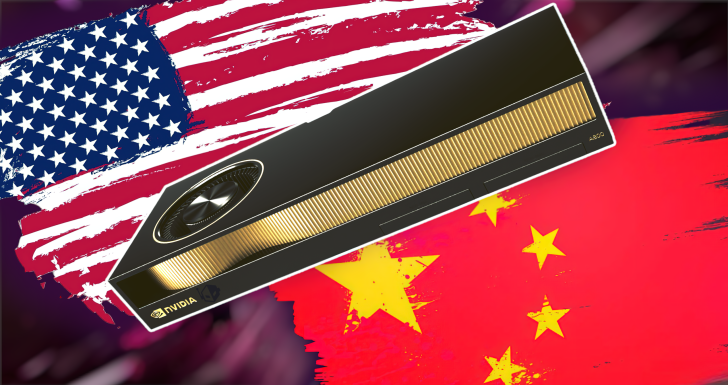
In a landscape where technological prowess is as sought after as valuable resources, China’s research authorities have delivered a critical recommendation for local AI companies: continue leveraging NVIDIA’s AI solutions rather than solely switching to domestic alternatives. This recommendation arises amidst the backdrop of geopolitical tensions and increasing sanctions from the United States, which have challenged China’s access to cutting-edge computing technology.
The China Academy of Information and Communications Technology (CAICT) has assessed the situation and advised data centers and AI firms to consider NVIDIA’s A100 and H100 GPUs when feasible. Despite China’s spirited endeavors to foster homegrown technology, led by companies like Huawei with their Ascend AI chips, these solutions reportedly still fall short in replacing NVIDIA’s offerings entirely.
While Huawei and other domestic players such as BirenTech have made significant strides in developing AI chips, the CAICT suggests that the vast capabilities and efficiency offered by NVIDIA’s hardware remain unmatched at present. Consequently, sticking with NVIDIA’s solutions ensures that industry giants like ByteDance and Tencent can continue to harness the computing power needed to serve their extensive user bases effectively.
The importance of NVIDIA’s presence in China is underscored by the company’s substantial revenue generated from the region, even amid US trade restrictions. Chinese data centers have seen a staggering 70% increase in demand for GPU-based AI computing power over the past year, illustrating the voracious appetite for advanced AI technology.
While there are rumors of Huawei advancing its Ascend GPU lineup, the CAICT highlights the obstacles in transitioning to a fully domestic stack. The complexities of porting code and adapting large language models already developed on NVIDIA’s infrastructure underscore the challenges of such a shift.
Beyond the technical hurdles, geopolitical dynamics further fuel uncertainty. With US policy shifts potentially altering the landscape at any moment, China is urged to not place all its technological eggs in one basket. While some alternative strategies, such as renting GPUs or acquiring hardware through informal channels, exist, they do not present a sustainable long-term solution.
The path forward remains fraught with challenges as China navigates the intricate web of global tech politics and strives to reinforce its independent technological capabilities. However, for now, embracing a hybrid strategy that incorporates both domestic innovations and established international technologies appears to be the prudent course of action.