AMD closed Q3 2025 with record results and a clear roadmap for next-gen data center and AI silicon. Revenue hit $9.2 billion, up 36% year-over-year and 20% quarter-over-quarter, driven by surging demand across AI, server, and client PC markets.
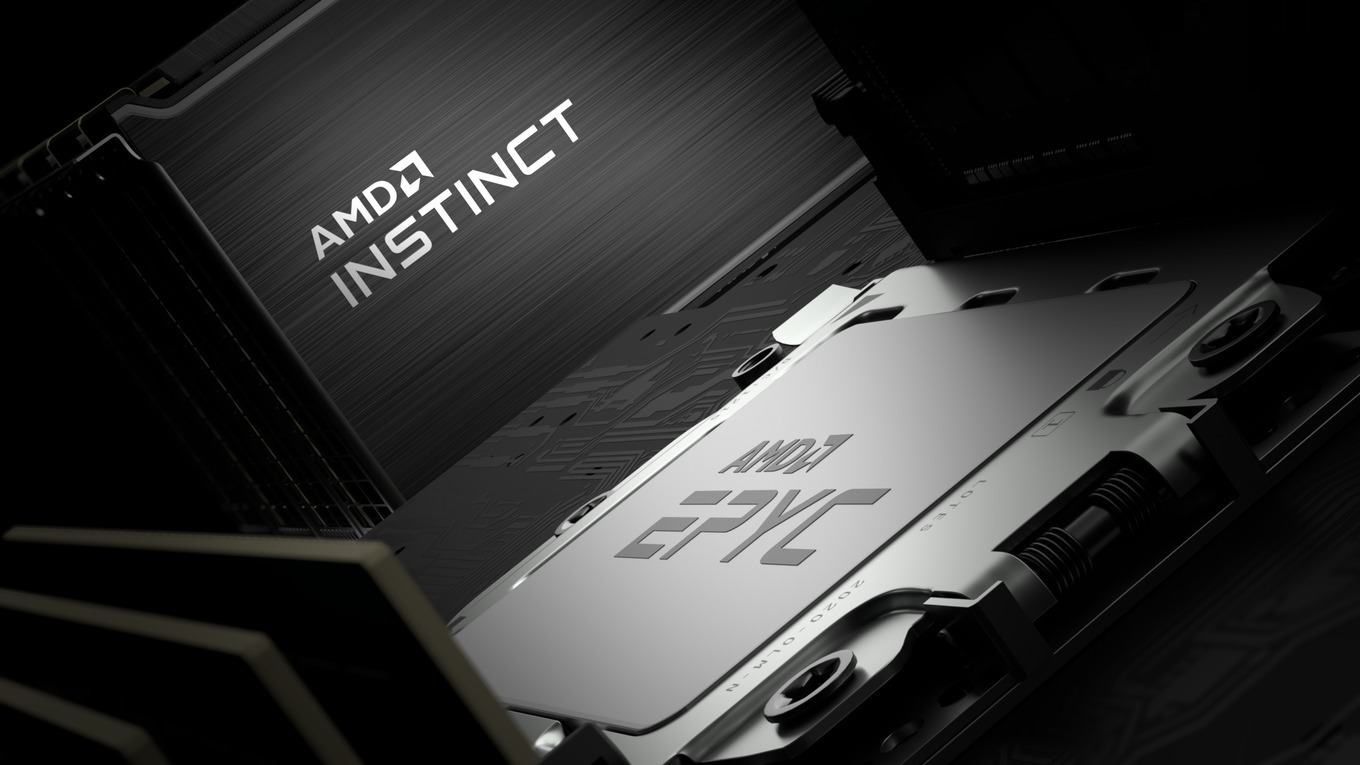
On the server front, AMD confirmed its 2nm EPYC “Venice” processors built on the Zen 6 architecture are on track for a 2026 launch. Silicon is already in labs and reportedly delivering substantial gains in performance, efficiency, and compute density over today’s Zen 5-based Turin parts. Multiple cloud OEMs have first-wave Venice platforms online, setting the stage for broader availability at launch.
AMD also outlined momentum for its next data center AI portfolio. The Instinct MI400 accelerator family, designed for high-end training and inference, targets a 2026 debut with a new compute engine, advanced networking, and massive HBM4 configurations. The series is expected to scale up to 40 PFLOPs with as much as 432 GB of HBM4 delivering 19.6 TB/s of bandwidth, positioning it squarely against solutions like NVIDIA’s Rubin platform. These accelerators will anchor Helios, AMD’s rack-scale AI system that integrates silicon, software, and systems for data center deployments.
Adoption is already taking shape. Oracle plans to be a lead launch partner for MI450, deploying tens of thousands of GPUs across Oracle Cloud Infrastructure beginning in 2026 and expanding through 2027 and beyond. The U.S. Department of Energy selected MI430X GPUs and EPYC Venice CPUs to power Discovery, Oak Ridge’s next flagship supercomputer for AI-driven scientific research. OpenAI announced a partnership to procure 6 gigawatts of AMD Instinct GPUs across generations, including 1 gigawatt of next-gen MI450.
On the client side, Ryzen 9000 desktop CPUs remain a standout, achieving record channel sell-in and sell-through thanks to strong performance and efficiency for gaming, content creation, and productivity. Notebook sell-through also climbed as demand for premium gaming and commercial systems grew. AMD is expected to deliver a soft refresh of its fastest 3D V-Cache gaming CPUs around CES, with Zen 6-based Ryzen processors anticipated in the latter half of 2026.
Gaming posted a major rebound. Revenue rose 181% year-over-year to $1.3 billion, buoyed by semi-custom SoC strength as console partners prepared for the holiday cycle. On the GPU side, Radeon RX 9000 graphics based on RDNA 4 are gaining traction, with pricing trending toward MSRP to spur demand. AMD’s FSR 4 upscaling technology also accelerated, with supported titles more than doubling since launch to over 85, highlighting the company’s performance-per-dollar positioning in gaming graphics.
AMD will share more on its strategy and product roadmap at its Financial Analyst Day on November 11, 2025, where it plans to detail advancements across data center, AI, client computing, and gaming.