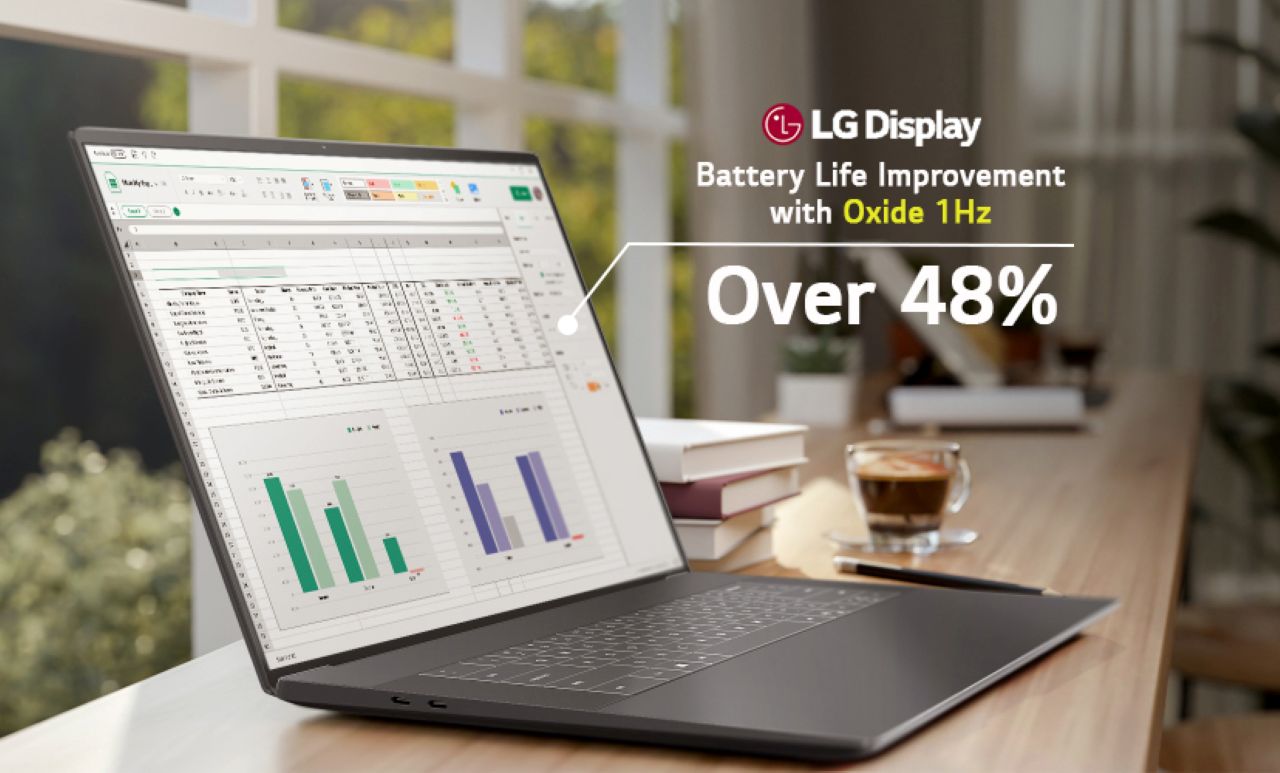
LG has officially begun production of a new kind of laptop display designed to stretch battery life without sacrificing smoothness. The company is now manufacturing variable refresh rate oxide LCD panels that can dynamically shift from a fast 120 Hz all the way down to just 1 Hz, depending on what’s happening on screen. The goal is simple: deliver the fluid feel people expect from premium laptops, while cutting wasted power consumption during lighter tasks.
At the center of this upgrade is oxide-based LCD technology. Compared with more conventional LCD approaches, the oxide material can hold an electrical charge for longer. That matters because a typical display often keeps refreshing rapidly even when the image barely changes. With an oxide panel, the laptop can slow the refresh rate dramatically when you’re reading, writing, viewing static content, or working with less motion on screen—then ramp back up to 120 Hz when you scroll, animate, or game. Less unnecessary refreshing translates into lower power draw and longer runtime.
This approach isn’t entirely new to the broader display world. Oxide LCDs have been explored for years, including earlier implementations such as IGZO-style panels that focused on lowering power consumption and enabling variable refresh behavior. More recently, other manufacturers have shown that oxide can scale in multiple directions, from extremely high refresh rates for laptops to ultra-low refresh operation for phones. LG’s move signals that the technology is now ready for wider, high-volume laptop production—especially in premium categories where buyers want both performance and efficiency.
According to LG, these new oxide LCD panels are being produced for premium Dell XPS laptops, with plans to expand production in 2027. The company claims the displays can provide up to 48% more use on a single charge compared with regular LCD panels. That kind of gain is particularly appealing as more users run demanding workloads on portable machines, including AI-powered applications that can quickly drain a battery during sustained use.
LG also notes that the efficiency improvements aren’t coming from the oxide layer alone. Alongside the new panel structure, the company optimized display algorithms and other supporting panel technologies to further reduce power consumption. In other words, this is a full-stack efficiency push: smarter refresh behavior, improved electrical characteristics, and tuned processing working together to keep battery drain in check.
For laptop shoppers, the takeaway is straightforward. These variable refresh oxide LCD panels aim to deliver a premium viewing experience—smooth when it needs to be, ultra-efficient when it can be—making them a strong fit for thin-and-light productivity laptops where battery life is just as important as display quality.