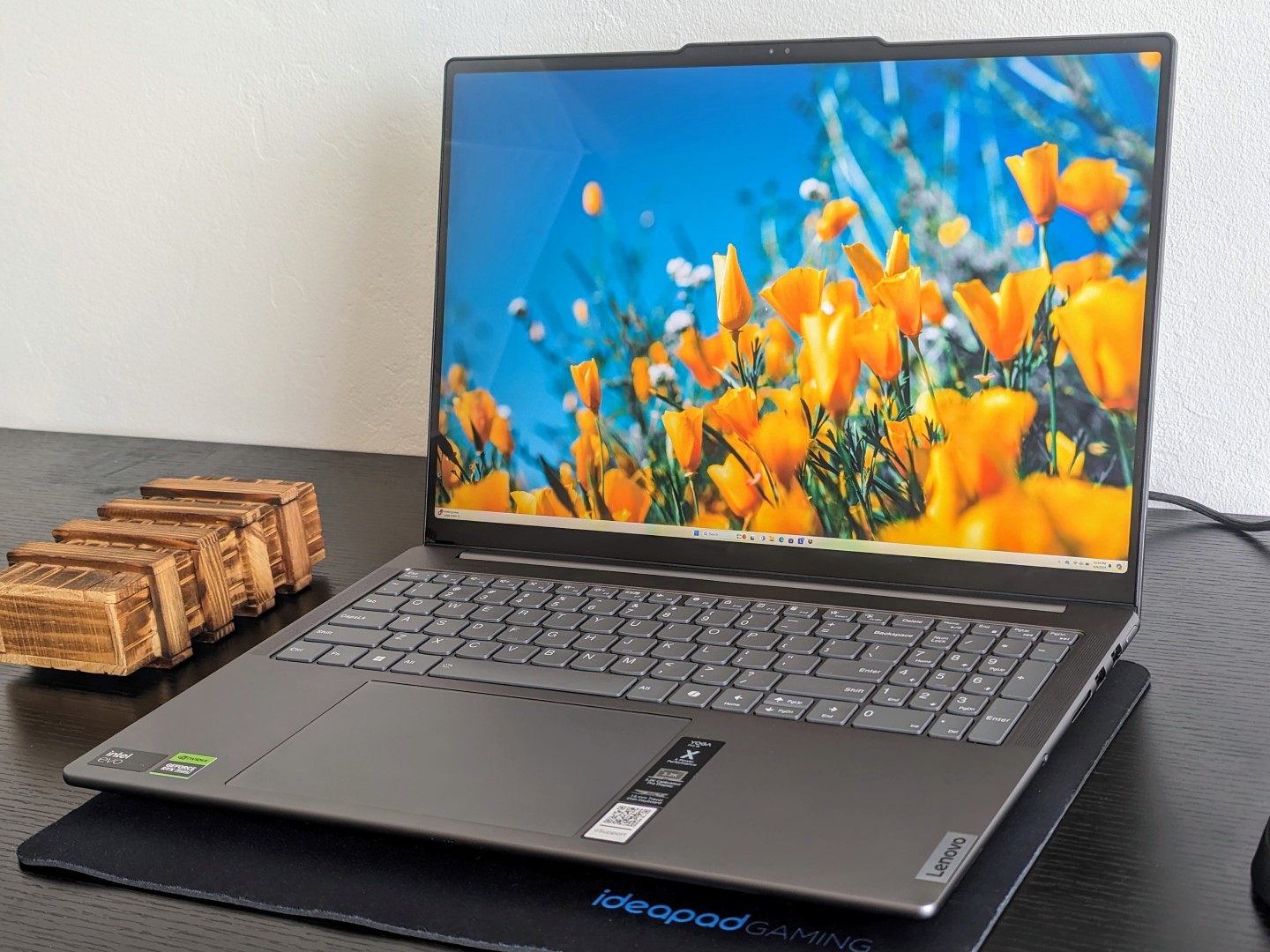
The Lenovo Yoga Pro 9 16IMH9 laptop has emerged as a noteworthy performer in the high-end laptop sphere, particularly with its configuration that includes the NVIDIA GeForce RTX 4050 Laptop GPU. With the increased demand for portable yet powerful computing solutions, the combination of advanced processors and GPUs in laptops has become a top priority for consumers and professionals alike.
According to performance assessments, the Lenovo Yoga Pro 9 16IMH9, equipped with an Intel Core Ultra 9 185H processor and the NVIDIA RTX 4050 GPU, is showing impressive results in various benchmarks. This model boasts significant graphical capabilities that cater to both creatives and gamers who seek robust performance in a versatile form factor.
Comparing the RTX 4050’s performance within the Yoga Pro 9 to other high-performance laptops, we see that Lenovo’s offering holds its own against competitors. Laptops featuring the same GPU from manufacturers like Dell, HP, Asus, and Alienware display a wide spectrum of performance metrics, with the Lenovo Yoga Pro 9 proving to be a strong contender in the mix.
In gaming and graphics-intensive applications, where frame rates and GPU power are of utmost importance, Lenovo’s Yoga Pro 9 with the RTX 4050 demonstrates that it can exceed expectations. It is particularly commendable in situations where laptops usually equipped with higher-tier GPUs, like the RTX 4070 or RTX 4090, are expected to dominate.
Performance summaries reveal that the Lenovo Yoga Pro 9, powered by the RTX 4050, strikes a balance between efficient power consumption and compelling graphical proficiency. The laptop showcases an ability to run modern applications with ease, and despite not being the absolute top tier in terms of raw power, it provides a remarkable experience that falls within the realm of premium portable computing devices.
Consumers should note that the Yoga Pro 9’s excellence is not just a result of its GPU; the synergy between its high-end CPU and other components also plays a critical role. These laptops are designed to handle a plethora of demanding tasks beyond gaming, such as video editing, 3D modeling, and other creative workflows.
People interested in up-to-date laptops endowed with potent graphics capabilities will find Lenovo’s Yoga Pro 9 to be a persuasive option. Its RTX 4050 GPU empowers users with high-performance features, adaptable to various use cases whether for professional environments or entertainment purposes. The Lenovo Yoga Pro 9 16IMH9 demonstrates that even in configurations with less publicized GPUs like the RTX 4050, users can still expect a high-quality performance that can compete with some of the more extensively discussed models in the market. This serves as a reminder that when selecting a laptop, one should consider the overall performance and real-world usage, not just the specifications on paper.If you’re in the market for a high-performance laptop, powerful GPUs like the NVIDIA GeForce RTX series are a key aspect to consider. With offerings from brands like Alienware, Lenovo, and HP, understanding the capabilities of these GPUs is critical for savvy shoppers and gamers. Let’s delve into the options available and analyze what you should look for to suit your needs.
Starting with impressive performance, the Alienware m16 R1 equipped with an AMD Ryzen 9 7845HX and NVIDIA GeForce RTX 4080 Laptop GPU offers significant computing power. With reported frame rates around 164.7 fps, this rig shows a strong lead in performance. Similarly, the Lenovo Legion 9, featuring an Intel Core i9-14940HX and NVIDIA GeForce RTX 4090 Laptop GPU, delivers a remarkable 400 fps, marking a jump of 134% in frame rate, showcasing the prowess of top-tier graphics on the latest gaming titles or professional applications.
For those who need a notch down but still aim for superior graphics, the HP Victus 16 (2024) with an Intel Core i7-14700HX and NVIDIA GeForce RTX 4060 Laptop GPU pushes performance further with around 205 fps. And if you’re eyeing something that blends performance with flexibility, the HP Envy x360 2-in-1 powered with an AMD Ryzen 7 8840HS and AMD Radeon 780M GPU could be the middle ground you’re looking for.
On the other hand, laptops such as the HP Pavilion Plus 16-ab0456tx with an Intel Core i7-13700H and a slightly modest NVIDIA GeForce RTX 3050 6GB Laptop GPU can handle most tasks smoothly, but with a less dramatic frame rate around 91.9 fps – catering well to casual gamers and professional work without breaking the bank.
For creative professionals and multitaskers, the Lenovo Yoga Pro 9 with its Intel Core Ultra 9 185H paired with NVIDIA GeForce RTX 4070 Laptop GPU demonstrates a robust balance of portability and power, making it a strong candidate for resource-heavy applications.
In contrast, the Framework Laptop 16 with an AMD Ryzen 9 7940HS and AMD Radeon RX 7700S is another option, clocking in at a commendable 170.9 fps. It provides a sustainable choice for those who prioritize reparability and upgradability in their tech.
It’s clear that performance levels can vary widely depending on your chosen configuration. When shopping for a GPU-equipped laptop, consider the types of games or software you’ll be running. A higher frame rate is generally better for gaming and visually intensive tasks, but with higher performance often comes a higher price tag.
In summary, carefully assess your needs and budget before choosing a laptop. Whether it’s for gaming at the highest settings or tackling graphics-intensive work tasks, there’s an array of options out there, each with their unique strengths. Remember that the GPU is just one piece of the puzzle – CPU, memory, and storage options are also critical for a well-rounded machine. By keeping a close eye on the frame rates and performance benchmarks, you can make an informed decision and invest in a laptop that will serve you well into the future.When it comes to choosing a laptop for gaming or heavy-duty tasks, understanding the performance metrics is crucial. Modern laptops with high-end GPUs like the NVIDIA GeForce RTX series and processing units from Intel and AMD are designed to handle intense graphics and computation. Let’s compare the gaming frame rates of different laptop models to gauge their performance.
Starting off with a heavyweight contender, the Lenovo Legion 9 16IRX9 stands out with an Intel Core i9-14900HX CPU and an NVIDIA GeForce RTX 4090 Laptop GPU. Users can expect a staggering average of 369 frames per second (fps) with peaks that significantly outperform many other models on the market. This gaming rig is designed for those who need top-of-the-line performance for gaming or professional graphics work.
Alienware is well-known for its powerful gaming machines, and the Alienware m16 R1 with an AMD Ryzen 9 7845HX processor and NVIDIA GeForce RTX 4080 Laptop GPU holds its ground with around 357 fps. It’s an excellent choice for gamers who want smooth gameplay and are willing to invest in a high-end setup.
On the mid-range side, there’s the HP Victus 16 (2024), equipped with an Intel Core i7-14700HX CPU and NVIDIA GeForce RTX 4060 Laptop GPU. This model shows a respectable performance of approximately 179 fps, making it a decent option for those who seek balance between cost and capability.
The Dell XPS 16 9640, with its Intel Core Ultra 7 155H CPU and NVIDIA GeForce RTX 4070 Laptop GPU, as well as the Lenovo Yoga Pro 9 16IMH9 with similar specs, demonstrate how machines in this tier can deliver performance around 150 fps, suitable for most modern gaming needs without breaking the bank.
For users who prefer AMD configurations, the Framework Laptop 16 featuring an AMD Ryzen 9 7940HS CPU and AMD Radeon RX 7700S GPU shows a competitive performance, clocking in around 143.9 fps. This is excellent for those who support AMD’s ecosystem and want a reliable gaming laptop.
The Asus VivoBook Pro 16 and the Asus ZenBook Pro 16X, both with the Intel Core i9-13900H CPU and varying NVIDIA RTX GPUs, demonstrate that ASUS continues to produce powerful laptops for graphic-intensive tasks, with performances averaging around 139.1 to 152.1 fps.
Budget-conscious consumers might look at models like the HP Pavilion Plus 16 with Intel Core i7-13700H and NVIDIA GeForce RTX 3050, or the HP Envy x360 with an AMD Ryzen 7 8840HS and AMD Radeon 780M, which offer more modest frame rates of 80.5 fps and 42.2 fps respectively. These are suited for casual gaming and multimedia consumption.
Lastly, laptops like the Lenovo Yoga 7 featuring an Intel Core Ultra 5 125U with integrated Intel graphics are designed for everyday use and light gaming, as reflected in its lower fps of around 30.2 in gaming tasks.
In conclusion, whether you’re an avid gamer or a professional creator, there’s a laptop out there to meet your performance needs. High-end models like the Lenovo Legion 9 and Alienware m16 R1 lead the pack with exceptional fps, whereas the mid-range options like the HP Victus 16 and Dell XPS 16 offer balanced performance for the cost. Budget-friendly options like the HP Pavilion Plus and Lenovo Yoga 7 provide casual gaming capabilities without a high price tag. When selecting a gaming laptop, consider the type of games you want to play, your budget, and whether the system’s specs justify its performance for your needs.