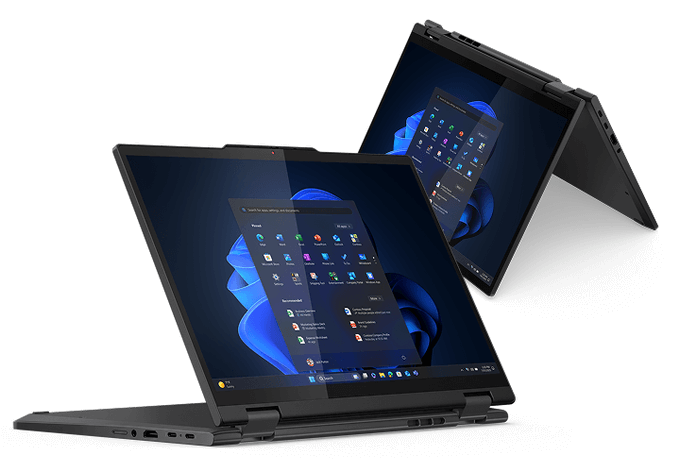
Exciting times are ahead for Lenovo enthusiasts, as a recent leak reveals a dramatic shift in Lenovo’s renowned ThinkPad lineup, just in time for the Mobile World Congress (MWC) in March. Among the buzz is the introduction of the Lenovo ThinkPad T14s 2-in-1, a new convertible addition that may signal the sunset of the ThinkPad X13 2-in-1 series.
For over two decades, the ThinkPad T series has been a staple in the business laptop arena, known for its performance and reliability. Now, it’s evolving with a 2-in-1 convertible model, a first in its history. This shift by Lenovo aligns with broader market trends, where manufacturers like Asus are shifting focus from the 13-inch to the 14-inch screen size, potentially for greater utility and user demand.
The leaked lineup has conspicuously omitted the X13 2-in-1 Gen 5, which we recently tested and enjoyed for its 13.3-inch screen, suggesting it may cease production in favor of the newer, larger model. This could mark the end of a long-standing tradition of smaller convertible laptops, which have been a part of the ThinkPad X series since 2005.
Despite this change, Lenovo isn’t leaving fans of compact models entirely in the dust. The leak hints at a new generation of the Lenovo ThinkPad X13, albeit in a traditional clamshell design, keeping the spirit of smaller ThinkPads alive for those who cherish them.
The T14s 2-in-1 promises several benefits with its larger size, including a more expansive touchpad, a broader keyboard, and enhanced cooling and battery systems. However, these features come at the cost of a larger physical footprint and potentially higher weight compared to its predecessor, the X13 2-in-1.
As technology evolves, so must the tools we use day in and day out. This adaptation by Lenovo underscores a pivotal shift in user preferences and market dynamics, as larger-scale laptops become more commonplace. For business professionals and tech enthusiasts alike, these new developments offer a promising glimpse into the future of mobile computing.


