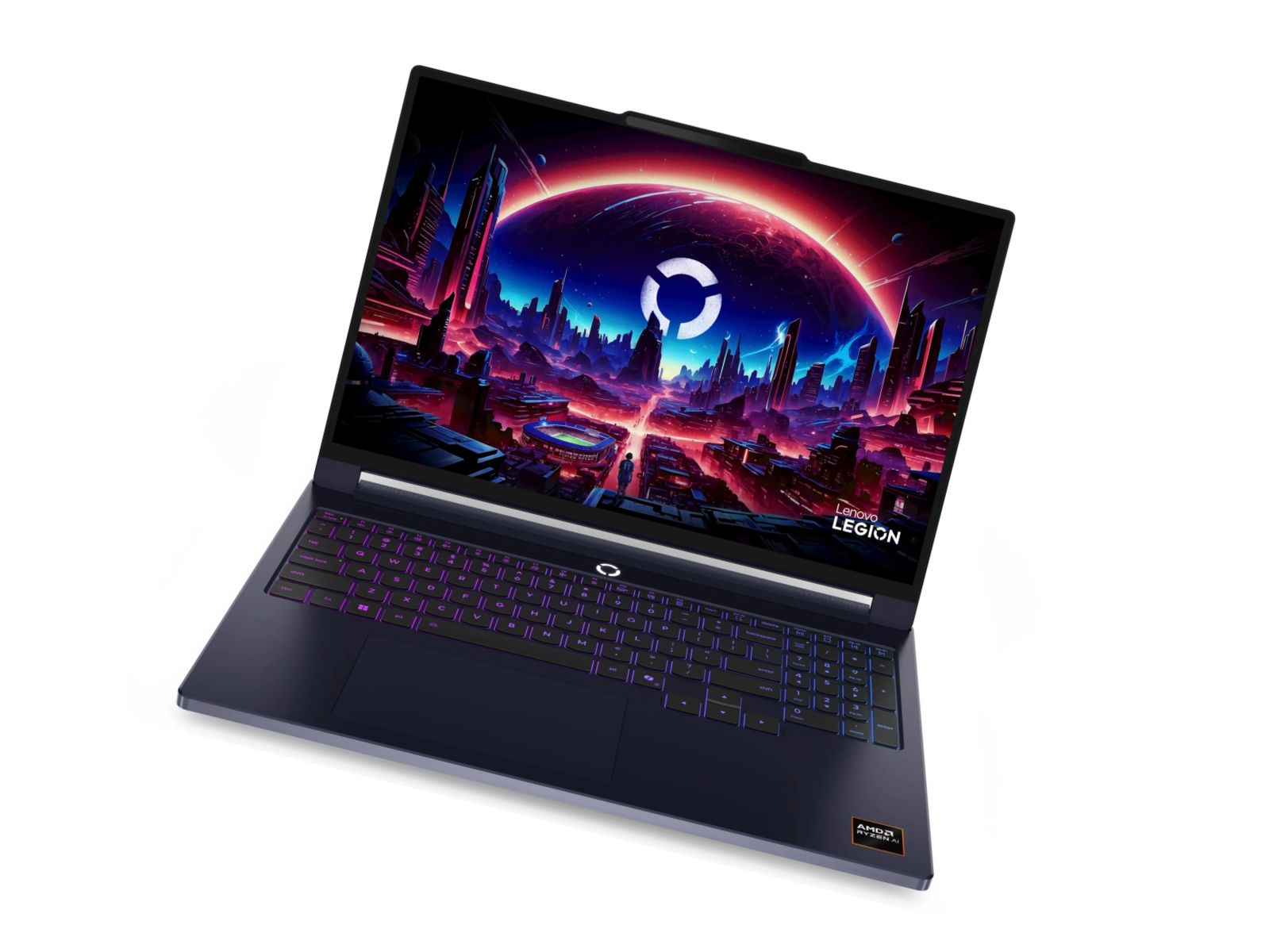
Lenovo looks to be gearing up for another addition to its Legion gaming lineup, and this one could be especially interesting for players who want strong gaming performance without the extra heat, bulk, or power draw of a dedicated graphics card.
Early signs point to a new model called the Legion 7 15 ASH11. The name matters here: “ASH” appears to reference AMD’s Strix Halo platform, a new high-performance APU approach designed to deliver desktop-like CPU strength and surprisingly capable graphics from integrated Radeon hardware. Lenovo hasn’t formally announced the laptop yet, but the Legion 7 15 ASH11 has already been mentioned on a Lenovo Legion Space support page, which is often a strong hint that a product launch is being prepared behind the scenes.
What makes Strix Halo so compelling is that it aims to blur the line between integrated and dedicated graphics. While Lenovo hasn’t confirmed which chips will be offered, likely candidates include AMD’s Ryzen AI Max+ 392 and Ryzen AI Max+ 395. Either way, graphics performance should be similar because both are expected to use the same Radeon 8060S integrated GPU. In other words, buyers may be choosing between CPU tiers and AI performance rather than big differences in gaming graphics.
Another notable detail is the size. Unlike the 16-inch Legion 7 Gen 11 models shown during Lenovo’s CES 2026 showcase, the Legion 7 15 ASH11 is expected to use a 15-inch display. That could appeal to gamers who want something a little more compact while still staying in the premium Legion 7 family.
It’s also useful to compare this rumored model to Lenovo’s existing Legion 7a Gen 11 configuration, which pairs an AMD Ryzen AI 9 HX 470 processor with an Nvidia GeForce RTX 5060 Laptop GPU. If Lenovo brings the Legion 7 15 ASH11 to market with a top-tier Strix Halo chip like the Ryzen AI Max+ 395, it could offer a meaningful CPU advantage over the Legion 7a Gen 11. At the same time, AMD’s integrated Radeon 8060S graphics are positioned to compete in the same general performance conversation—while potentially using significantly less power thanks to the no-dGPU design.
That combination points to a potentially sweet spot for modern gaming laptops in 2026: high frame rates in popular competitive titles, smoother performance in everyday and creator workloads, and better efficiency for quieter fans and improved battery life when you’re not gaming.
For now, the biggest unknown is timing. Lenovo hasn’t shared an official release date or full specifications yet, but the appearance of the Legion 7 15 ASH11 in support documentation suggests the wait may not be too long. If you’re shopping for a new gaming laptop and want next-generation AMD Strix Halo performance in a Legion 7 design—without relying on a dedicated GPU—this is one model worth keeping an eye on.