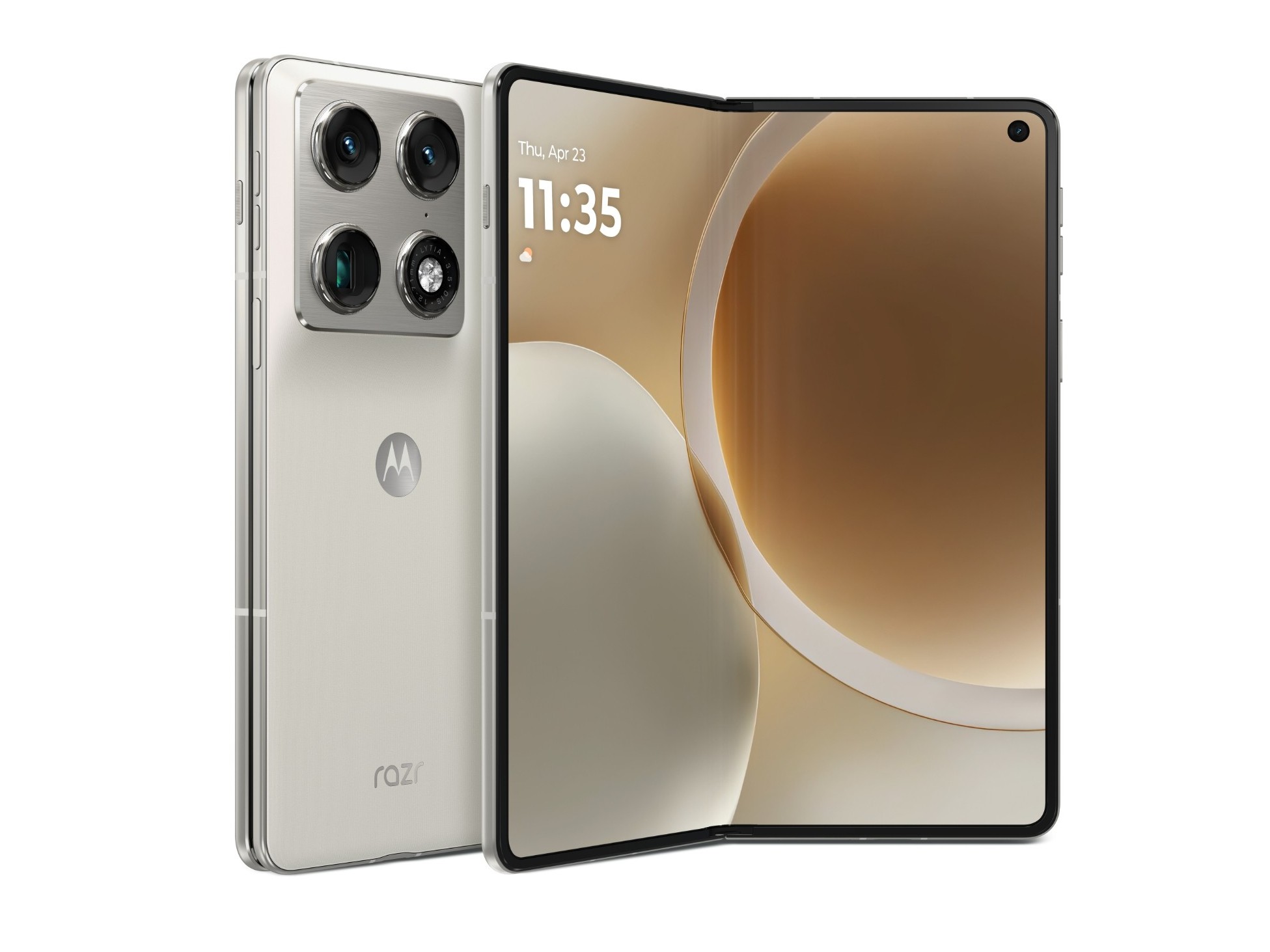
Motorola is getting ready to shake up the foldable phone market in a big way this summer with the Razr Fold, its first book-style foldable. After years of focusing on clamshell foldables, Motorola is now stepping into the same arena as other large-screen foldable smartphones—aiming directly at the devices people cross-shop when they want a phone that opens into a tablet.
When the Razr Fold was introduced at CES 2026, Motorola kept several key details under wraps. Specs like the processor, memory options, storage configurations, and—most importantly for many buyers—the price weren’t confirmed at the time. Now, a new leak has put a clear number on what shoppers in the United States might pay, and it suggests Motorola is planning to compete aggressively on cost.
According to prominent leaker Evan Blass, the Motorola Razr Fold is expected to start at $1,500 in the US. If that pricing holds, it positions Motorola as a more affordable option in the premium foldable category, undercutting rival book-style foldables that commonly launch closer to the $1,800–$2,000 range. For shoppers who want the foldable experience without paying top-tier pricing, that number could instantly make the Razr Fold one of the most interesting upcoming foldable phones of 2026.
Of course, a lower entry price often comes with trade-offs, and the leaked pricing has sparked new speculation about what chipset Motorola will use. Instead of opting for Qualcomm’s top-end Snapdragon 8 Elite Gen 5—expected to power many of 2026’s highest-performance flagship phones—Motorola may decide to use the Snapdragon 8 Gen 5 instead. That would mirror Motorola’s approach on some previous flagship launches, where it has occasionally chosen a slightly less powerful Snapdragon option to control costs, even while keeping other premium features intact.
If Motorola does go with the Snapdragon 8 Gen 5, the Razr Fold could still deliver strong real-world performance for everyday users, multitasking, and productivity apps—especially if paired with solid software optimization. But for buyers who prioritize maximum gaming performance, heavy creative workloads, or the absolute best benchmark scores, the exact processor choice could become a deciding factor once full specs are confirmed.
Even so, Motorola may have a smart plan here. A more affordable book-style foldable could be exactly what’s needed to attract users who have been curious about foldable phones but hesitant to spend nearly $2,000. And Motorola’s foldables often see meaningful price drops not long after launch, which could make the Razr Fold an even better value for anyone willing to wait a few months.
For now, the biggest takeaways are simple: Motorola’s Razr Fold is coming this summer, it could launch at around $1,500 in the US, and that competitive pricing may be tied to Motorola making strategic choices on its internal hardware. If the final spec sheet delivers strong displays, a well-designed hinge, capable cameras, and reliable battery life, Motorola could end up with one of the most compelling foldable phone value plays of 2026.