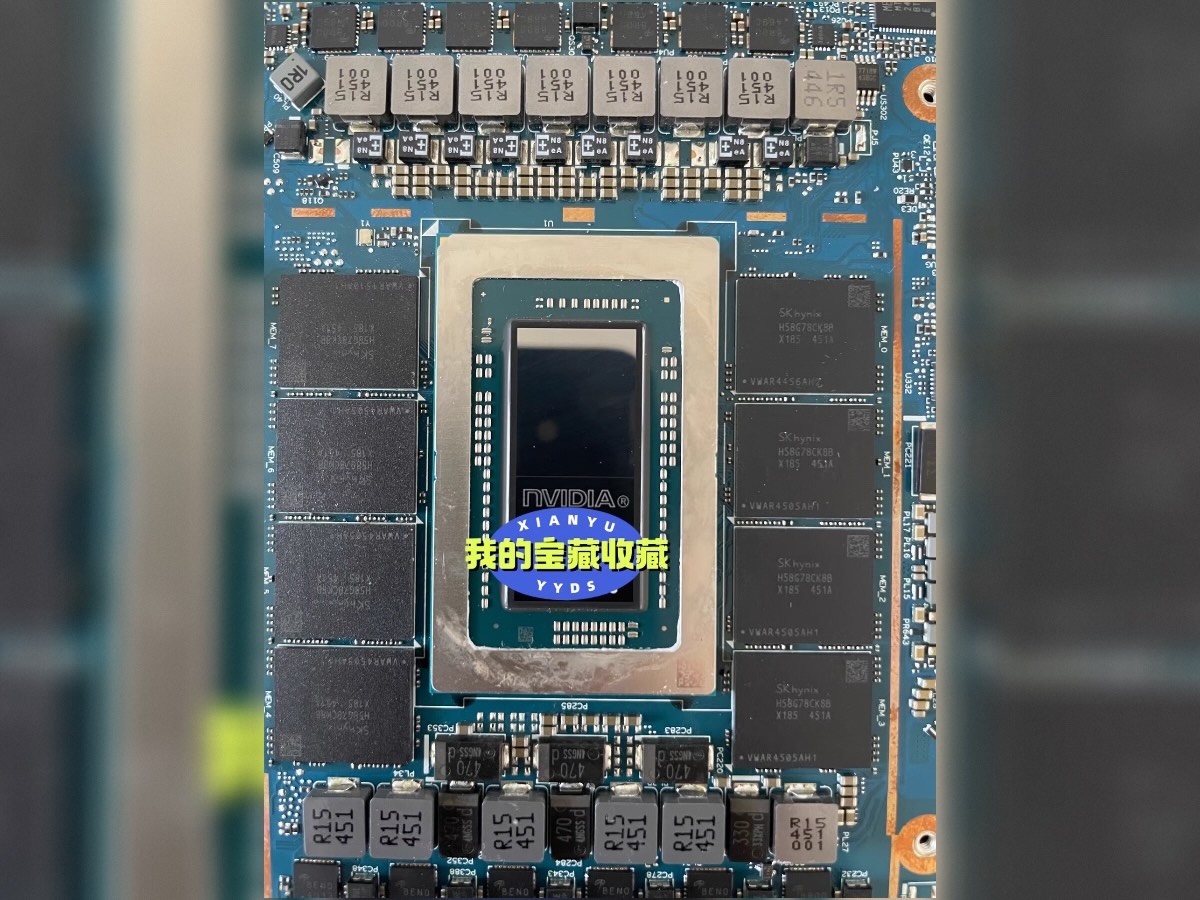
A leaked product listing has offered one of the clearest signs yet that Nvidia’s long-rumored N1-powered laptops are getting close to reality. An engineering-sample laptop motherboard believed to feature the upcoming Nvidia N1 system-on-chip (SoC) recently surfaced on Goofish, and the photos reveal a few eye-catching details—most notably an astounding 128 GB of RAM listed alongside the chip.
For months, talk has been building that Nvidia is preparing a serious push into the consumer SoC market, aiming directly at the fast-growing category of efficient, ARM-based laptops. The higher-tier Nvidia N1X has already shown up in multiple benchmark sightings, fueling expectations that the first wave of laptops using Nvidia’s N1-family silicon could arrive later this year. Some reports also suggest major PC makers are lining up devices around the same timeframe, adding weight to the idea that this is more than just a lab experiment.
What makes this fresh leak especially interesting is that it appears to show an early motherboard intended for a more mainstream “vanilla” N1 model, not only the flagship. If accurate, it’s a strong indicator Nvidia is planning a broader lineup rather than a single halo chip.
The leaked motherboard images also hint at connectivity options. The port layout shown includes USB-C, USB-A, HDMI, and a 3.5 mm audio jack. Since this seems to be an engineering sample, it’s best to treat the I/O configuration as a work in progress—final retail laptops often tweak port selection and placement before launch.
On the performance side, anticipation is largely centered on the Nvidia N1X. One earlier benchmark listing pointed to a 20-core CPU configuration made up of 10 Cortex-X925 performance cores and 10 Cortex-A725 efficiency cores. In that same leak, the chip reportedly edged past Apple’s M5 by a small margin and also outperformed Intel’s Core Ultra 7 275HX by a more noticeable gap. Because early benchmark results can be affected by immature firmware, drivers, and platform-level tuning, real-world performance could improve further as the hardware and software stack matures closer to release.
Graphics are another big part of the N1 story. A separate benchmark leak referenced an onboard Blackwell-based GPU that may pack around 6,144 CUDA cores—remarkably close to the GB10 SoC used in Nvidia’s DGX Spark mini PC. Early GPU benchmark results weren’t particularly dramatic, landing only slightly ahead of an RTX 2050 Mobile in that snapshot, but that kind of result is often typical for early-stage hardware running unfinished drivers. To put the rumored core count in perspective, Nvidia’s RTX 5070 Ti Laptop GPU is listed with 5,888 CUDA cores, though laptop GPU performance depends on many factors beyond core counts alone.
As for the exact specifications of the standard Nvidia N1 (including its final CPU and GPU core configuration), details remain unclear for now. Still, with an engineering-sample motherboard now appearing in the wild, it’s becoming harder to dismiss the idea that Nvidia’s ARM laptop push is nearing a real product launch.
If Nvidia moves forward as expected—reportedly in collaboration with MediaTek—it could quickly reshape the Windows-on-ARM landscape, which has largely been defined by Qualcomm so far. For buyers, that could mean more competition, more device options, and faster improvements in performance and efficiency for next-generation laptops.


