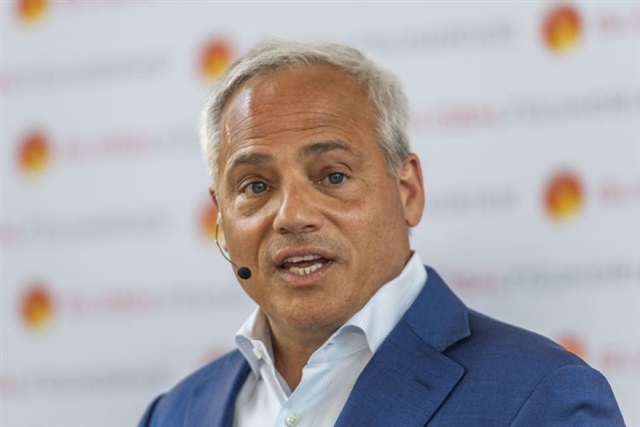
In a twist that has the tech world buzzing, changes in GlobalFoundries’ leadership have fueled speculation about who will fill the vacant CEO spot at Intel, marking a new chapter for the semiconductor giant. The buzz began when Thomas Caulfield announced his resignation from his CEO position at GlobalFoundries to take on the chairman’s role, allowing Tim Breen, the current chief operating officer, to ascend as CEO.
This leadership shuffle has led many to believe that Caulfield might be eyeing a top-tier position at Intel or its subsidiary, Intel Foundry. Caulfield’s impressive credentials, including significant time with IBM and leading efforts in GlobalFoundries’ semiconductor manufacturing, make him a strong candidate for the leadership of Intel Foundry. While he may not have direct experience in integrated circuit design, his formidable academic background in materials science and engineering positions him well to steer Intel through the competitive tech landscape.
This timing couldn’t be more critical, as Intel’s future in the semiconductor manufacturing industry is tethered to the successful rollout of its upcoming 18A and 14A nodes. Adding fuel to the speculation, a previous report from Bloomberg suggested that the U.S. government is advocating for a strategic merger between Intel and GlobalFoundries, aiming to bolster the influence and scale of American foundry companies. Should Caulfield take on a leadership role at Intel, he could potentially set a new strategic path that aligns with these expansionary goals.
Prior to Caulfield’s emergence as a potential candidate, the semiconductor community was abuzz with recommendations for Lip-Bu Tan, a former Intel board member, as a top contender for the CEO role. Tan’s knack for transforming loss into profit and his forward-thinking leadership style earned him high regard from past Intel executives, positioning him as a seemingly perfect choice. However, despite his respected reputation and the urging of numerous shareholders, Tan appears uninterested in steering Intel’s helm at this time.
As Intel continues to define its future direction amidst these changes, the industry watches closely, intrigued by what these high-level shifts could herald for the company’s strategy and its place in the global semiconductor arena.


