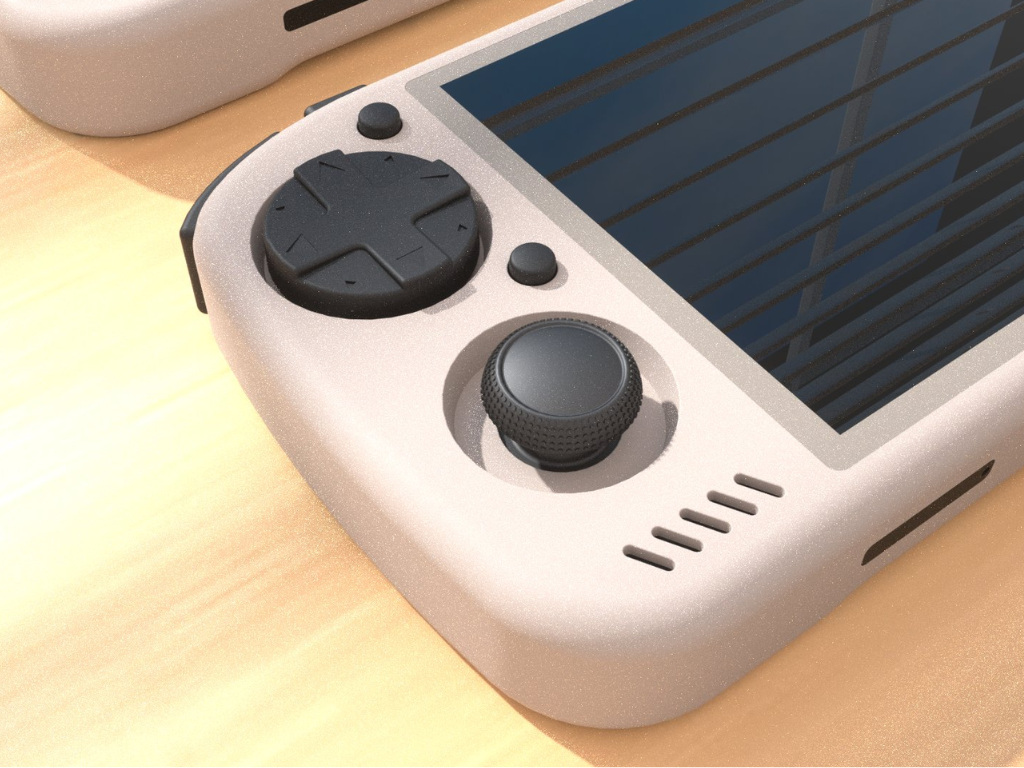
Fresh first-look images of a new retro gaming handheld are making the rounds, and they’re already turning heads among emulation fans. The device is called the KTR1 S, and it’s being positioned as a refreshed take on the 2022 KT-R1—this time with more power, more flexibility, and a much heavier focus on personalization.
The KTR1 S has been described as “the true custom handheld,” and the specs plus design options help explain why. Instead of locking everyone into a single layout and build, the KTR1 S is built around choice. Buyers can pick between two display aspect ratios—classic 4:3 for a more authentic retro feel, or a taller 3:2-style option that better suits a wider range of games. On top of that, the handheld supports swapping the analog stick positions, letting you choose what feels best in your hands rather than forcing a one-size-fits-all control scheme.
Color options are also part of the early reveal, with the handheld shown in purple, cream, black, and white. Pre-orders are expected to open soon, which means anyone who’s been waiting for a more tailor-made emulation handheld may want to keep an eye on upcoming availability.
A major upgrade comes from what’s inside. The KTR1 S moves on from the older MediaTek Helio G99 used in the 2022 model and steps up to a MediaTek Dimensity 7300. That’s a notable jump in CPU and GPU capability, featuring four Cortex-A78 performance cores alongside four A55 efficiency cores, plus a significantly stronger Mali-G615 GPU. Built on a modern 4nm process, the new chipset is designed to deliver better performance while keeping power use under control—an important combination for handheld gaming where smooth play and battery life both matter.
In practical terms, this hardware boost is aimed squarely at better emulation performance and stability, especially for tougher systems like the GameCube and PlayStation 2, where weaker handhelds often struggle with frame pacing, heat, or inconsistent results across games.
Battery options are also part of the package. The standard version is said to include a 6920mAh fast-charging battery, while a lighter model will use a 5600mAh battery to reduce weight to around 220–230 grams. That gives buyers a clear choice between going bigger for longer sessions or going lighter for comfort and portability.
The customization doesn’t stop at sticks and batteries. Display choices appear tailored to different play styles: you can opt for a 4.2-inch 960×1280 IPS screen in a true retro-friendly 4:3 format, or choose a 4.5-inch 1080×1620 panel aimed at people who also want a better experience with more modern titles and interfaces.
Control layout customization goes even further, with options that can prioritize a top-positioned D-pad for classic, Sega-style play or shift emphasis toward joystick-first layouts depending on what you play most. The shell material is also configurable, with plastic for a standard build or a premium magnesium alloy option for a more high-end feel. The metal version reportedly opens the door to an extensive set of custom colors—more than 44—with an added cost in the $20 to $30 range.
For retro handheld fans, the KTR1 S is shaping up to be less about a fixed “best” design and more about letting players build the handheld that matches their games, their grip, and their preferences. Between the Dimensity 7300 upgrade, the flexible layout options, and the wide range of screen and shell choices, it’s positioning itself as a serious contender for anyone who wants strong emulation performance without giving up the kind of customization usually reserved for enthusiast hardware.