Keychron is taking a notable step toward more user-driven customization by publishing a large collection of its hardware design files for free download. The company has made 3D models available in STEP format, giving keyboard enthusiasts, modders, and makers a new way to explore how Keychron products are built and to create their own non-commercial modifications.
There is one important catch: STEP files are great for viewing precise dimensions and part placement, but they’re not always the easiest format for direct editing compared to more creator-friendly CAD formats. Even so, they’re still extremely useful if your goal is to measure components accurately, design compatible parts around existing geometry, or fabricate your own enclosures and accessories. For many users, that opens the door to 3D printing or CNC machining replacement parts or custom housings in materials that may offer different weight, durability, acoustics, or aesthetics than stock options.
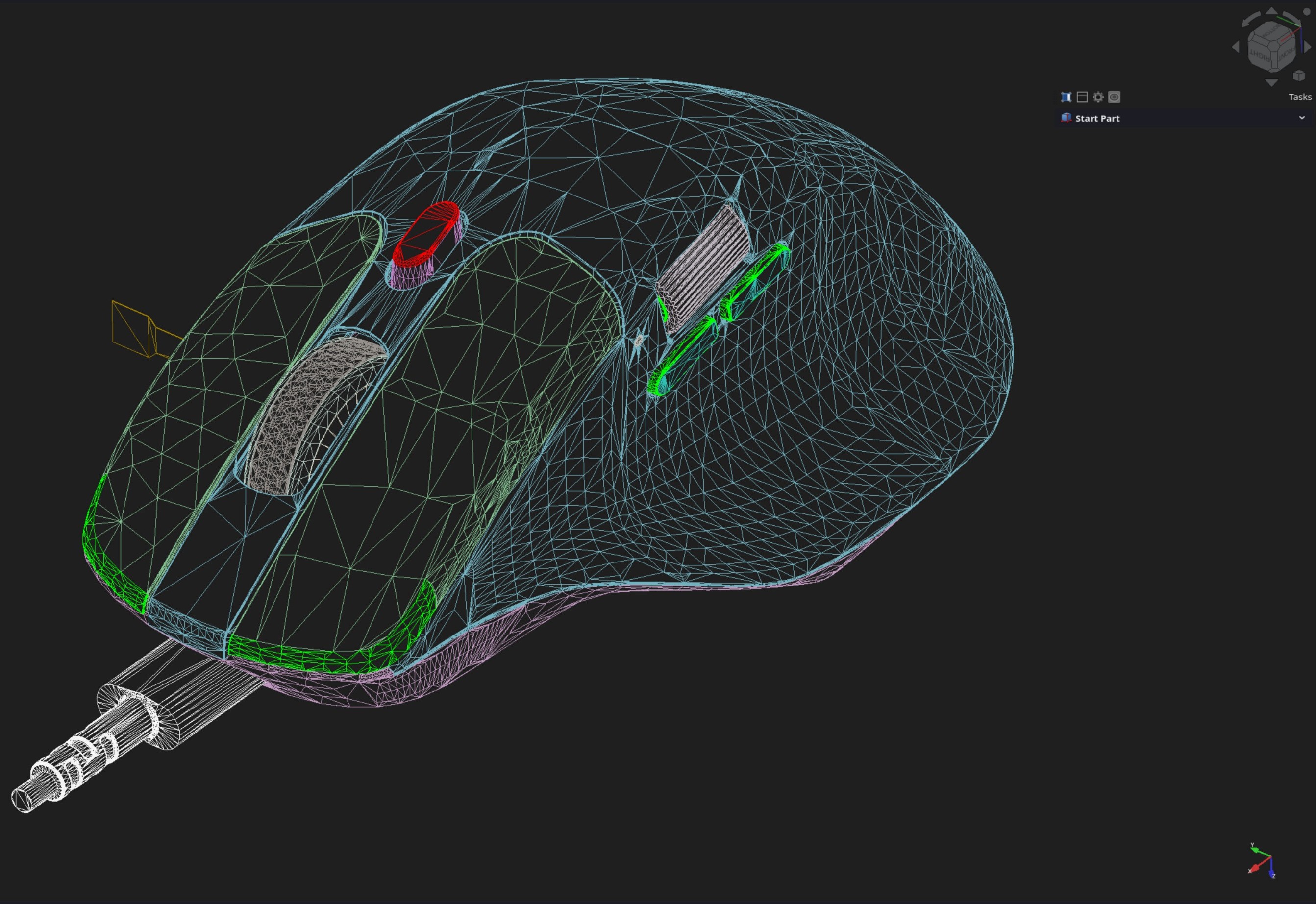
A look through Keychron’s repository reveals a surprisingly comprehensive library. It isn’t limited to a single keyboard or a handful of parts. Instead, it includes detailed models for keycaps, keyboard cases, knobs, plates, mouse shells, and even stabilizer housings. For the mechanical keyboard community, that kind of official reference material can save hours of guesswork when planning a custom build, testing fitment, or experimenting with case design and internal acoustics.
Keychron is also very explicit about how these files may be used. The license is “source-available,” not open-source in the traditional sense, and it clearly prohibits commercial use. In other words, you can view, download, and study the designs for personal or educational purposes, and you can modify the files or create derivative works as long as the end result remains strictly non-commercial—such as printing a custom case for your own keyboard. You’re also allowed to share the original, unmodified files with others, as long as you include the full license and copyright notice, and you can reference the materials in academic or educational contexts.
What you cannot do is use the files (or anything derived from them) for commercial purposes. That includes manufacturing, selling, distributing for profit, or incorporating the designs into any product or service intended for commercial gain. The license also restricts redistribution of modified versions without written permission from Keychron, forbids removing or altering attribution and license notices, and requires that derivative works not be presented as officially endorsed by Keychron. As with many design file releases, the files are provided “as is” with no warranty, and Keychron states it can change the license terms for future releases.
To make access easier, Keychron has connected the repository to its website and streamlined downloads through a familiar process. Instead of digging through folders manually, users can select a keyboard from a drop-down menu and download the corresponding file using the same checkout-style flow typically used for purchasing products—only in this case, it’s for grabbing the design files.
For anyone into mechanical keyboard modding, DIY fabrication, or learning product design by studying real-world components, Keychron’s release is a meaningful addition to the maker ecosystem. It delivers official dimensions and part geometry for a wide range of components, while clearly drawing a firm line between personal tinkering and commercial reuse.