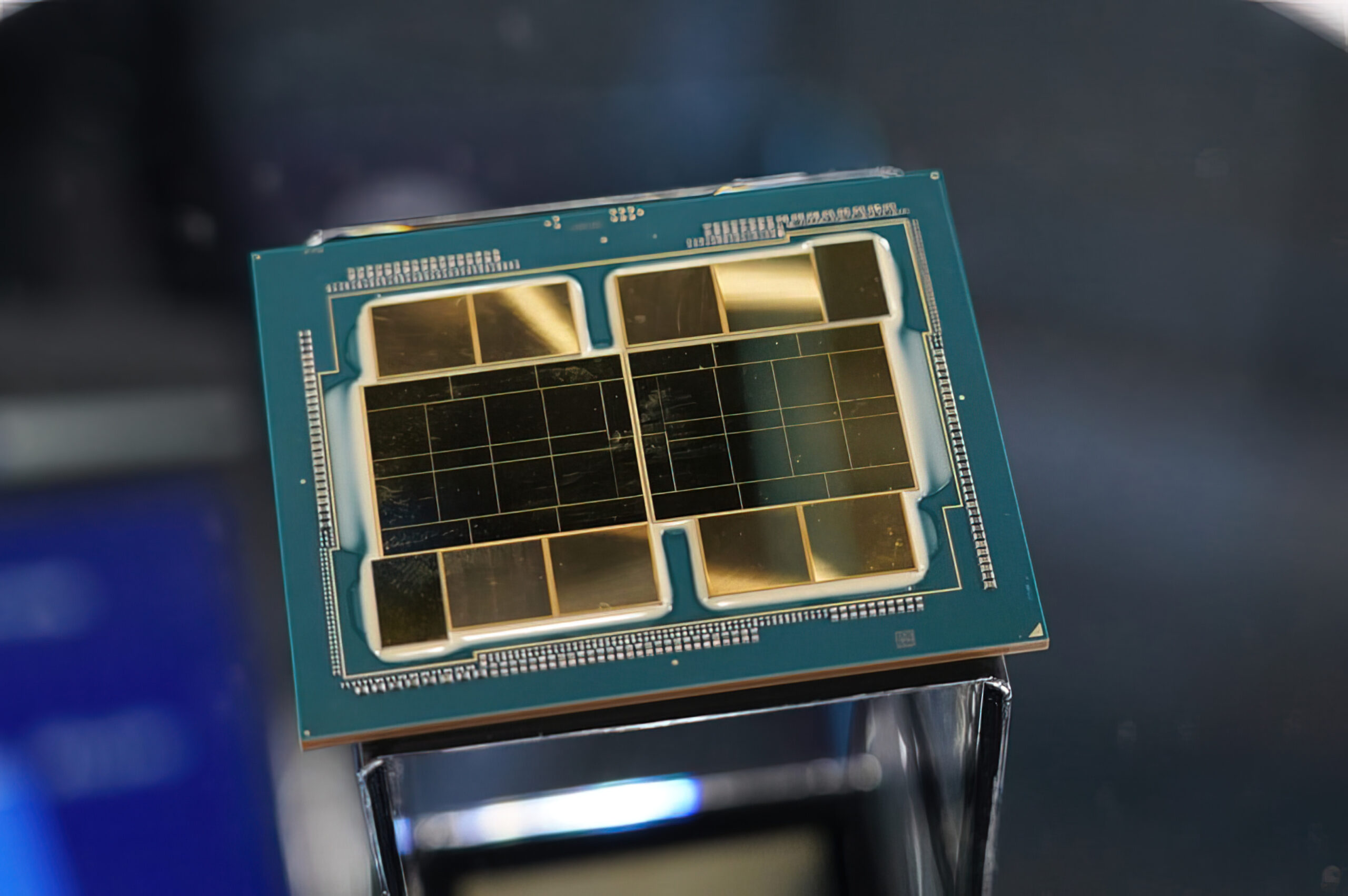
Intel has ceased further deployment of its Ponte Vecchio GPU, a key product known for its remarkable chiplet-heavy design. Designed to drive the next wave of exascale computing, this advanced GPU encompassed an impressive array of 47 tiles on a single package, boasting various internal and external components including Xe HPC, Rambo, Xe Base, EMIB, Xe Link, and HBM.
Despite its groundbreaking design, the Ponte Vecchio GPU’s deployment comes to a halt as Intel shifts its focus to emerging technologies. The GPU was a centerpiece in Intel’s Data Center Max GPU series, and notably powered the Aurora Supercomputer—which achieved the significant milestone of breaking the exascale barrier, albeit later than competitors.
The Aurora supercomputer, which utilized the Intel Xe hardware and dedicated AI accelerators, set AI performance records, yet Intel is now prioritizing its next-gen Gaudi accelerators. These will guide the future of its AI performance segment, with the Gaudi 2 and Gaudi 3 chips taking the lead.
Speaking with sources in the tech community, Intel confirmed that no new clusters would feature the Ponte Vecchio GPUs. While current clusters will continue to be equipped with Ponte Vecchio, the company’s direction firmly points towards its upcoming Falcon Shores GPU. Nevertheless, the Ponte Vecchio GPUs remain accessible via the Intel Developer Cloud for those interested in its high-performance computing (HPC) capabilities.
Intel has not only halted the development of Rialto Bridge, an anticipated upgrade to Ponte Vecchio but has also redirected Falcon Shores from being a hybrid x86 CPU/GPU architecture to a GPU-centric design. This pivot aligns with current trends, as seen with competitors like AMD, who integrate their graphics and processing units into single-package solutions like the MI300A APU Accelerator.
The Falcon Shores GPU aims to amalgamate the best features of the Gaudi and the forthcoming Xe GPU architectures. Although its debut is projected for the following year, enthusiasts and professionals alike are eagerly awaiting to see if this launch will proceed as planned or encounter the delays that marked the Ponte Vecchio.
As Intel concludes the chapter on Ponte Vecchio, the tech community watches with anticipation for what Falcon Shores will bring to the evolving landscape of GPU technology and exascale computing.


