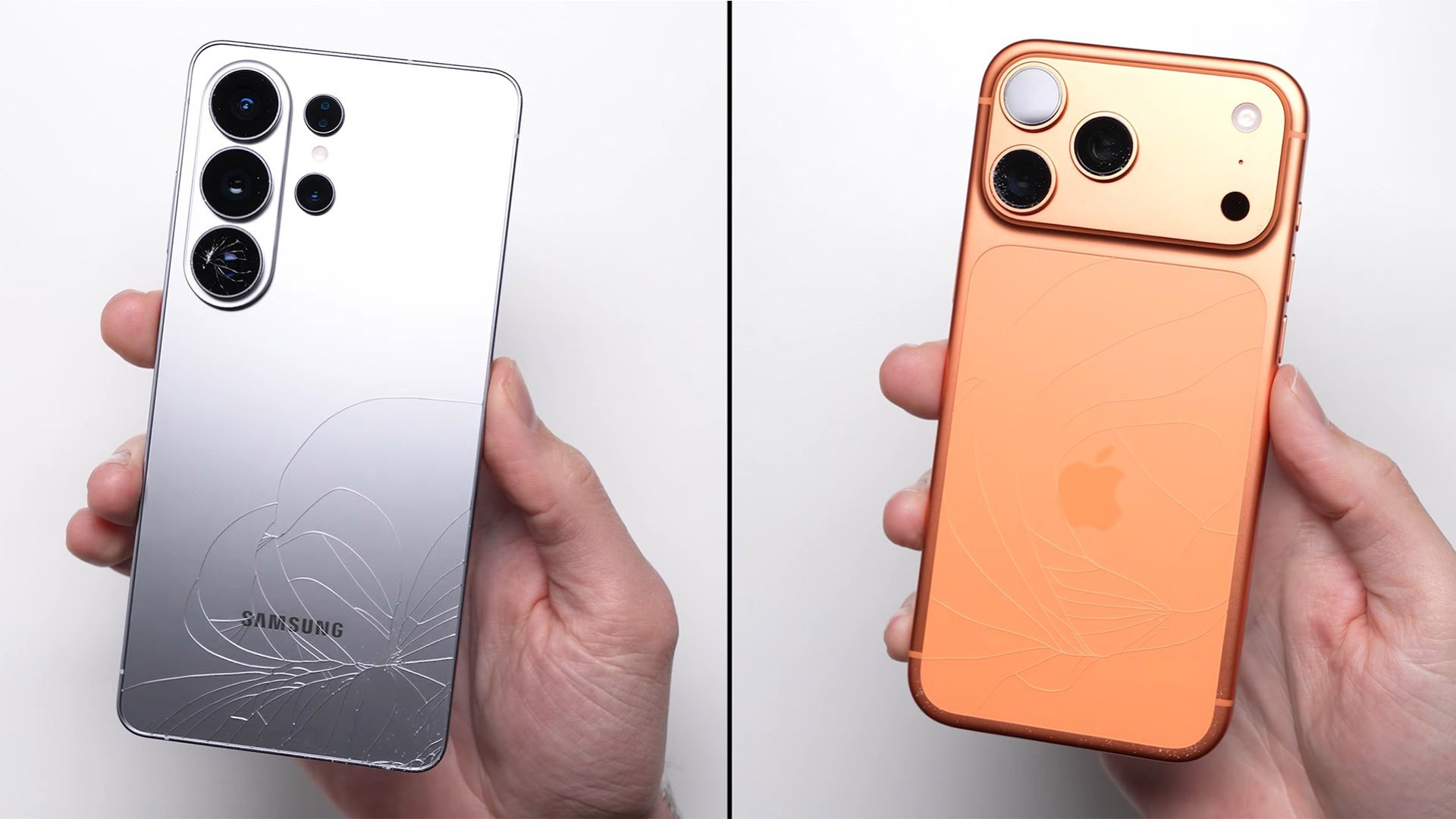
Material choices can make or break a flagship phone’s real-world toughness, and the Galaxy S26 Ultra is a perfect example of how a single change can shift the outcome. By moving from a titanium alloy frame to aluminum, Samsung’s newest Ultra now lines up more closely with what you’d expect from an iPhone 17 Pro Max in terms of mainstream premium materials. The trade-off, however, shows up fast when the phones hit the floor.
In a head-to-head drop test from PhoneBuff, the iPhone 17 Pro Max narrowly beats the Galaxy S26 Ultra again, this time helped by a small but important design advantage. Apple didn’t extend its Ceramic Shield coverage across the entire back panel. Instead, the camera plateau area remains metal, and that extra metal reinforcement appeared to improve how the phone handled repeated impacts.
Both phones were dropped six times total, alternating between back, corner, and front drops at two different heights. Here’s how the damage stacked up.
On the first 1-meter back drop, neither flagship got away clean. Both rear panels shattered, but the Galaxy S26 Ultra suffered heavier damage, especially around the telephoto camera glass. The cameras still worked, but lens flare began to appear. The iPhone’s top section, where metal is exposed, held up notably well, while the glass portion at the bottom absorbed most of the hit.
The 1-meter corner drop scuffed the edges on both devices. Interestingly, the iPhone 17 Pro Max showed more visible marks, likely made easier to spot by its Cosmic Orange finish. There was also a clear dent on the iPhone’s corner, while the Galaxy S26 Ultra looked comparatively better after this round.
Next came the 1-meter front drop, and this is where both brands ran into the reality of gravity: both displays cracked. The Galaxy S26 Ultra’s damage was more contained overall, while the iPhone 17 Pro Max took a harsher hit that caused its front camera to develop lens flare similar to what the Galaxy had already started showing. Even so, core biometrics survived at this stage—Samsung’s fingerprint reader and Apple’s Face ID both still worked, and the Galaxy S26 Ultra’s privacy screen functionality reportedly remained unaffected.
Things changed at the higher drop height. After the 1.5-meter back drop, the Galaxy S26 Ultra’s fingerprint sensor stopped working, even though the visible damage didn’t seem dramatically worse than earlier. The iPhone 17 Pro Max, on the other hand, kept Face ID running without issues.
The 1.5-meter corner drop mainly resulted in chipped paint on both phones, but there wasn’t a major jump in structural damage compared to earlier drops.
Finally, the 1.5-meter front drop further separated the two experiences. The iPhone 17 Pro Max ended up with heavy “spider-webbing,” with cracking spreading more aggressively across the display. The Galaxy S26 Ultra developed a different kind of concern: the telephoto lens area started shedding small glass fragments from the housing. Along with worsening lens flare, the exposed and loose glass could potentially be a safety issue if the phone is handled carelessly—like pulling it quickly from a pocket.
When the points were totaled, the iPhone 17 Pro Max edged out the Galaxy S26 Ultra by a slim margin, scoring 56 to Samsung’s 54. It’s a close result, but it reinforces two key takeaways for anyone comparing these flagships in 2026: small design choices (like leaving metal exposed around the camera area) can meaningfully affect durability, and a frame material change—from titanium to aluminum—can influence what survives not just cosmetically, but functionally, especially when it comes to biometric hardware.