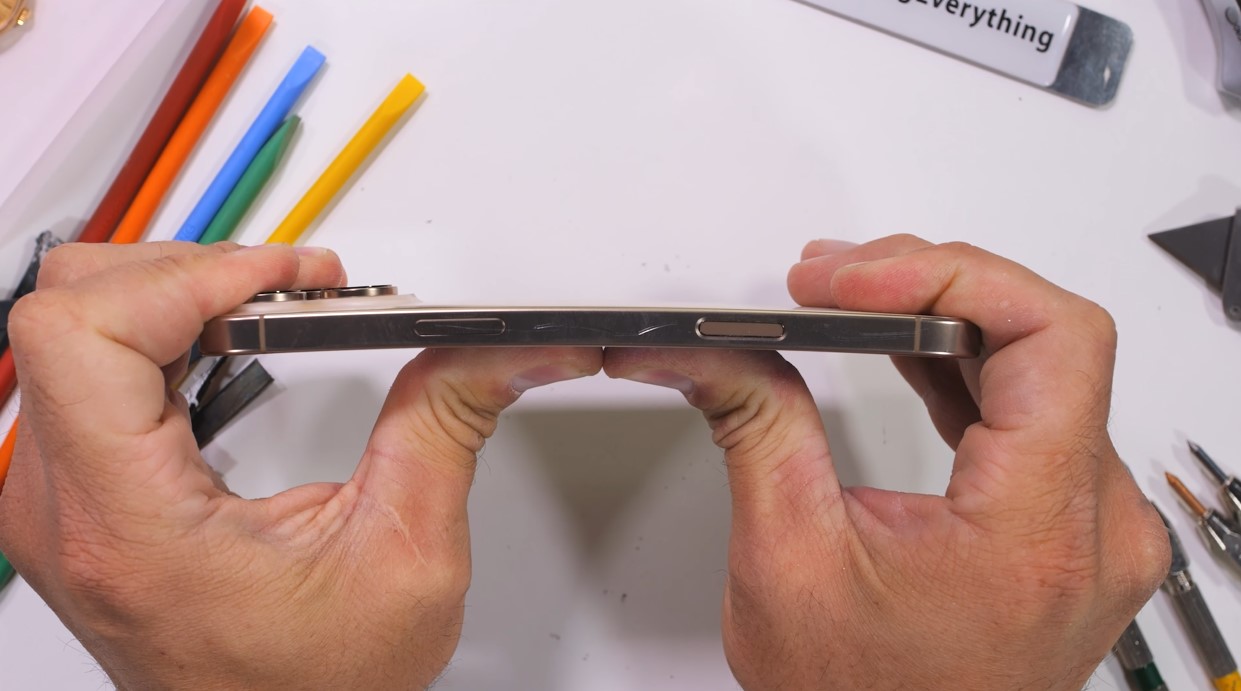
The iPhone 16 series hit the global market on September 20. While Apple didn’t introduce a radical new look for the iPhone 16 Pro and iPhone 16 Pro Max, they did make several internal upgrades that addressed previous issues. True to Apple’s reputation, the build quality remains top-notch, as demonstrated in a recent durability test where the iPhone 16 Pro Max barely budged under stress. This is notably better compared to the more fragile M4 iPad Pro lineup.
Enhancements like a thicker logic board and a new metal cover for the battery likely contribute to the improved durability of the iPhone 16 Pro Max. Shortly after its release, Zach from JerryRigEverything put Apple’s high-end iPhone 16 Pro Max in Desert Titanium through its paces. He humorously criticized Apple’s tactic of minor design updates disguised as new models, but he did highlight some new features, including the revamped Camera Control button. This button showed marks from a level 7 pick on the Mohs scale, indicating the presence of sapphire.
Interestingly, the sapphire isn’t pure, possibly due to manufacturing imperfections. Verification with a specialized tool barely confirmed its purity. The rest of the iPhone 16 Pro Max is a blend of titanium and glass, with the titanium reacting similarly to anodized aluminum when scratched. While the scratch and burn tests are intriguing, many readers are more interested in the bend test results.
Critics who were hoping to point out Apple’s use of inferior materials will be disappointed. The iPhone 16 Pro Max barely flexes, whether bent from the front or back. A previous teardown revealed that the smaller iPhone 16 Pro has a thicker logic board with a metal cover on the battery. These features likely contribute to the flagship model’s impressive durability.
For those curious about what makes the iPhone 16 Pro Max so robust internally, stay tuned for further insights. For now, check out Zach’s durability test video for a closer look, and we’ll be back with more updates soon.