Apple made waves with the launch of the iPhone 13 Pro and iPhone 13 Pro Max, thanks in part to their innovative ProMotion technology. This feature allows these flagship models to boast a 120Hz display refresh rate, providing an ultra-smooth user experience whether you’re swiping, scrolling, or navigating through multiple apps. However, with the recent rollout of iOS 18, some unexpected changes have surfaced—one of which wasn’t officially communicated to users.
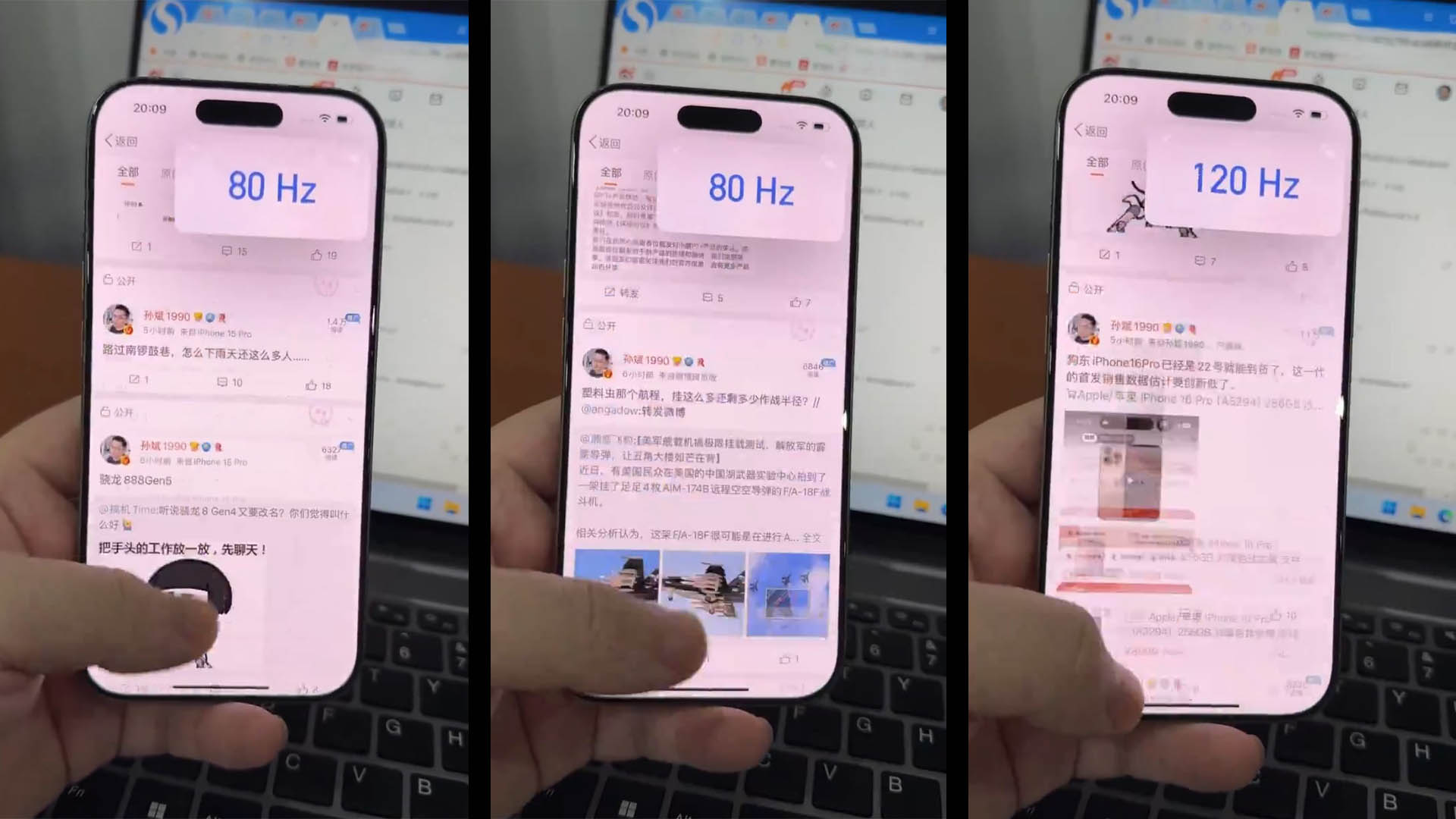
A savvy tipster recently uncovered a hidden tweak in iOS 18 that restricts the iPhone’s refresh rate to 80Hz, despite the device’s capability of running at the default 120Hz. Video evidence has been posted showing this alteration in action, particularly during rapid scrolling sessions, where the refresh rate caps at 80Hz and only occasionally touches 120Hz. This discovery was made on what appears to be one of Apple’s latest iPhone 16 models, raising questions among users and tech enthusiasts.
The most plausible explanation for this limitation is that Apple aims to extend battery life in iOS 18 by lowering the refresh rate. Yet, the lack of transparency surrounding this change has users concerned. One of the first to highlight this issue was Ice Universe, who cautioned that despite the software update’s polished look and smooth animations, there’s an underlying constraint that impacts the device’s performance. The refresh rate counter, visible thanks to a third-party app, confirms that the refresh rate doesn’t exceed 80Hz during intense scrolling.
Given that some users might prioritize a smoother visual experience over longer battery life, the absence of any announcement regarding this limitation is troubling. Transparency would allow users to make informed decisions about updating their devices.
Interestingly, this is not the first instance where Apple has made such adjustments to enhance battery efficiency in iOS 18. Earlier findings revealed that iPhones running on this latest OS version show reduced Geekbench 6 single-core and multi-core performance scores. This is due to a deliberate slight delay that prevents the performance cores from reaching their peak frequencies instantly.
While Apple’s intentions to preserve battery life are understandable, the secretive nature of these changes—coupled with real-world evidence—suggests a need for more open communication with users. If you’ve noticed similar behavior with your iPhone on iOS 18, it’s essential to report these experiences, ensuring Apple addresses these concerns more transparently in future updates.