Invincible Season 4 Episode 4, “Hurm,” arrived on Prime Video on March 25 with sky-high expectations. The series has trained viewers to anticipate bigger, bloodier, more animation-heavy showdowns as a season moves forward, so it’s not surprising that this chapter sparked a loud split in reactions. A lot of fans immediately labeled it “filler,” calling it slow and light on the franchise’s trademark brutality.
That complaint isn’t coming from nowhere. If you tuned in hoping for nonstop carnage and major plot accelerators, “Hurm” is intentionally not that kind of episode. There’s also a change that can genuinely throw longtime viewers off: William Clockwell sounds different this season. After three seasons with a voice that nailed William’s specific brand of snark, the quiet recast is noticeable. In a show packed with in-demand actors, the simplest explanation is scheduling conflicts—big ensemble casts can be a logistical headache. Still, while the recast may be jarring, it doesn’t define what “Hurm” is trying to do.
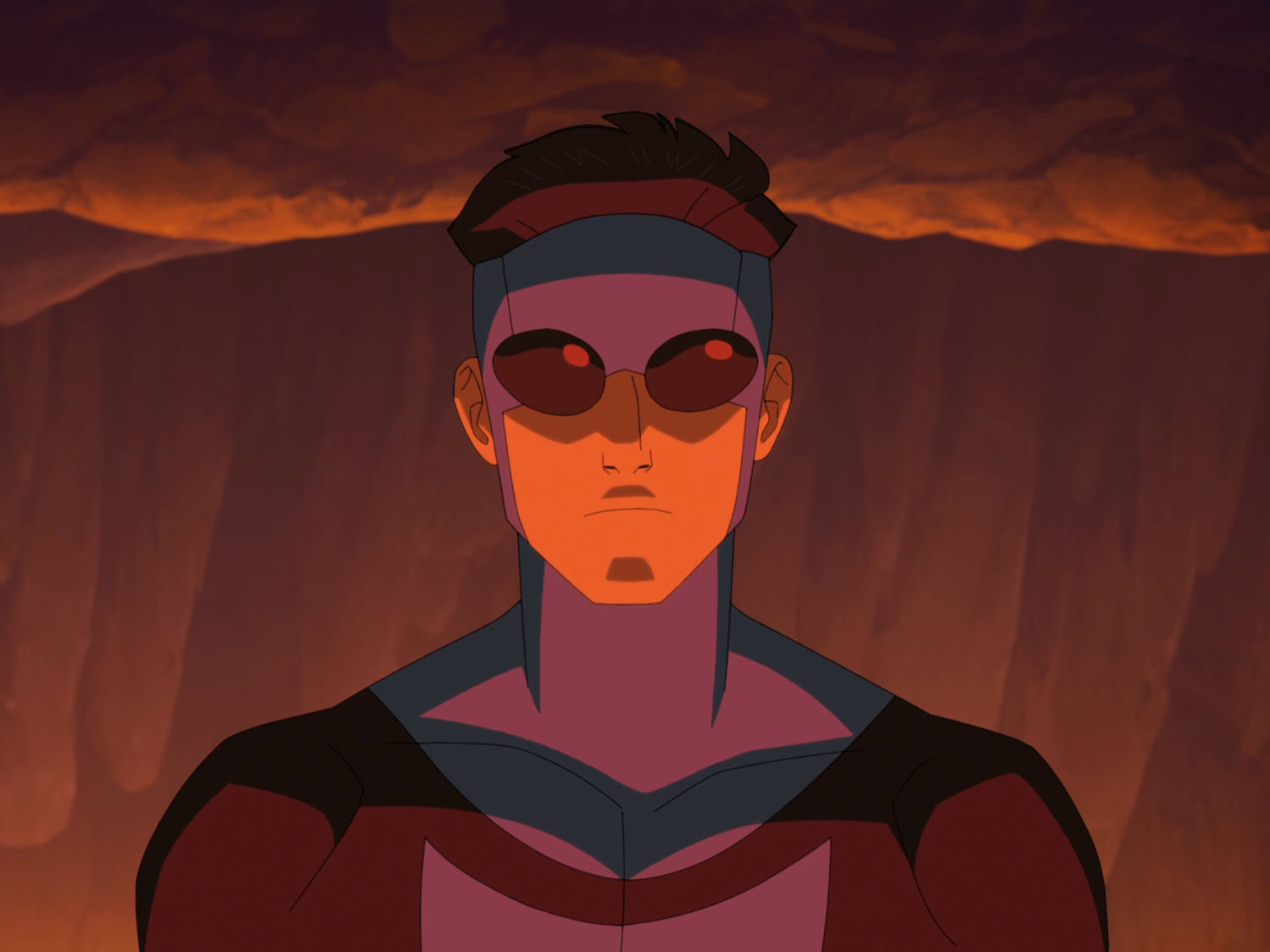
What the episode actually delivers is something Mark Grayson has been missing: room to breathe, think, and honestly confront himself. Early on, Mark admits to Art that he’s afraid of his own recent violent impulses. That fear has been building for a while. Mark has spent much of the series in reactive mode—getting hit, healing up, jumping to the next crisis, or simply trying to survive the fallout of someone stronger targeting him. “Hurm” breaks that cycle by putting him in the Underrealm with Damien Darkblood, where the story pauses long enough to look inward.
That Underrealm detour isn’t just a strange side quest, either. It turns the episode into a character-driven pressure cooker. Mark isn’t immediately trapped in the usual pattern of getting pulverized by an unstoppable enemy. Instead, he’s forced to sit with his thoughts in an environment that makes morality, consequence, and guilt feel tangible. The result is less about pushing the central comic-book storyline forward and more about clarifying who Mark is becoming—and what scares him about that person.
The episode also makes smart use of Damien Darkblood, giving him a perspective no one else in Mark’s life can offer. Mark has leaned on his mother, his employer, and even his father’s old tailor for guidance before, but Damien approaches Mark’s crisis from a completely different angle. He’s a demon detective who’s spent eons surrounded by the worst of what people can become. He views humanity through the harshest lens possible: consequences are real, and they are permanent.
When Damien tells Mark that his guilt is the one thing validating his soul, it lands like a grim but oddly grounding truth. It gives Mark a concrete way to measure himself. The episode argues that Mark’s potential for violence isn’t the real threat—what matters is that Mark dreads it, questions it, and doesn’t excuse it. That terror of who he could be is exactly what separates him from the monsters he keeps being compared to. And you can feel how badly he needed someone, anyone, to say it out loud.
For viewers insisting the episode has “no action,” it’s worth looking at the combat that does happen. Mark’s fight against Volcanikka’s forces may not be the season’s centerpiece brawl, but it serves a purpose the show has leaned away from for a long time: it lets Mark look competent again. Since the beginning, Mark has often felt like a supernatural punching bag—getting brutalized by enemies who outclass him and leaving viewers to watch him endure rather than dominate. In “Hurm,” he finally cuts loose against opponents he can actually handle, tearing through hellfire and beasts to retrieve Satan’s crown. It’s a rare, cathartic reminder that Mark isn’t just defined by suffering. He is powerful, and sometimes he can win without being broken in the process.
Does “Hurm” radically advance the season’s main storyline? Not really—aside from the note it strikes near the end involving Nolan and Allen. But calling it meaningless misses why this kind of episode exists in the first place. “Hurm” strengthens Mark’s self-awareness at the exact moment the story needs him to understand what’s happening inside his head. It gives him perspective from the last character you’d expect to offer genuine clarity. It forces him to think about what makes him human while he’s surrounded by literal demons. And it recalibrates the show’s central promise: before Mark can face what’s coming next, he has to believe it again—he has to feel, in some way, invincible.