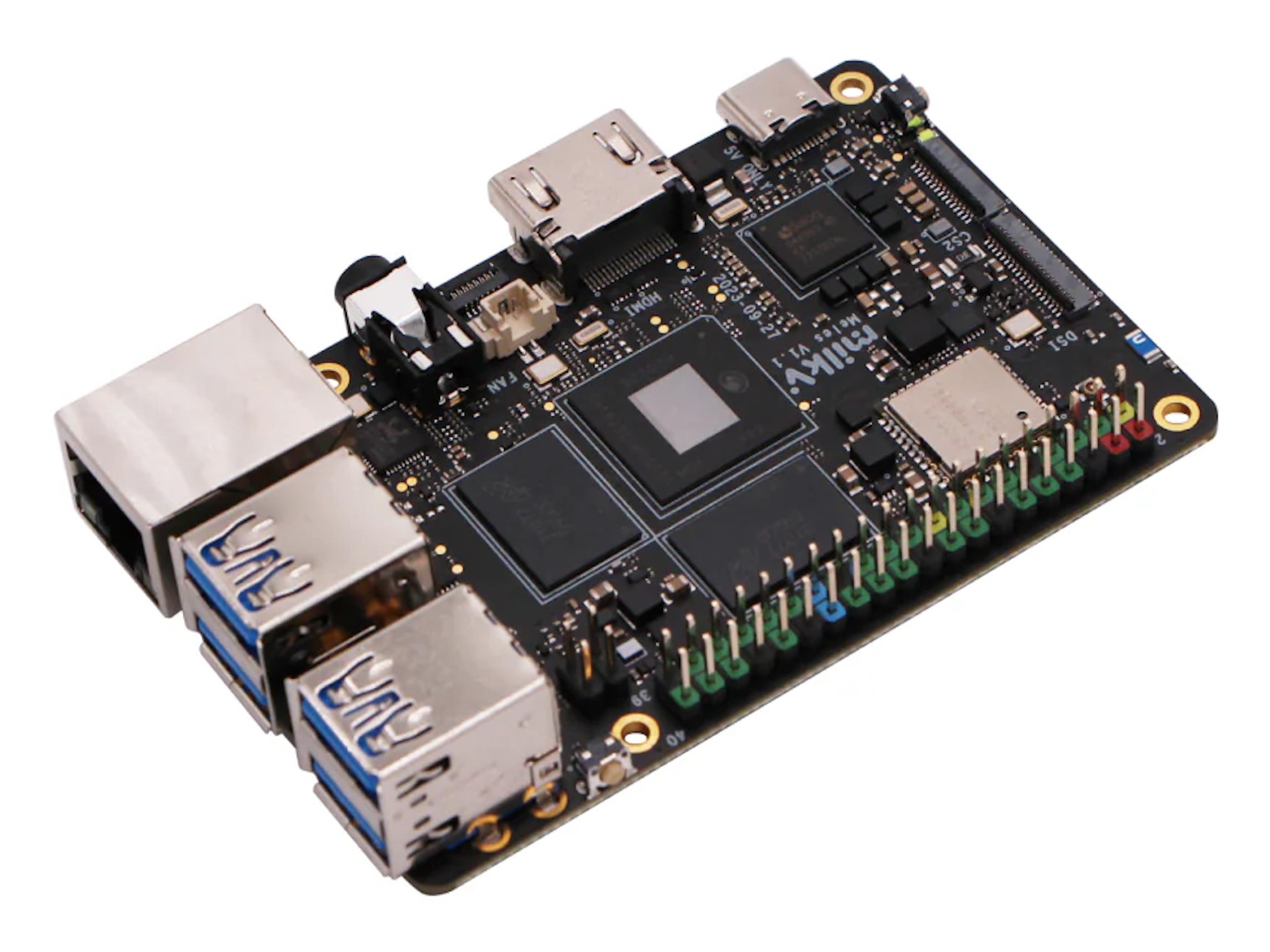
For enthusiasts in the world of single-board computers, a new option has emerged: the Milk-V Meles. This notable addition to the selection of compact computing platforms offers a robust set of features that differentiates it from the well-known Raspberry Pi.
Available for purchase, the Milk-V Meles embraces the RISC-V processor architecture, a departure from the ARM architecture traditionally found in Raspberry Pi models. The device boasts a T-Head TH1520 chip, which operates at a clock frequency of 1.85 GHz with four computing cores. A standout feature of this architecture is the onboard Neural Processing Unit (NPU), which can deliver up to 4 TOPS, enhancing the device’s capacity to speed up AI applications. It offers support for popular AI frameworks like Caffe and TensorFlow.
The board is currently sold with an 8 GB RAM specification and includes a 128 GB eMMC module for storage, augmented by a microSD card slot for additional storage options. Visual output is handled by an HDMI 2.0 port, and a four-lane MIPI DSI interface further enhances its display capabilities.
For imaging and project experimentation, such as image recognition, the Meles comes equipped with a MIPI CSI connection for attaching cameras. Its connectivity suite is rounded off with four USB 3.0 ports, WiFi 5, and a Gigabit Ethernet port for networking.
Hardware enthusiasts will appreciate the 40-pin GPIO header that facilitates the connection of various sensors and actuators, expanding the board’s versatility in project builds. Additionally, a fan connector is provided, and the device measures 85 x 56 mm, drawing power through a USB-C port.
As a new player in the market, the Milk-V Meles is priced at an introductory rate of $80. However, this rate is indicated as being for a limited time, with no specific end date disclosed.
This computing solution seems to fit a niche for users looking for a RISC-V architecture-based board. The Milk-V Meles, with its advanced capabilities, especially in the realm of AI-driven tasks, could be an especially compelling choice for developers and hobbyists looking for a powerful alternative to traditional ARM-based single-board computers.
In the rapidly evolving world of miniature computing, where compact systems offer vast potentials, the Milk-V Meles stands out. Its intriguing design, AI acceleration potential, and array of features make it not just a competitor but a potentially transformative presence in the field of bootstrapped AI, IoT, and embedded system projects. Whether for educational purposes, professional development, or DIY enthusiasts, the Milk-V Meles represents an interesting shakeup in the ecosystem of single-board computers.