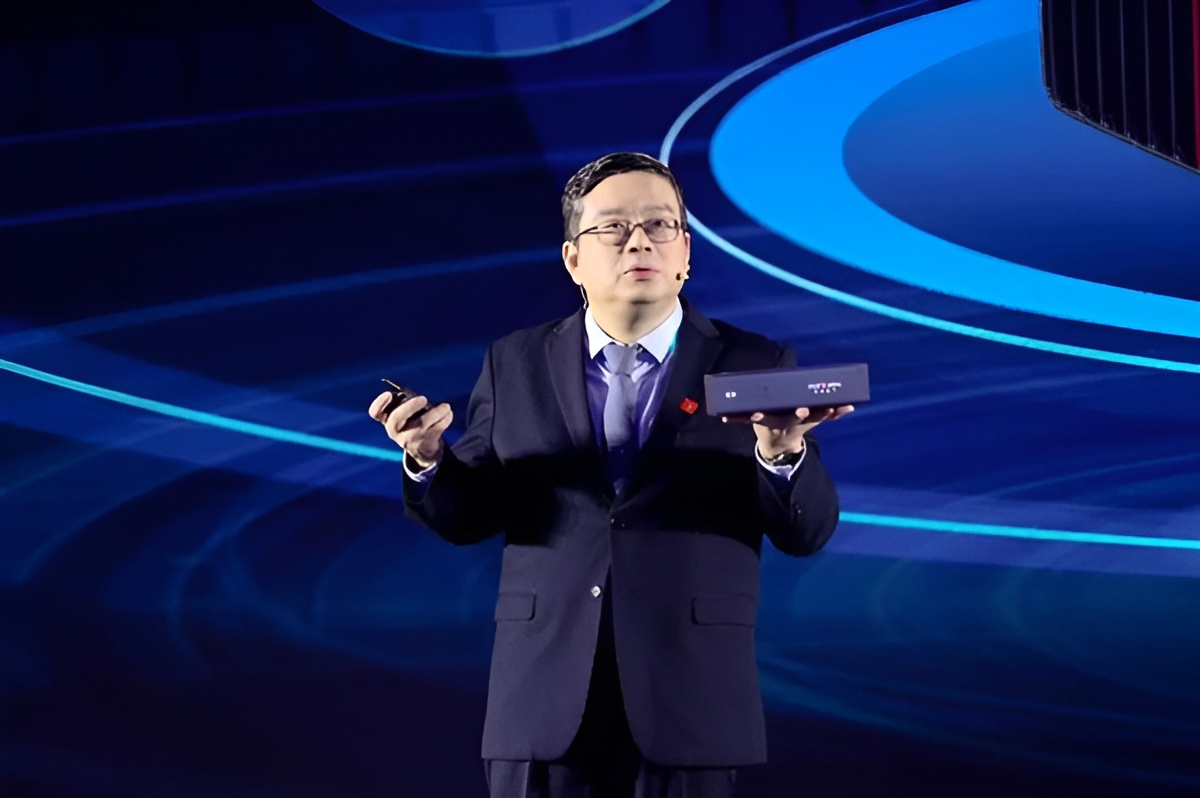
In an era of rising chip sanctions and an increasing push for domestic development, Intellifusion, a Chinese AI firm, has revealed its new AI-focused hardware, known as the “DeepEye” AI box. This innovative product is touted to offer a blend of high-end performance and affordability aiming to provide accessible AI solutions.
Intellifusion’s entry into the consumer market with the DeepEye AI box represents a significant step in the company’s trajectory, particularly known for its collaboration with local governments on AI-centric projects for public services. The ambition is now to capture the attention of the consumer sector with their AI computing products.
The unveiled device carries Intellifusion’s bespoke DeepEdge10 Max chip, fabricated on a 14nm process and presenting a chiplet architecture with a D2D interface, proudly utilizing the RISC-V architecture. The DeepEdge10 Max chip is set to deliver an impressive 48 TOPS (tera operations per second) of AI computing power based on INT8 training benchmarks.
Intellifusion doesn’t stop there; it has sketched out a detailed product roadmap stretching into the future. The enterprise plans to launch a more powerful model within the first half of 2025, fitted with the DeepEdge10Ultra chip. This variant is expected to double the computational ability, boasting 96 TOPS. Prior to this release, a more compact version, the device with the DeepEdge10Pro chip offering 24 TOPS, will hit the markets.
Pricing plays a pivotal role in Intellifusion’s strategy, as the initial offerings of the DeepEye AI boxes are expected to be market-compelling, approximately retailing at 1000 yuan. With this aggressive price point, the company aspires to offer a solution that is “90%” more cost-effective than existing alternatives, which are primarily GPU-based and command higher prices.
Consequently, Intellifusion is positioning itself as a competitive player for low to mid-tier enterprise users demanding affordable yet powerful AI capabilities. This bold move is indicative of the ongoing trend where companies are seeking to provide in-house AI solutions amidst external pressures such as international chip sanctions.
Although the real-world performance of DeepEye remains to be tested, the projections put forward by Intellifusion certainly pique interest. They potentially align with the performance of some of the quickest neural processing units (NPUs) on the market, including those by leading manufacturers like Qualcomm.
The AI box’s impact and success will hinge on the company’s ability to fulfill these commitments of delivering cutting-edge, economical AI computing options. If successful, the “DeepEye” AI box could be a game-changer for enterprises looking to harness AI without breaking the bank.


