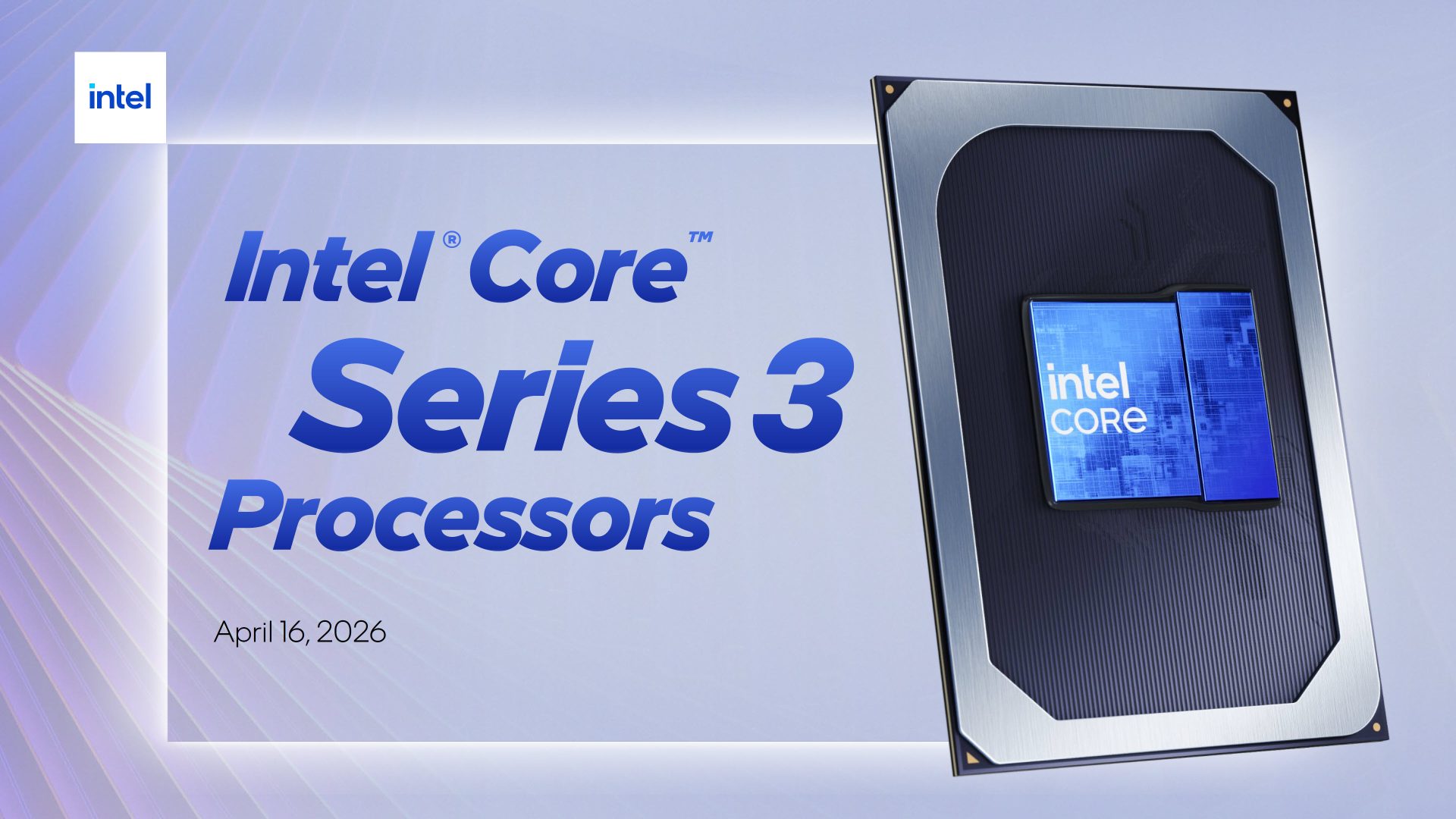
Intel has officially introduced Wildcat Lake, its new Core Series 3 system-on-chip lineup built for affordable, everyday laptops. The timing is important: mainstream buyers have been watching the rise of low-cost, long-battery laptops like Apple’s MacBook Neo, and Intel is now answering with a platform meant to bring much of its newer Panther Lake DNA to a wider range of Windows PCs.
Wildcat Lake is essentially a smaller, cost-optimized sibling to Panther Lake. It keeps the same key building blocks that made Panther Lake stand out—Cougar Cove performance cores, Darkmont efficiency cores, Xe3 integrated graphics, and the NPU5 neural processing unit—while trimming overall specs to hit more accessible price points. It’s also notable as Intel’s first Series 3 processor family manufactured on Intel’s 18A process technology, which should help with efficiency and power management in thin-and-light designs.
A big part of Intel’s pitch is “AI-ready” computing without forcing shoppers into premium-tier pricing. Intel says Core Series 3 supports AI workloads with up to 40 platform TOPS, which aligns with requirements for modern Windows AI PC experiences. The chips also bring current-gen connectivity expectations, including up to two integrated Thunderbolt 4 ports, Wi‑Fi 7 (R2), and Bluetooth 6—features that matter to buyers who want a laptop that feels modern for several years.
On the CPU side, Wildcat Lake scales up to 6 total cores in a hybrid setup with 2 performance cores and 4 efficiency cores. Graphics are more modest than the higher-tier Panther Lake parts: Wildcat Lake offers up to 2 Xe3 GPU cores (with one lower SKU dropping to a single Xe3 core). Even with those reductions, Intel claims meaningful real-world gains over older mainstream mobile chips, including up to 2.1x faster creation and productivity performance, up to 2.7x higher AI GPU performance, and up to 64% lower processor power compared to previous-generation Intel Core 7 150U systems.
Battery life is where Intel is clearly trying to win everyday users. According to Intel’s figures, laptops built on Wildcat Lake can reach up to 18.5 hours of Netflix streaming, up to 12.5 hours of office productivity, and up to 9.6 hours of video calls in Zoom 1×1 meetings with AI effects enabled. If partner laptops match anywhere close to those numbers in typical configurations, Wildcat Lake systems could become strong options for students, remote workers, and anyone who wants long endurance without paying flagship prices.
Intel also designed the surrounding platform specifically to reduce cost. One of the biggest changes is memory: Wildcat Lake uses a single-channel memory layout, while still supporting both LPDDR and DDR options. That approach is intended to give laptop makers more flexibility to offer better memory capacity-to-price ratios in entry and mainstream models, even if it’s not aimed at high-end performance tuning.
Storage has also been set up with affordability and efficiency in mind. Intel is enabling lower-cost, lower-power options through UFS 3.0 storage aligned with SD card standards, while also supporting PCIe Gen4 SSDs to deliver strong everyday responsiveness without the added expense associated with Gen5 drives. On top of that, Intel worked with partners on a lower-cost Type‑3 6-layer motherboard design, another lever to help manufacturers bring down overall system pricing.
At launch, Intel says there are more than 70 laptop designs planned from its partners, with availability starting now. The Wildcat Lake lineup includes six SKUs in total. All of them target a 15W base power level with up to 35W maximum power, and most models use a 6-core configuration, while one SKU drops down to a 5-core layout and can also reduce graphics to a single Xe3 core.
For shoppers who care more about daily speed, battery life, modern wireless, and practical AI features than maxed-out specs, Intel Core Series 3 “Wildcat Lake” laptops are positioned to become one of the most important value-focused Windows laptop launches in a long time—especially as competition heats up in the sub-$1000 (and potentially much lower) category.