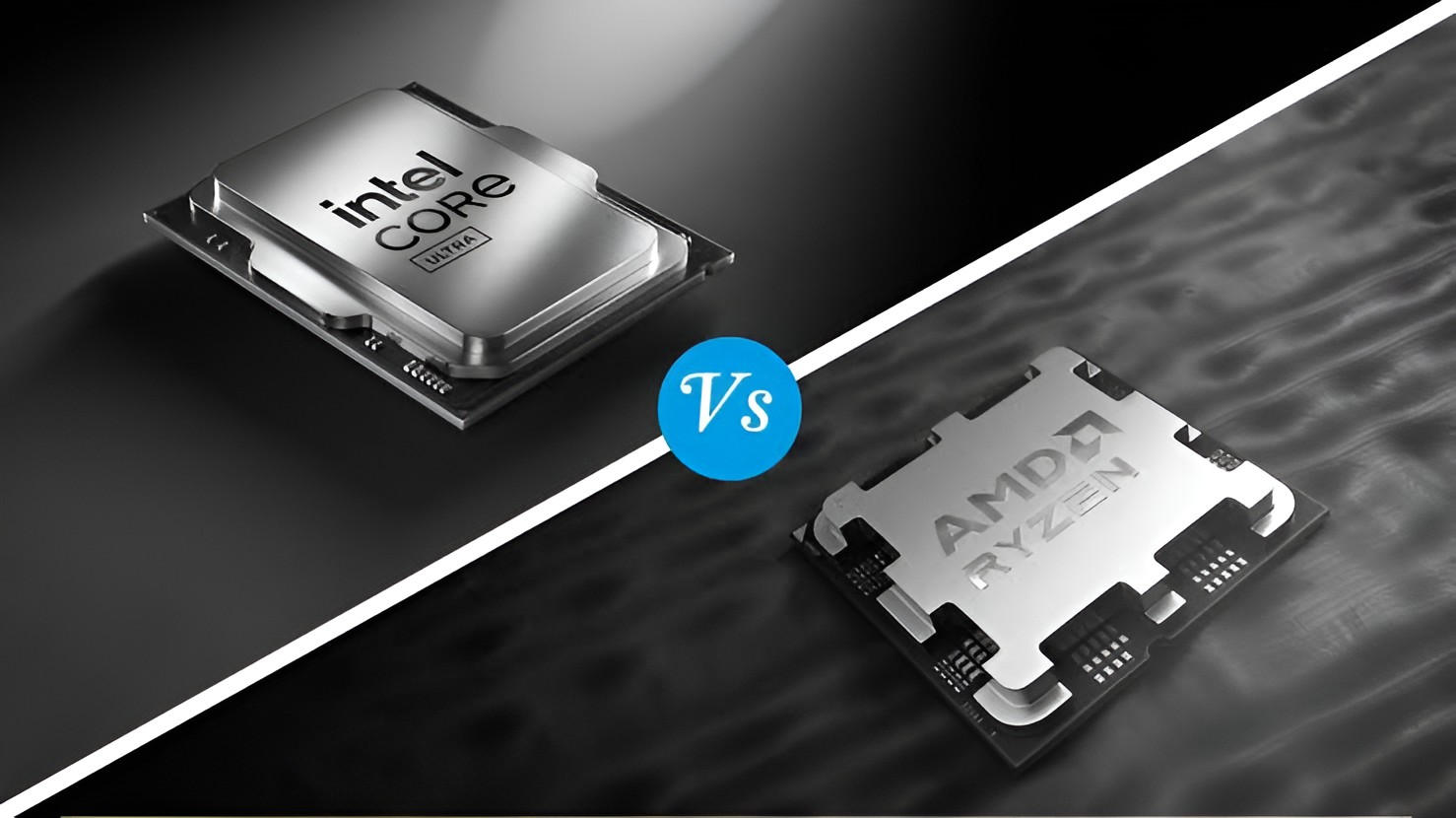
Intel’s Nova Lake and Razor Lake plans could tighten TSMC capacity and put pressure on AMD
Intel’s next two processor generations, Nova Lake and Razor Lake, are shaping up to be more important than a simple product refresh. According to recent industry reports, both CPU families may continue using TSMC manufacturing capacity alongside Intel’s own in-house process technology. If accurate, that could create a tougher competitive environment for AMD, especially as demand for advanced TSMC nodes remains extremely high.
The key issue is capacity. TSMC’s most advanced manufacturing lines are already under heavy pressure from major customers across CPUs, GPUs, AI accelerators, and high-performance computing products. If Intel maintains or increases its allocation at TSMC for Nova Lake and Razor Lake, AMD may have less room to secure additional wafer supply for its own future processors, including server CPUs and high-end desktop chips.
Intel’s Nova Lake processors are expected to enter mass production around January 2027. Earlier expectations suggested that Nova Lake would rely entirely on Intel’s 18A process. However, newer reports indicate Intel may divide production between Intel 18A and TSMC’s N2P process, a refined version of TSMC’s 2nm-class technology.
That approach would give Intel more flexibility. It could use its own fabs where possible while leaning on TSMC for certain chip components or product tiers. For AMD, however, the same move could make it harder to obtain extra advanced-node capacity at a time when every wafer matters.
One of the more interesting rumors around Nova Lake is the introduction of bLLC, or Big Last-Level Cache. This feature appears designed to compete more directly with AMD’s popular 3D V-Cache technology, especially in gaming and cache-sensitive workloads. Reports suggest that high-end 52-core Nova Lake models may feature up to 288 MB of cache, while 28-core versions could offer up to 144 MB.
If those figures prove accurate, Intel may be preparing a more aggressive challenge to AMD’s X3D lineup. AMD has enjoyed strong momentum in gaming CPUs thanks to its large-cache designs, and Intel’s move toward a similar strategy could make the next generation of desktop processors far more competitive.
There are also signs that Nova Lake laptop chips may not arrive immediately. Some reports suggest that mobile variants could be delayed until the Razor Lake-HX generation. If true, Intel may prioritize desktop and certain high-performance segments first before expanding the architecture more broadly into notebooks.
Razor Lake, the generation expected after Nova Lake, is also rumored to use a split manufacturing strategy. Reports claim it may combine Intel’s own process technology with TSMC’s N2X node. N2X is expected to be a high-performance extension of TSMC’s 2nm platform, aimed at products that require high clock speeds, strong efficiency, and advanced performance scaling. This includes CPUs, AI chips, and high-performance computing hardware.
The transition from FinFET to nanosheet transistor technology is one of the major reasons these advanced nodes are so highly sought after. Nanosheet designs are expected to offer better power and performance characteristics, making them attractive for next-generation processors where efficiency and peak performance are both critical.
For AMD, Intel’s continued use of TSMC creates a strategic challenge. AMD depends heavily on TSMC for its most advanced CPUs and GPUs. Its EPYC server processors, Ryzen desktop chips, and AI-focused products all compete for access to leading-edge manufacturing capacity. If Intel becomes a larger or more consistent TSMC customer, AMD could face tighter supply conditions just as demand for data center and AI-related silicon continues to rise.
This does not mean AMD is suddenly in trouble, but it does highlight how important foundry allocation has become. In the modern chip industry, performance is not determined only by architecture. It is also shaped by who can secure enough advanced wafers, how efficiently those wafers are used, and how quickly products can be scaled into mass production.
Intel’s reliance on TSMC also tells another story. While Intel is pushing hard to restore its manufacturing leadership with the 18A process, the company may not yet be ready to depend on it fully for every major product. Using TSMC as part of the production mix could reduce risk and help Intel meet launch targets, but it also suggests that Intel’s internal manufacturing roadmap still faces pressure.
Meanwhile, early performance chatter around Nova Lake-S has added to the excitement. Intel’s Core Ultra 9 4950K, reportedly part of the Nova Lake-S desktop lineup, is rumored to feature 28 cores in a configuration that may include 8 performance cores and 20 efficiency-class cores. The efficiency-core count is said to include 16 standard E-cores and 4 low-power E-cores.
Early CPU-Z figures being discussed point to around 1,000 points in single-core performance and roughly 20,000 points in multi-core performance. These numbers should be treated cautiously until verified, but they suggest Intel is aiming for a major desktop performance leap with Nova Lake.
The bigger picture is clear: Intel’s Nova Lake and Razor Lake generations could reshape the CPU market not only through architecture and cache improvements, but also through manufacturing strategy. By continuing to use TSMC’s most advanced nodes, Intel may strengthen its own product roadmap while making it harder for AMD to expand capacity.
As the race for 2nm-class production heats up, the battle between Intel and AMD is becoming as much about supply chain power as raw processor performance. The companies that secure the right manufacturing capacity at the right time may have a major advantage in the next wave of desktop, laptop, server, AI, and high-performance computing chips.