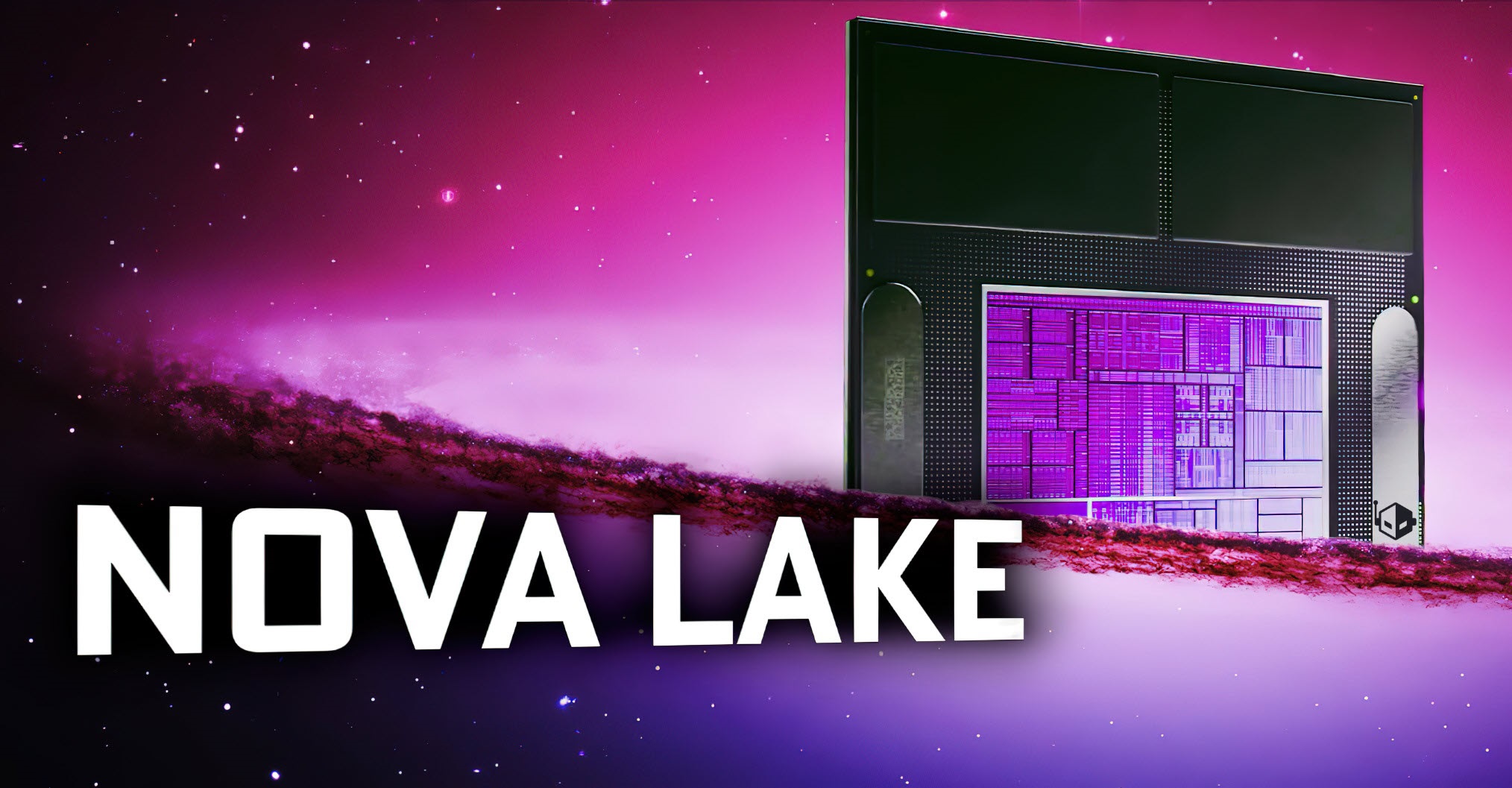
Intel has officially unveiled its upcoming Nova Lake CPUs for desktops and laptops, following the recent Bartlett Lake-S and Panther Lake chips. These next-gen processors are destined to enhance performance and redefine computing experiences.
Intel has detailed its upcoming CPU plans in an official presentation, where the spotlight was first on the Bartlett Lake-S line, branded under the “Core Series 2.” These CPUs will boast up to 12 P-Cores, maintaining the traditional core threading model with up to 24 threads. Bartlett Lake-S, designed from previous Gen architectures, will continue using the LGA 1700/1800 socket rather than the new LGA 1854.
Bartlett Lake-S chips, mainly tailored for edge computing, have already rolled out with several SKUs, each offering different configurations from hybrid setups to P-Core-only options. The lineup includes models with various core counts and power levels catering to diverse computational needs.
After Bartlett Lake-S and Arrow Lake-S, Intel’s Nova Lake-S promises a leap in desktop processing with compatibility on the upcoming LGA 1954 socket. These chips will introduce advanced architectures with core counts expected to skyrocket. You can anticipate up to 52 cores based on the newest Coyote Cove P-Core and Arctic Wolf E-Core designs.
Rumors suggest that Intel is pushing the boundaries by substantially increasing both P-Cores and E-Cores for Nova Lake. Desktop and laptop variants could boast up to 16 P-Cores and 32 E-Cores, potentially revolutionizing multi-core performance.
On the laptop front, Intel has plans to debut its next-gen Panther Lake CPUs by 2026, succeeded shortly after by Nova Lake-U, which will cater to mainstream and entry-tier markets. High-performance Nova Lake-H and HX variants are slated to follow, providing a wealth of options for different user needs.
This strategic rollout of diverse CPU families underscores Intel’s commitment to innovation, offering cutting-edge technology that enthusiasts and professionals alike can eagerly anticipate.
Stay tuned, as Intel’s roadmap continues to evolve with exciting developments on the horizon. As these next-gen processors come to fruition, they promise to elevate computing to new heights.