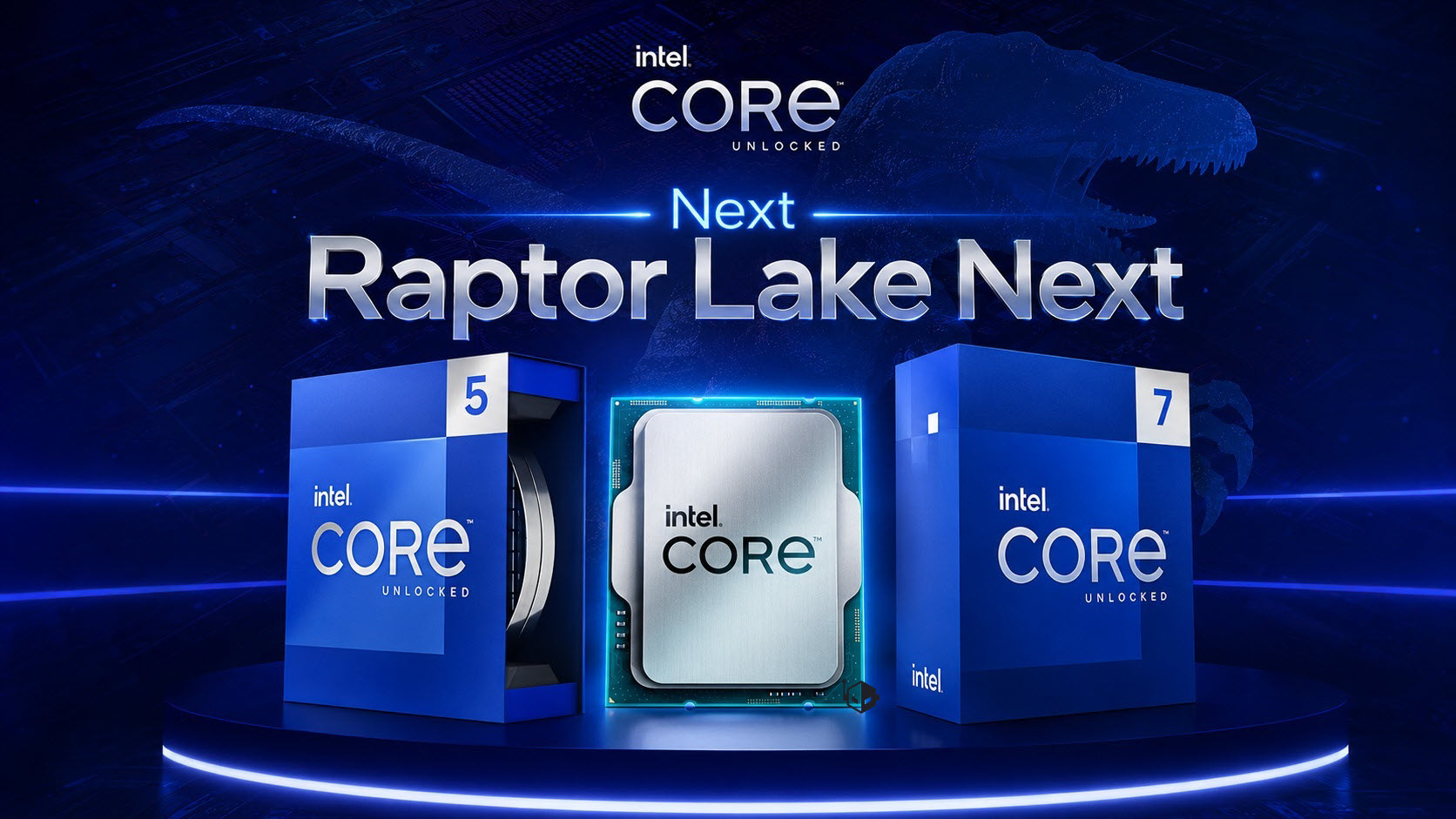
Intel Raptor Lake Next desktop CPUs could give budget gamers a fresh reason to stay on LGA 1700
Intel’s next big enthusiast desktop platform may be moving further into the future, but the company still appears to have a plan for mainstream PC builders. Instead of leaving budget and mid-range gamers waiting, Intel is reportedly preparing a new Raptor Lake “Next” desktop CPU lineup designed for the existing LGA 1700 platform.
That means users with current 600-series and 700-series motherboards may get another upgrade path without needing to buy a new motherboard, new memory, or an entirely new platform. For gamers trying to keep costs low, that could make Raptor Lake Next one of Intel’s most practical desktop CPU releases in the near term.
Memory shortages are changing Intel’s CPU roadmap
Intel and AMD are both preparing next-generation desktop CPU families, with Intel working on Nova Lake and AMD moving toward Zen 6. These future platforms are expected to target higher-performance segments, but ongoing memory shortages, rising component costs, and softer demand in the PC market have reportedly delayed broader launches until early 2027.
Rather than relying only on brand-new platforms, CPU makers are now extending the life of older, more mature designs. AMD has already taken this route with updated AM4 processors, and Intel appears ready to do the same with another Raptor Lake refresh.
This strategy makes sense. Older platforms are cheaper to produce, motherboard support is already widespread, and users can upgrade without replacing every major component in their PC. For the budget gaming market, that combination matters more than chasing the newest architecture.
Raptor Lake Next will keep LGA 1700 alive
The upcoming Raptor Lake Next lineup is expected to be the third major version of Intel’s Raptor Lake family. The original chips launched as 13th Gen Core processors, followed by the 14th Gen Raptor Lake Refresh. This new release will reportedly continue using the Intel 7 process node and the familiar hybrid architecture built around Raptor Cove performance cores and Gracemont efficiency cores.
The biggest advantage is compatibility. Raptor Lake Next is expected to work with existing LGA 1700 motherboards, which already support both DDR4 and DDR5 memory depending on the board model. This gives PC builders more flexibility at a time when memory pricing is becoming a bigger concern.
For users trying to build an affordable gaming PC, DDR4 support could be a major selling point. DDR4 kits remain widely available and often cost less than DDR5. On the other hand, users who choose DDR5 may be able to reuse that memory on future systems, making it the more forward-looking option.
Intel has also been working with partners on lower-cost memory solutions, but the response to newer memory formats has been limited so far. Because of that, the ability to support regular DDR4 and DDR5 memory remains one of Raptor Lake Next’s strongest advantages.
Core 200 branding expected for desktop and mobile chips
Raptor Lake Next is reportedly being prepared under Intel’s Core 200 branding. The lineup is expected to include Core 7, Core 5, and Core 3 models, targeting different price and performance tiers.
The processors are expected to keep integrated graphics, making them useful for office PCs, entry-level systems, troubleshooting, and budget builds where a dedicated graphics card may be added later.
The reported desktop lineup includes several configurations.
The Core 7 series is expected to offer up to 8 performance cores and 12 efficiency cores, with 65W models likely aimed at mainstream users who want strong multi-core performance without moving into high-power enthusiast territory.
The Core 5 series may include both 8 performance core plus 8 efficiency core models and 6 performance core plus 4 efficiency core models. These chips are expected to come in both 125W and 65W versions, giving gamers a choice between higher-performance unlocked-style parts and more efficient mainstream options.
The Core 3 series is expected to feature 4 performance cores and no efficiency cores, with 65W power targets. These chips would likely focus on entry-level gaming PCs, everyday desktops, and affordable upgrade systems.
No 12 performance-core model is expected
One important detail is that Raptor Lake Next is not expected to include a 12 performance-core configuration. That separates it from some other Intel desktop concepts that have been discussed in the past.
Instead, Intel appears to be keeping this family focused on affordable, familiar, and efficient configurations. The goal is not to create a new high-end flagship, but to provide value-oriented CPUs for users who already own LGA 1700 hardware or want to build a lower-cost desktop PC.
New cache behavior could improve selected models
While Raptor Lake Next is not expected to bring a major new architecture, Intel may introduce a useful design change involving cache.
The chips are reportedly set to support asynchronous cache slices. In simple terms, this means that even when certain core clusters are disabled on a processor, some of the cache from those disabled sections may still be usable. This could allow Intel to increase available L3 cache on certain lower-tier models.
One reported example is a Core 5 chip with 6 performance cores and 4 efficiency cores that may feature 24 MB of L3 cache instead of the usual 20 MB for that type of configuration. Extra cache can help in some gaming and productivity workloads, especially when paired with the right memory setup.
This approach may also allow Intel to improve product segmentation while making better use of partially disabled silicon, which is useful when trying to maximize yields and control costs.
Why Raptor Lake Next could matter for gamers
For PC gamers, Raptor Lake Next may not be exciting because of groundbreaking new technology. Its appeal is much more practical.
A user with a 12th Gen Alder Lake system could potentially upgrade to a newer Core 200 Raptor Lake Next processor without changing motherboards. Someone building a low-cost gaming PC could choose a DDR4 LGA 1700 motherboard and spend more of the budget on a graphics card. System integrators could also use these chips to offer more affordable prebuilt desktops.
In a market where platform upgrades can quickly become expensive, that matters. A new CPU socket often means buying a new motherboard and memory. Raptor Lake Next could avoid that problem for many users.
Raptor Lake Next will not replace Intel’s future platforms
Intel’s long-term desktop roadmap is still expected to move beyond Raptor Lake. Arrow Lake, Nova Lake, and later platforms will continue pushing newer architectures, updated sockets, and future memory standards. However, those platforms are expected to focus more on performance leadership and enthusiast features.
Raptor Lake Next is different. It is expected to coexist with existing 14th Gen Core processors and serve the mainstream market. It should retain familiar features such as PCIe 5.0 support, DDR4 and DDR5 compatibility, and LGA 1700 platform support, but it is not expected to introduce major new platform technologies.
That makes it more of a strategic refresh than a full generational leap.
Intel’s recent mainstream desktop CPU path
Intel’s desktop lineup has evolved through several major steps in recent years.
Alder Lake introduced the hybrid architecture with performance cores and efficiency cores on the LGA 1700 platform, along with DDR4 and DDR5 support.
Raptor Lake improved performance with higher core counts and refinements while keeping the same platform.
Raptor Lake Refresh extended the same design again under the 14th Gen Core family.
Raptor Lake Next is expected to continue that pattern, offering another round of LGA 1700 processors for budget and mainstream users.
Meanwhile, newer families such as Arrow Lake and Nova Lake are expected to serve more advanced platforms with newer CPU core designs and DDR5-focused ecosystems.
A practical move in a difficult PC market
The return of Raptor Lake in another refresh may not sound revolutionary, but it could be one of Intel’s smartest moves for the mainstream desktop market. With memory supply issues, higher component prices, and many users holding onto older PCs for longer, affordable upgrade options are becoming more important.
If Intel prices these chips aggressively, Raptor Lake Next could appeal strongly to budget gamers, students, office users, and system builders who want dependable performance without paying for a full platform replacement.
For anyone already using an LGA 1700 motherboard, this lineup could offer one last meaningful upgrade path before Intel’s future desktop platforms fully take over.