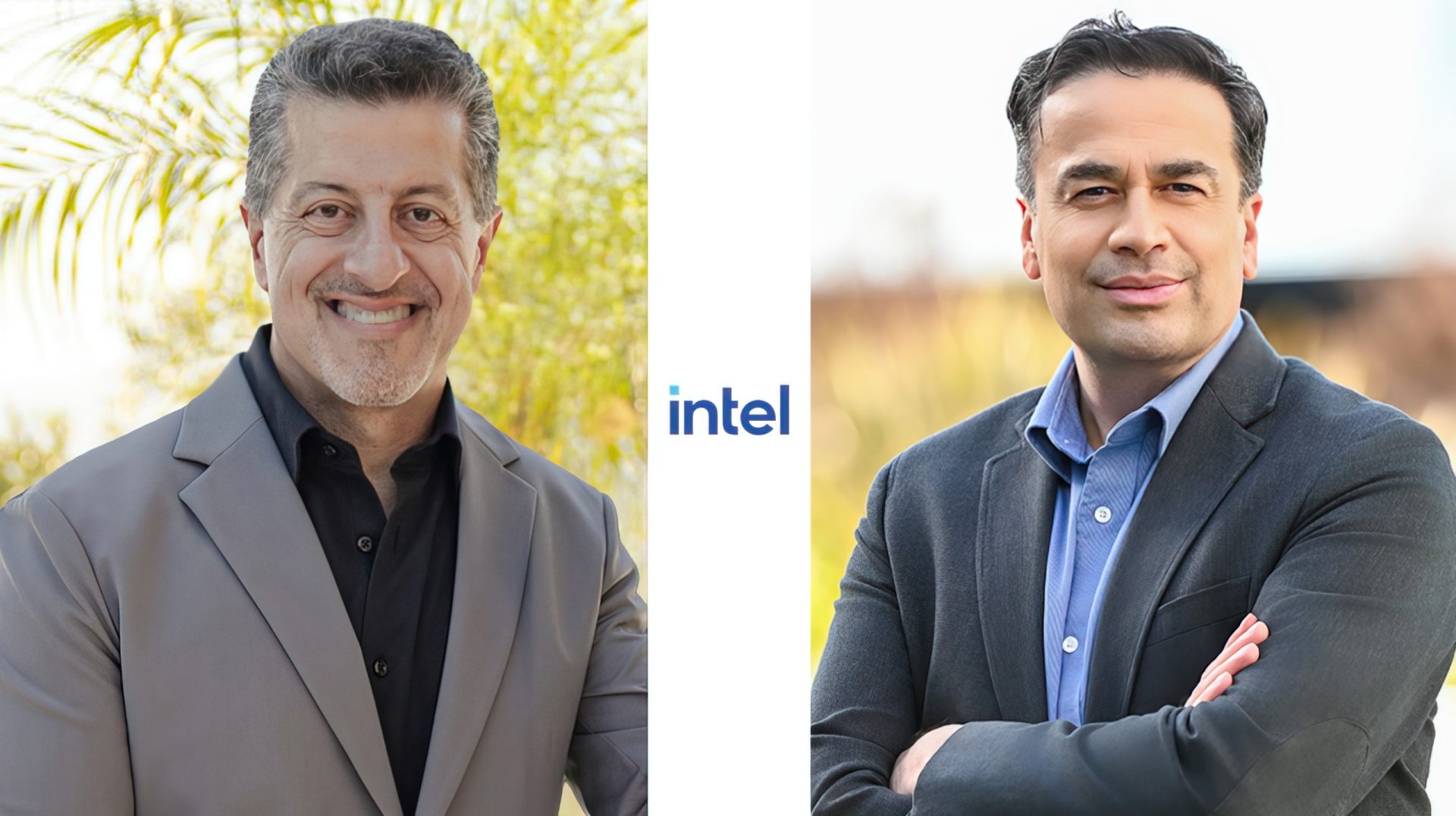
Intel is making notable moves at the top as it pushes harder into AI-driven computing, announcing two major leadership appointments designed to strengthen its core product strategy and accelerate innovation.
The biggest change is the arrival of Alex Katouzian, who will join Intel in May as executive vice president and general manager of the Client Computing and Physical AI Group. Intel says Katouzian’s mission is to bring its client computing business into closer alignment with “physical AI” systems—technology that extends beyond traditional PCs into real-world, intelligent machines such as robotics platforms, autonomous systems, and other edge AI devices.
Intel CEO Lip-Bu Tan framed the appointment as a response to the rapidly shifting role of AI at the edge. As more AI workloads move closer to where data is created—on laptops, embedded devices, industrial machines, and robotics—Intel wants its client strategy to evolve beyond the classic PC definition. The company believes this shift creates a major growth opportunity, and it’s positioning client computing and physical AI as connected parts of the same future.
Katouzian comes to Intel from Qualcomm Technologies, where he most recently served as executive vice president and group general manager for mobile, compute, and extended reality (XR). Intel highlighted his reputation for technical vision and his ability to execute at scale—two qualities that matter as the industry races to deliver AI PCs, expand edge AI inference, and build the computing foundations for next-generation intelligent devices.
Katouzian echoed that direction, pointing to Intel’s ambition to lead in AI PCs, scale AI inference at the edge, and accelerate physical AI systems. His focus will be on turning that roadmap into practical, competitive products and experiences that can ship in volume.
Intel also confirmed a key internal leadership transition: Pushkar Ranade has been officially appointed chief technology officer after serving in the interim role. As CTO, Ranade will guide Intel’s technology strategy, lead special technology initiatives, and drive development across several critical emerging fields. Intel specifically called out quantum computing, neuromorphic computing, photonics, and novel materials—areas widely viewed as potential long-term breakthroughs for computing performance, efficiency, and new capabilities.
Ranade will also continue serving as chief of staff to the CEO, a dual role intended to keep Intel’s technology priorities tightly aligned with business execution. Both Katouzian and Ranade will report directly to CEO Lip-Bu Tan.
Taken together, these appointments signal Intel’s intent to compete more aggressively in the next era of computing—one shaped by AI PCs, edge AI, and physical AI systems that blend compute with real-world autonomy. For customers and partners, it’s a clear message that Intel is organizing its leadership and strategy around what it sees as the next major wave of growth in the industry.